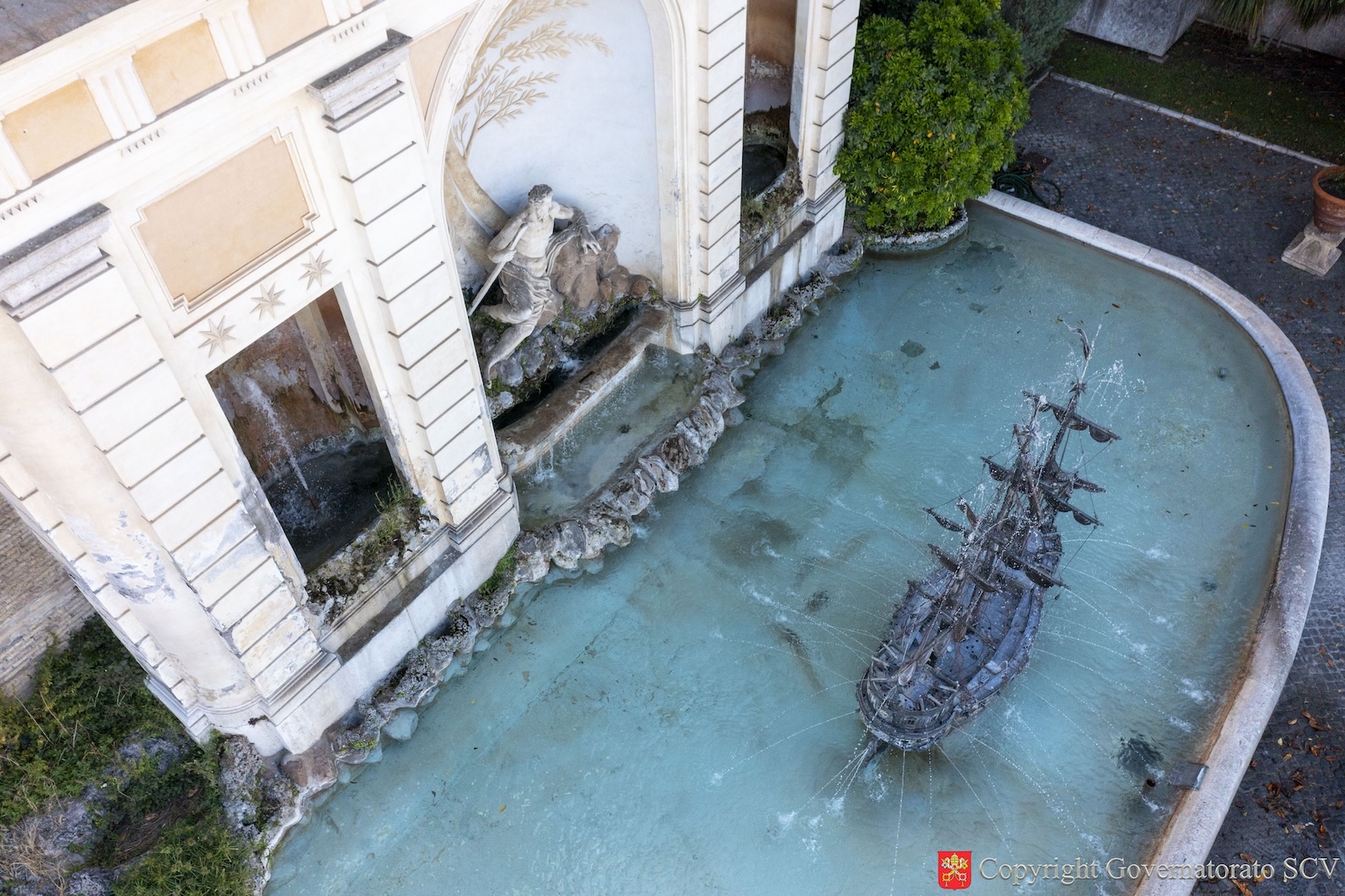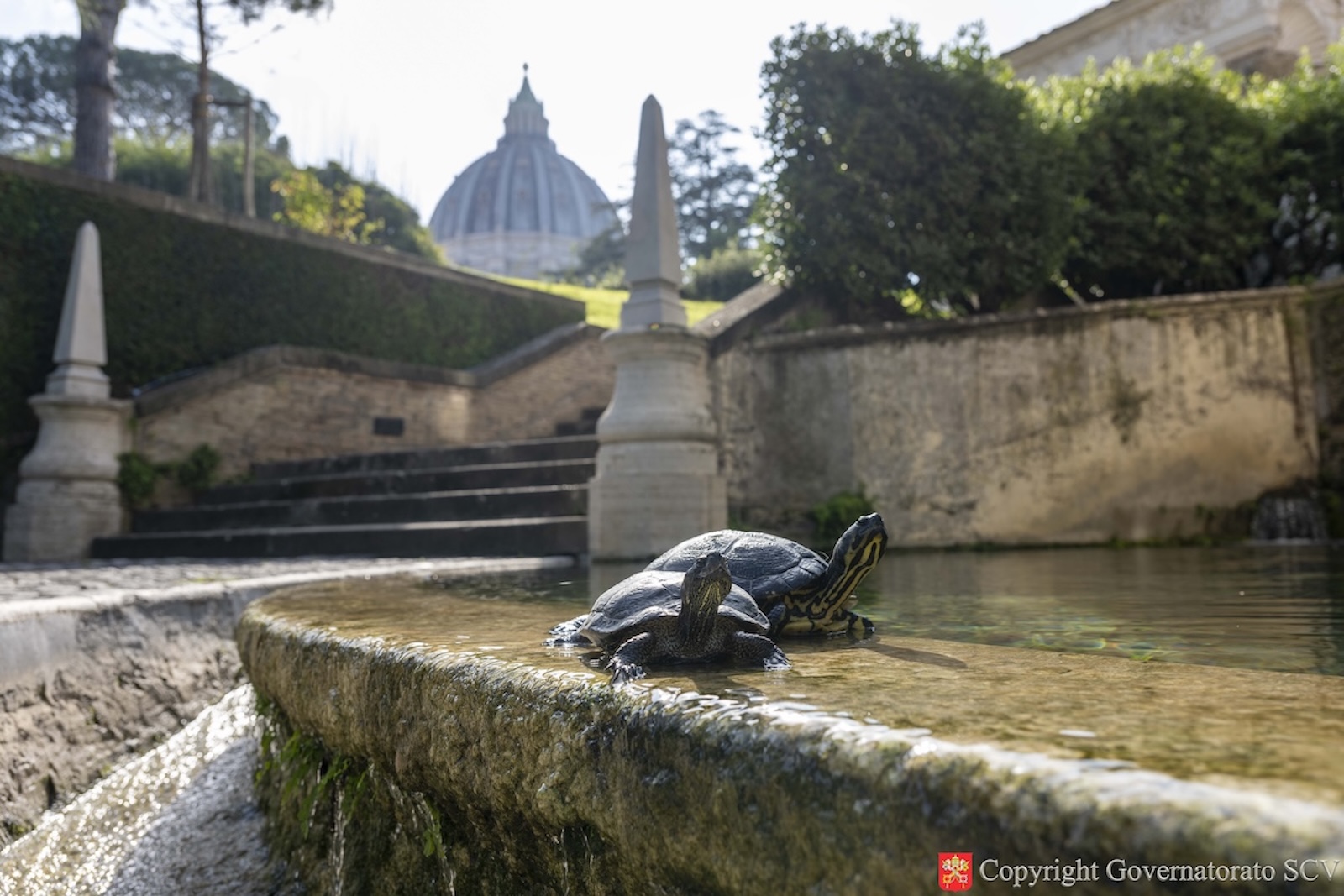


Few may realize that beneath the surface of the gardens and monumental complexes of Vatican City State lies an “invisible city of water”: irrigation facilities, water supply networks, storage systems, pumping stations, control valves, and booster pump systems. More than one hundred historic fountains in the Vatican are the most visible feature of this system, yet beneath the ground lies a complex water distribution network consisting of separate pipelines and circuits that require constant monitoring and scheduled maintenance.
Water management in Vatican City State involves the daily planning, maintenance, and rigorous oversight of strategic infrastructure and facilities. Salvatore Farina, an engineer and Director of the Governorate’s department of Infrastructure and Services emphasizes that the objective is to ensure “the full functionality, safety, and enhancement of Vatican City State’s infrastructure.” Alongside efforts to optimize water resources, the Directorate’s operational plan includes continuous oversight of the fire protection network, with particular attention to upgrading fire protection pipelines and monitoring water storage levels to safeguard a historical, artistic, and botanical heritage that is unique in the world.
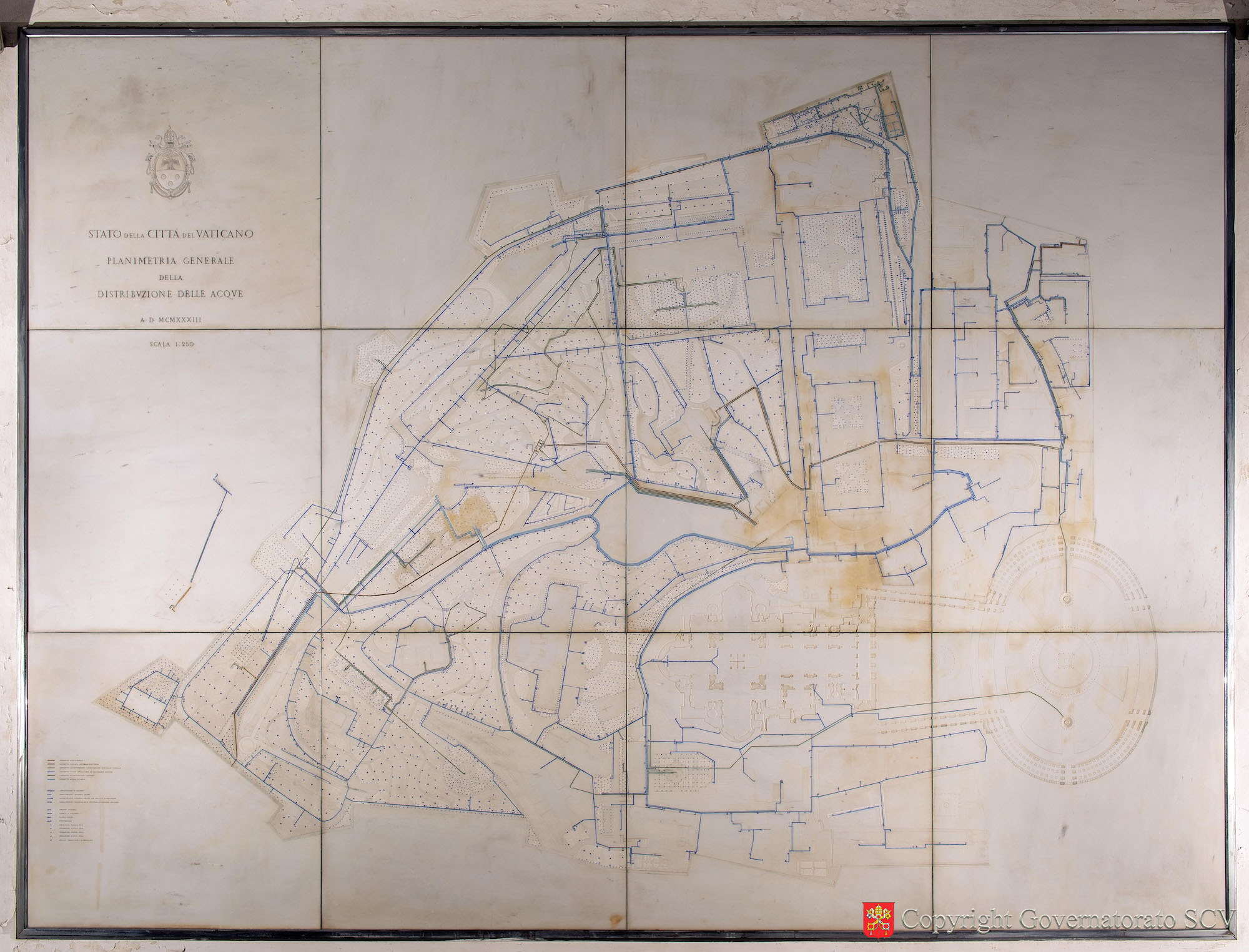
A Marble Map: A Record of the Underground City
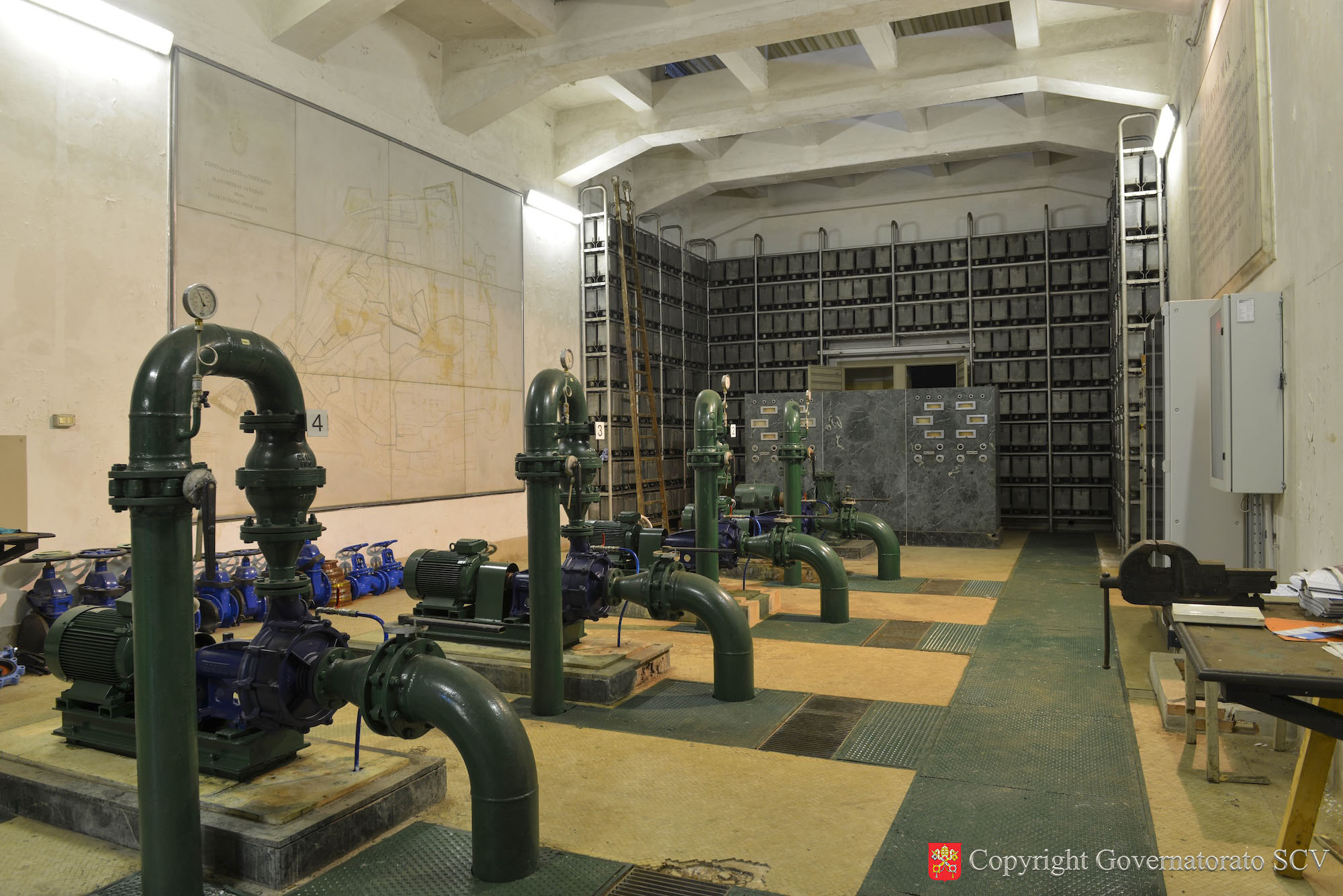
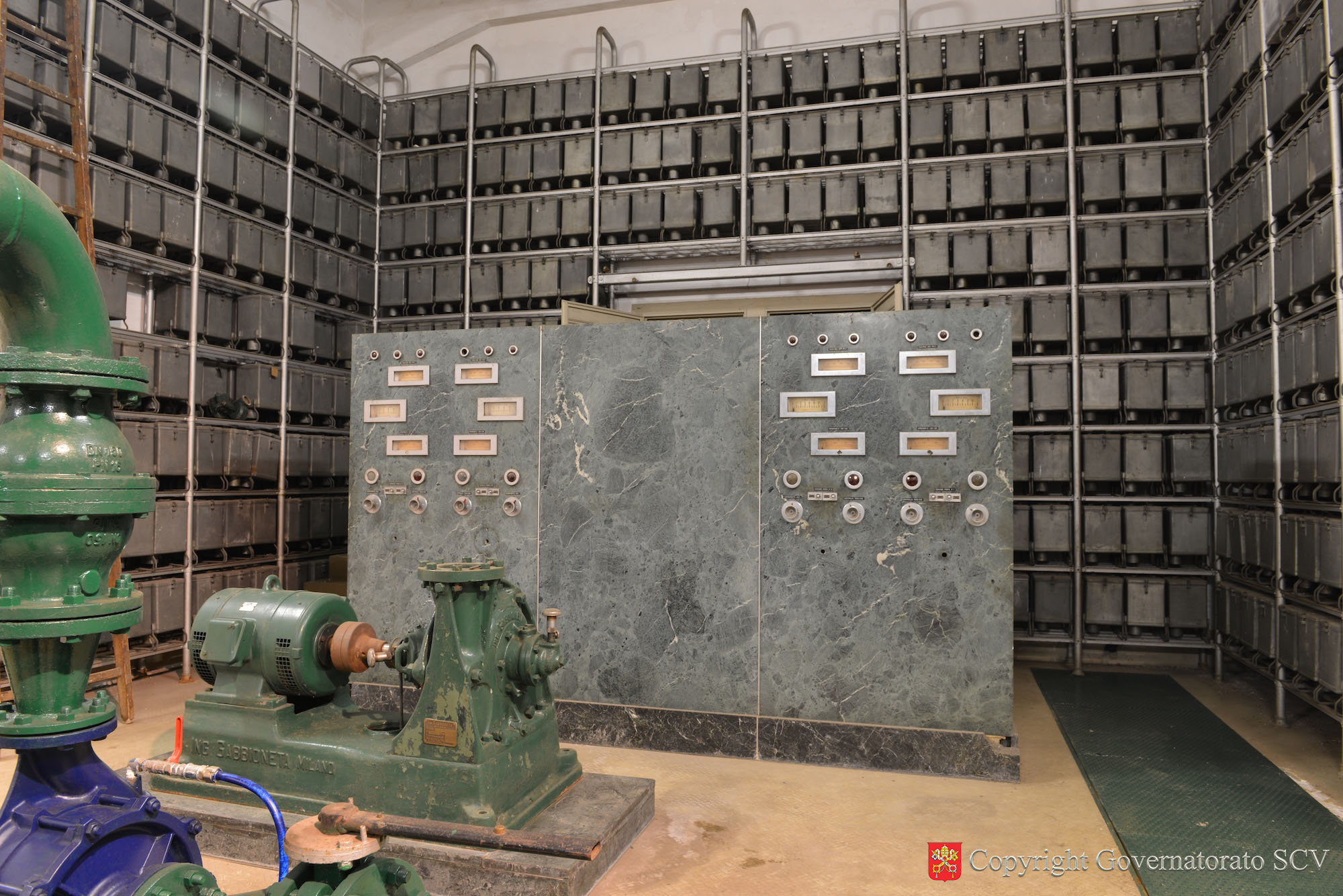
This commitment has deep historical roots, and its most eloquent testimony is preserved in a place largely unknown to the public. Inside the Vatican Water Station, an underground technical facility normally not seen by visitors walking through the Gardens, stands a large marble map created in 1933. The title of the map is itself a statement of purpose: “Vatican City State – General Plan – Water Distribution.”
Sculpted in Carrara marble by the historic Medici firm and consisting of twelve panels, the map provides a remarkably precise depiction of the State’s water distribution network at the time. The Water Station itself was built between 1932 and 1933, after the establishment of Vatican City State, and inaugurated by Pope Pius XI on May 12, 1933. Its hydraulic pumps rest on bases made of various types of fine marble, including Verde Alpi, Rosso Antico d’Italia, and Pietra di Trani, materials also used to clad the original control panel.
This choice illustrates how an essentially technical facility could be designed with particular attention to architectural quality while ensuring the supply of drinking water, fire protection, the operation of fountains, and the irrigation of lawns and wooded areas.
Water Networks, Sources, and Strategic Storage
Because Vatican City State does not have sufficient independent water reserves within its territory to meet its overall needs, it relies on a diversified supply system. Water for drinking, food preparation, and domestic use comes from the network operated by ACEA ATO2, supplied primarily by the Peschiera-Capore Aqueduct.
For technical purposes, irrigation of the Vatican Gardens, and the network serving more than one hundred historic fountains, the system historically drew on the ancient Trajan-Paul Aqueduct (Acqua Paola), which obtained its water from Lake Bracciano until July 2017. Following an excessive decline in the lake’s water level and the resulting regulatory measures prohibiting the use of lake water to supply Vatican City State, non-potable water is now provided by ACEA ATO2 through the Grotta Rossa pumping station.
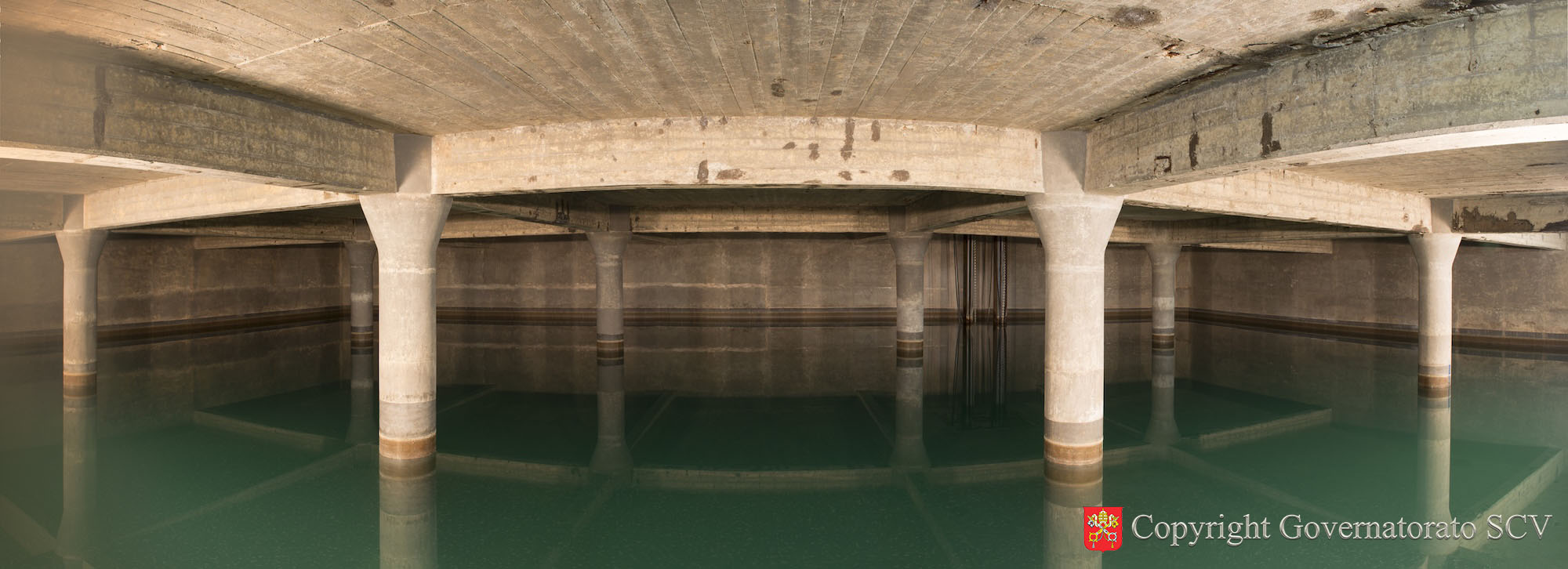
Alongside the pipelines, water storage systems play a fundamental role. Technical documentation identifies the large Acqua Paola reservoir near the Tower of St. John, constructed in 1930 with a capacity of approximately 2,000 cubic meters for irrigation and firefighting purposes, as well as a 4,000-cubic-meter drinking water cistern located beneath the Leo XIII Building in the Vatican Radio area.
The fire protection water network, installed in 1934, extends for approximately 30 kilometers and includes more than 500 fire hydrants. It is supplied by the Acqua Paola reservoir, which has a capacity of approximately 2,000 cubic meters and can deliver up to 45 liters per second. When necessary, the network can also be connected to the 4,000-cubic-meter drinking water reservoir.
Regarding the engineering vision and strategic planning behind these projects, engineer Domenico Sandulli emphasizes that “every project requires a collective effort, in which digitalization and technological innovation become essential tools from the earliest planning stages,” with the aim of “delivering solid, functional infrastructure designed with a constant eye toward the future.”
Water-Efficient Irrigation and Emergency Management
One of the most significant challenges concerns the Vatican Gardens, which occupy more than half the territory of Vatican City State. The modernization of the irrigation system dating back to 1932–1933 has introduced more durable pipelines, automated systems, and precision water distribution.
Along approximately twelve kilometers of boxwood and euonymus hedges, drip irrigation remotely controlled through a server operated by the Gardens and Environment Service has made it possible to achieve estimated water savings of approximately 60 percent. This approach is complemented by the use of non-potable water drawn from wells within the State for landscape irrigation and street cleaning.
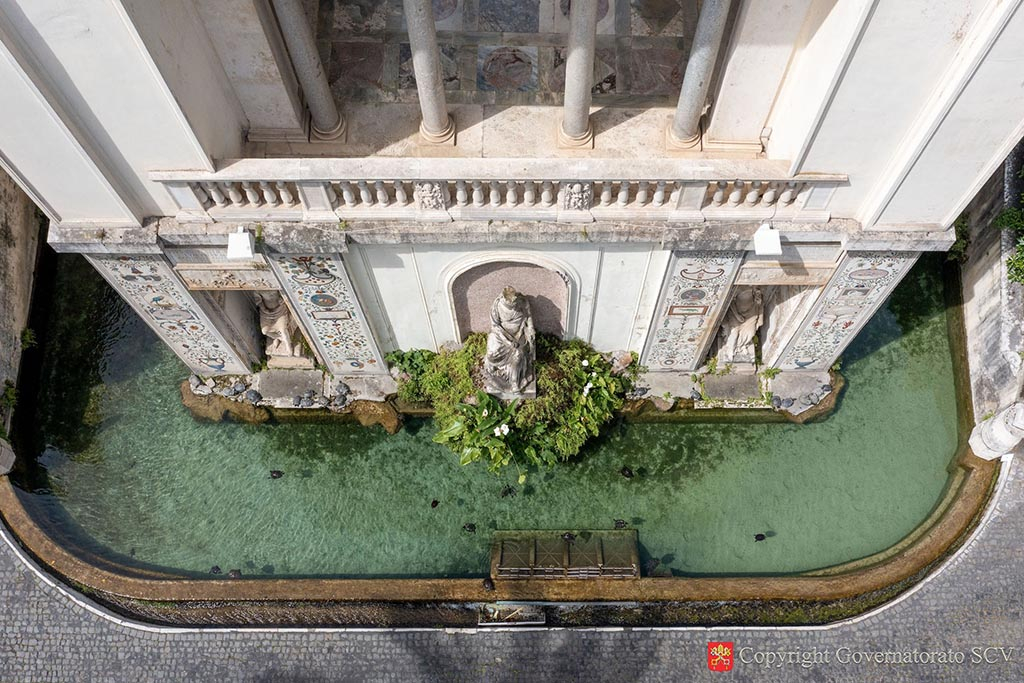
The fountains are the most visible part of the infrastructure. Some are connected to closed-loop systems in which water is filtered, treated to prevent limescale buildup, and recirculated using energy-efficient electric pumps.
A significant precedent dates back to July 2017, when, during the severe drought affecting Rome and the Lazio region, the Governorate ordered the fountains throughout Vatican City State to be turned off, including those in the Vatican Gardens and St. Peter’s Square. This marked a historic water management decision in response to an emergency.
A Network Undergoing Renewal: Digitalization and Predictive Maintenance
The Directorate of Infrastructure and Services’ 2026 program provides for the gradual modernization of water supply and fire protection infrastructure throughout Vatican City State, in cooperation with ACEA ATO2.
Technical oversight makes use of Internet of Things (IoT) technologies. The underground non-potable water pipeline originating at the Piazza Carpegna Water Station is continuously monitored by highly sensitive level sensors and data loggers capable of detecting changes in flow rates and abnormal flow patterns.
In 2023, the hydraulic distribution system of the Apostolic Palace underwent a complete overhaul, including the reconstruction of the pressurization station in the Cortile del Triangolo (Triangle Courtyard) and the water distribution room in the Borgia Tower.
At the former, a modern dual-pump inverter-controlled pressurization unit and a distribution manifold system made of fiber-reinforced polypropylene (PP-FR) were installed. At the latter, wear-resistant Max steel manifolds were used, replacing the old storage-tank-based distribution system with a modern, continuously supplied water distribution network equipped with remote monitoring and control through a data rack.
Underscoring the importance of caring for the Vatican State’s infrastructure and maintaining a constant on-site presence, engineer Carlo D’Alessandris, Head of the Maintenance Office within the same Directorate, points out that “a well-designed project requires equally attentive and consistent care over time.”
This daily commitment is aimed at “ensuring both operational continuity and the highest levels of reliability and safety for the structural and technological components of the infrastructure, for the benefit of the entire community.”
From Engineering to a Culture of Care
Water management forms part of the path outlined in the Encyclical Laudato si’ and finds a fundamental point of reference in Pope Leo XIV’s prayer intention for September: “For the Care of Water.”
In his message, the Holy Father calls for this precious resource to be safeguarded “with gratitude, justice, and responsibility,” reminding us that water is “a universal gift, a right without borders.”
Throughout Vatican City State, this message is translated into daily practice through network maintenance, the separation of water supplies according to their intended uses, scheduled irrigation, and the progressive modernization of facilities.
The Directorate’s expertise also extends to providing technical support for cultural initiatives such as AQVA, the Vatican Apostolic Library’s exhibition project dedicated to the theme of water.
The exhibition, inaugurated by Pope Leo on September 14 as part of the five-year exhibition series “Catastrophe and Wonder,” benefits from the Governorate’s cross-disciplinary support and interdisciplinary expertise in its planning, design, and installation.