

Interview with Chiara Principe, Coin Artist for the Vatican City State Mint

Inspiration, study, technique and experience
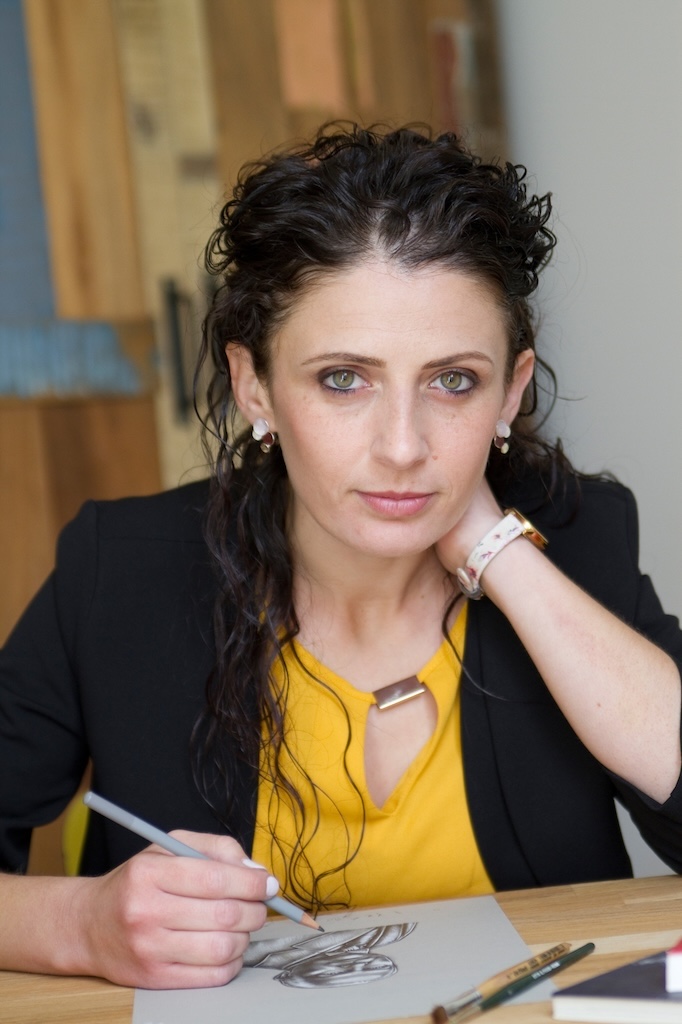
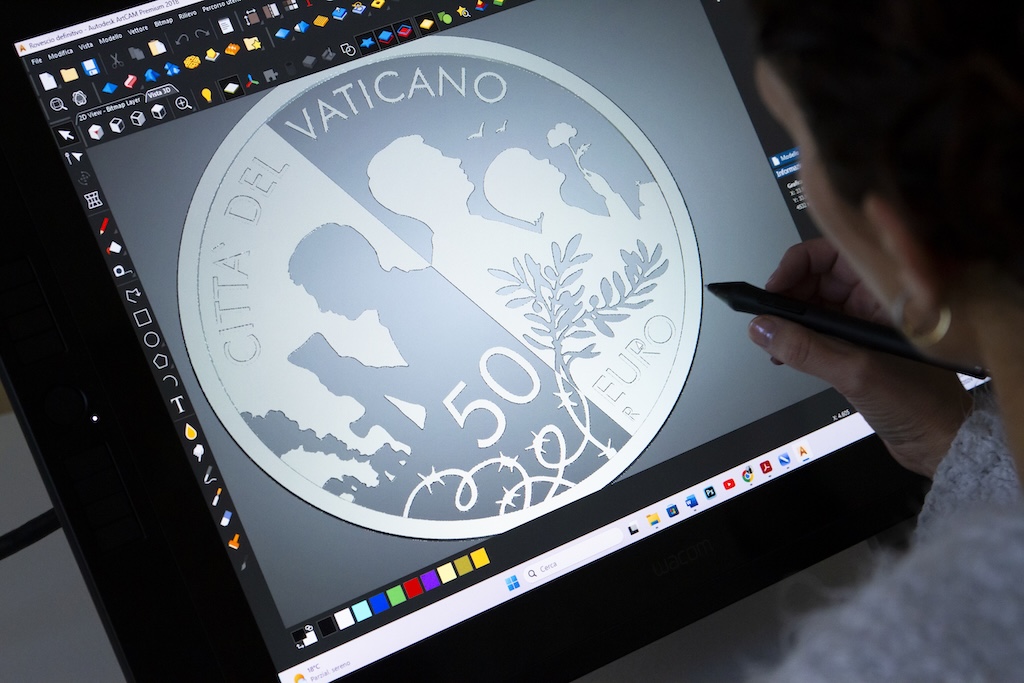
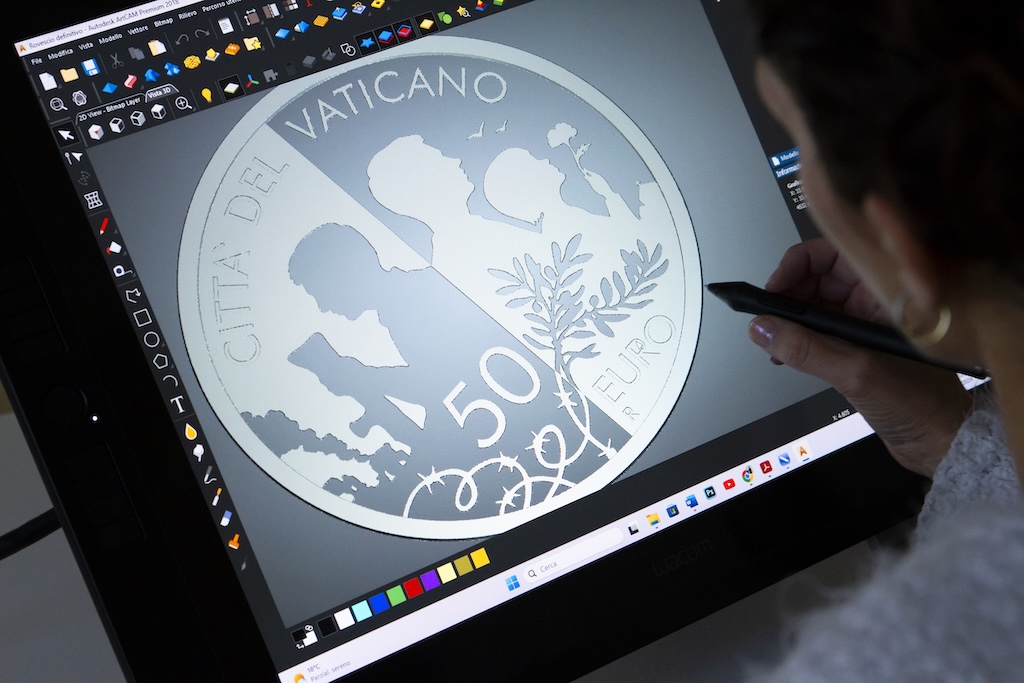
For the first time in the history of the Vatican City State’s numismatic issues, the artistic and creative process behind a coin was carried out entirely on a computer, without using pencils, paper, or sculpting materials, but only the stylus of a graphic tablet. Through this innovative technical approach, the 2024 50-euro gold coin themed “War and Peace” was created. This coin won the Best Gold Coin category of the prestigious international Coin of the Year (COTY) 2025 awards. Achieving this important recognition was the result of a team effort, as explained in this interview by Chiara Principe with www.vaticanstate.va, the designer who has been collaborating with the Vatican City State Mint for thirteen years in coin design.
What was the main inspiration behind the design of this particular coin?
Among the Vatican’s numismatic issues, each year two collector coins accompany the annual proof set of euro coins of the Vatican City State: a 20-euro silver coin and a 50-euro gold coin. The themes of these coins were traditionally chosen by the selected artist from those closest to the Pope’s heart in the final year of his pontificate. The issues are emblematic of the papal magisterium of that particular year so when I was commissioned to design the 50-euro coin, I felt it was necessary to seize the opportunity to shed light on the critical state of war that was then — and still is — afflicting Europe, the Middle East, and many other parts of the world that are often overlooked. In 2024, Pope Francis’ calls for peace never ceased, especially following the outbreak of the most recent bloody conflict in the Holy Land in October 2023.
I proposed dedicating my coin to this urgent call for peace, aiming to do so as directly and less rhetorically as possible. The coin was titled “War and Peace,” as the main inspiration came precisely from this dualism, this stark contrast between evil and good, hatred and love, death and life.
Did you want to convey a specific message through your work?
The eternal struggle between good and evil has always marked human history: the story of salvation itself begins with Adam and Eve’s disobedience in eating the fruit of the knowledge of good and evil! From that moment on, each of us is faced daily with this intimate choice: to pursue good and build peace, or to pursue evil and drift away from God, waging war within ourselves and against others.
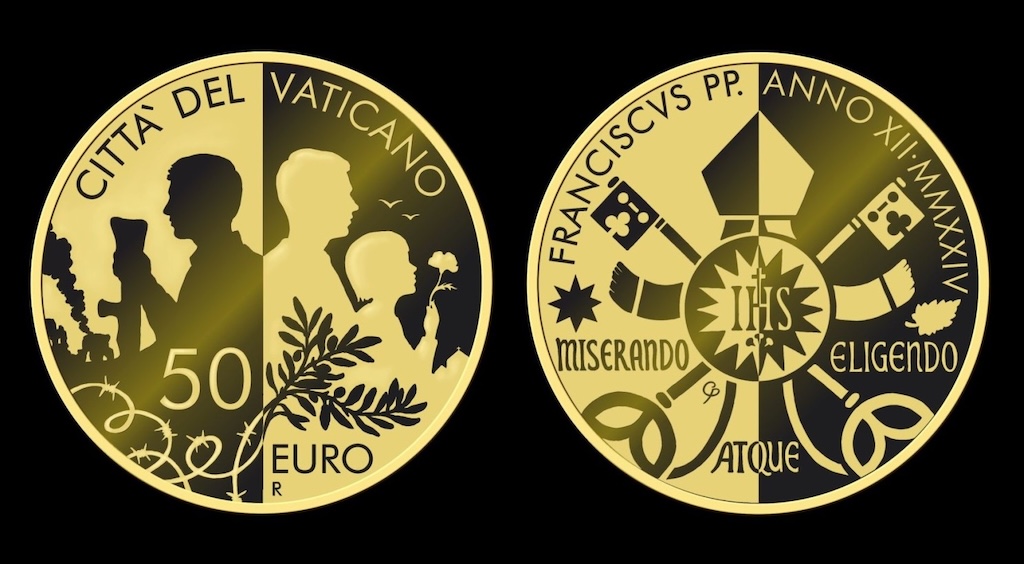
This innate dualism of the human heart is represented in the coin’s design by a vertical crack dividing and contrasting two opposing scenes. On the left, we see the hollow silhouette of a soldier — a man emptied by the horrors of war — with smoke from explosions rising in the background and barbed wire seemingly imprisoning the world. On the right, the barbed wire turns into an olive branch, and the same man’s figure now appears in relief, no longer alone but accompanied by symbols of a peaceful future: a little girl holding a flower, standing before a landscape of life rather than death. The simplicity of these images makes the coin’s message immediately understandable, placing the viewer before a choice: “Which side do you choose?” God, after all, leaves us free to choose! Just as Adam and Eve were free, so too are we, in our daily lives and actions, free to turn away from Him or live in His light and fullness. This applies also on a global scale: when choosing between good and evil, peace and war, nations determine the fate of their peoples.
What were the main stages of your creative process? Did it start from a sketch, an abstract idea, a symbol?
The initial inspiration always begins with a research and study phase, which helps artists create an emotional connection with the work they are about to produce. In this case, the desire to address the topic through contrasting imagery emerged almost immediately. The next step is always to synthesize inspiration into an image that takes into account the inherent characteristics of a coin, such as its dimensions, material, and technique.
Starting with the idea of dividing the coin vertically into two halves on both sides to represent the contrast between war and peace, the composition gradually evolved, focusing mainly on the different iconographic and sculptural scenarios represented in each half. On the left side, depicting war, the man is rendered as a hollow silhouette, essentially at zero relief, visible only through the raised plane of the surrounding sky. This symbolizes how war literally drains a person of dignity and humanity, leaving him hollow and alone, devoid of intrinsic form. On the right, by contrast, the man is no longer alone, and both his silhouette and that of the little girl appear in relief, full both literally and symbolically. This interplay of negative and positive planes is highly symbolic but also provides perfect compositional balance and was the result of a careful and lengthy design process. So while the initial inspiration is instantaneous, the study of the composition is always a process of trials, verifications, and accumulated experience.
How long did it take to finalize the design?
The initial design study and proposal phase for submission to the Vatican City State Mint lasted about three weeks, followed by additional rounds of requested feedback and modifications. In total, the entire design process took about a month and a half, after which the modeling phase began.
Did you draw on historical, cultural, or personal references in creating this coin?
The theme of the dualism between War and Peace, Good and Evil, certainly reflects the Catholic cultural background I grew up with. However, I think the idea of depicting peace through the growth of a new generation is closely tied to my personal experience as a mother of two young children, which makes me deeply sensitive to the theme of safeguarding their future.
How did you react when you learned that the coin had won the award?
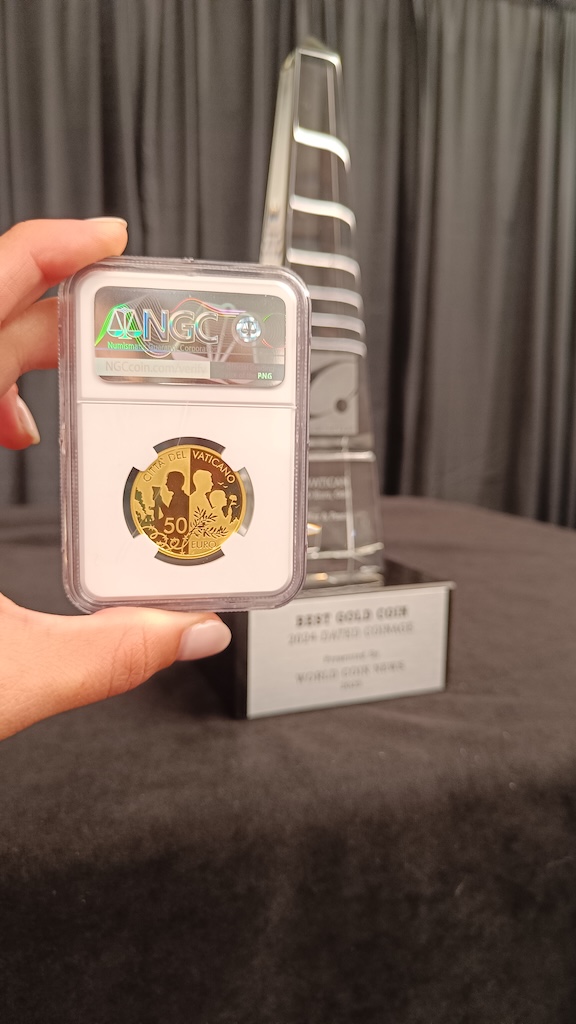
My first reaction was surprise, as the announcement caught me off guard during the Coin of the Year Awards ceremony at the World’s Fair of Money in the United States. I was there on business and, knowing about the ceremony and the coin’s nomination, I attended the event out of great curiosity. The Vatican’s 50-euro coin had made it to the finals as one of the ten most beautiful gold coins of 2024. When it was announced as the winner, the joy and emotion I felt were indescribable.
The president of the American Numismatic Association delivered a beautiful speech explaining the reasons for the award, describing the design in detail, and thanking the Vatican as the issuing state, myself as the designer, and artist Claudia Momoni as the engraver for the excellent work of minting such a powerful and communicative image on a subject as urgent and important as peace. The official photos likely captured all the profound joy and emotion I felt in receiving this award on behalf of the Vatican Mint and everyone involved in producing this coin.
What does receiving this recognition mean to you as an artist?
Winning this award holds great value and significance for me, not only professionally. Artistically speaking, in this field, winning one of the Coin of the Year Awards is perhaps one of the highest recognitions possible and thus a source of great prestige. Personally, however, I am especially happy that this award was won by a coin made for Vatican City. The Vatican Mint gave me my very first opportunity as a coin artist: at the beginning of my career, at just 25 years old and armed only with passion and training, the Governorate allowed me to prove myself by signing my first coin. My freelance career began and grew through Vatican issues before expanding and maturing. Now, more than thirteen years and countless coins later, seeing one of my Vatican works receive one of the highest honors is deeply emotional and meaningful. Handing this award over to the Vatican feels like a way of giving back the trust placed in me so many years ago, which opened doors for my art and gave me the chance to show it to the world.
Was there a particular technical challenge in translating your artistic vision onto such a small, detailed surface?
Direct, immediate communication is one of the prerequisites of numismatic design, but it is often difficult to achieve - telling stories and conveying meaningful messages within a few millimeters of diameter, in a way that is instantly understandable at first glance, is a huge challenge. Summarizing everything within the limited “canvas” of a coin is by far the greatest challenge, but designs like this 50-euro “War and Peace” coin reassure me that years of challenges — sometimes unsuccessful, sometimes successful — have trained me in my quest for synthesis and compositional harmony.
Technically, this coin also represents a first. For the first time in the history of Vatican coinage, the artistic creation process was carried out entirely digitally, without ever touching a pencil, paper, or sculpting materials, but using only the stylus of my graphic tablet. Given the highly graphic nature of the design, it was clear from the outset that the best tool, particularly for creating the minting model, was digital 3D software. My proposal was met with interest and curiosity by the Vatican Mint.
This “digital debut” for Vatican issues marks a significant step into the future and is also the result of the forward-looking approach the Vatican Mint has embraced in recent years, which — in collaboration with the Italian Mint — has introduced new products and techniques to complement the traditional range of coins familiar to collectors.
What does it mean to collaborate with the Governorate in creating coin designs?
Being among the artists who regularly collaborate with the Governorate in designing and sculpting the coins of the Vatican City State is both a great honor and a constantly evolving challenge. Throughout history, coins and their iconography have always reflected their times, serving as a narrative tool for each State to communicate to the world and to the annals of history its message about a particular historical period. Continuing this tradition through coins — which are both collectible items and official state currency issued by law — is a beautiful yet delicate responsibility, especially in this turbulent era of global and ecclesial change.
Even a century from now, those who study the coins we create today will read the history of the Church and the papacies, grasping their sensitivities and inclinations. Coins hold a profound historical and cultural significance that we often forget!