

Working Session of the World Meeting on Human Fraternity 2025

Placing the Human Person at the Center: Towards an Economy of Care and Dignity
In recent decades, two epochal events—the global financial crisis in 2008 and the Covid-19 pandemic—have profoundly shaken the foundations of traditional economic models, clearly exposing their structural limitations. In this context, a reflection has gained renewed momentum across academic, political, and religious spheres: the urgent need to rethink the economy starting from the centrality of the human person, with his or her inviolable dignity and inherent fragility.
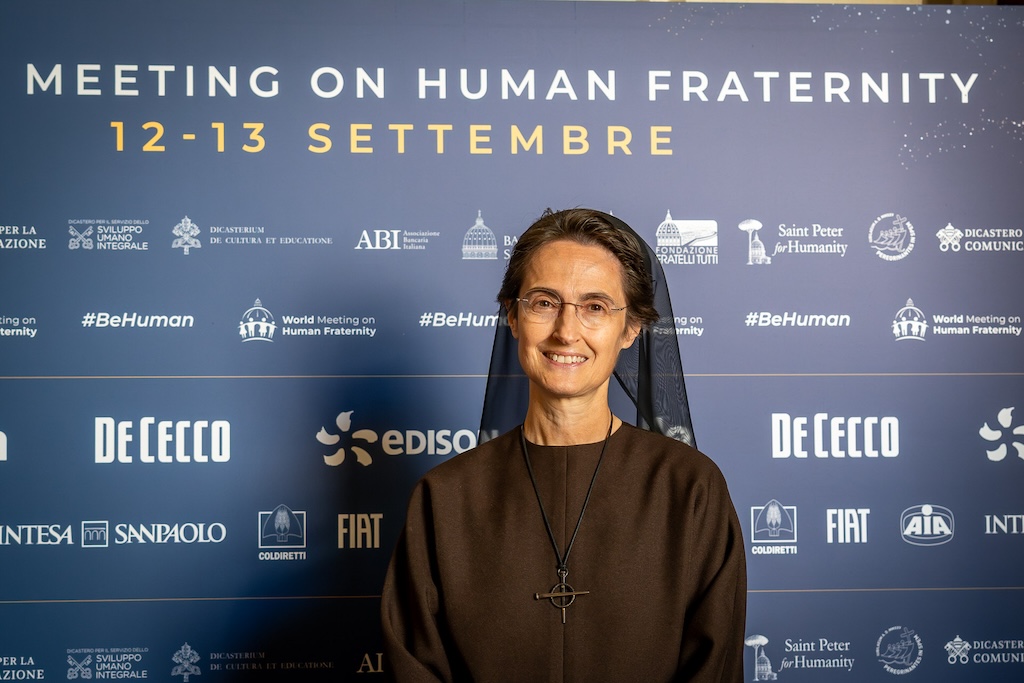
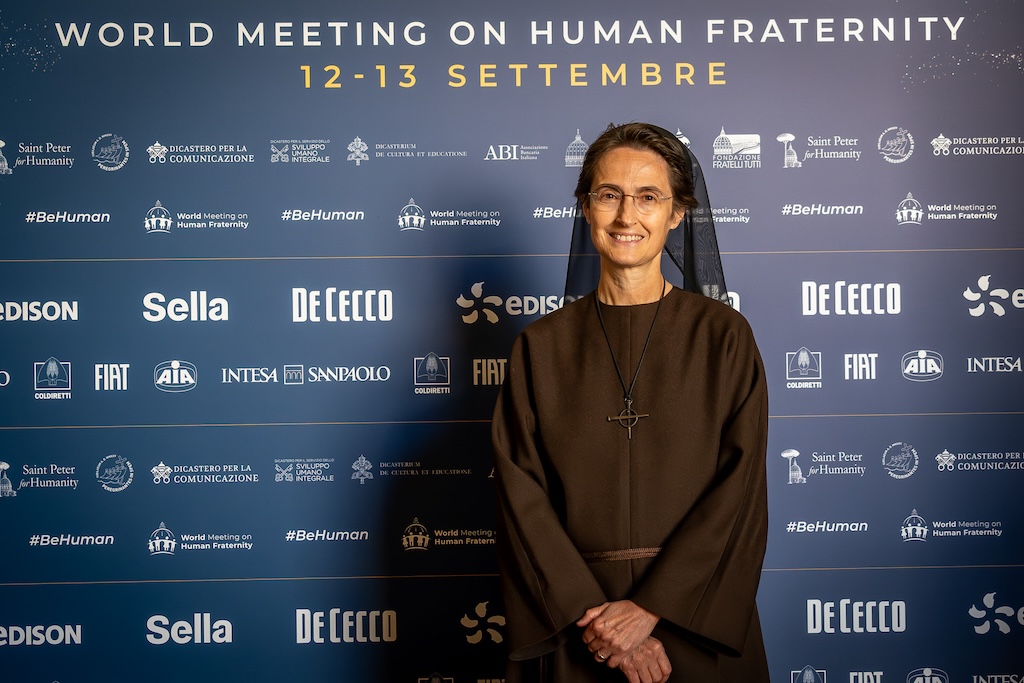
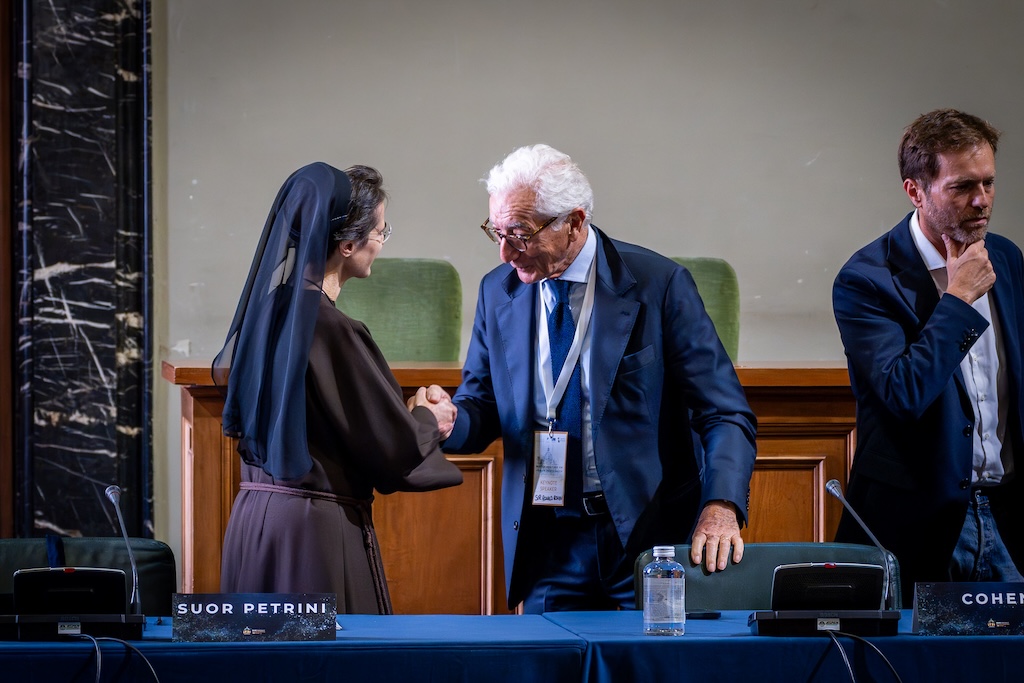
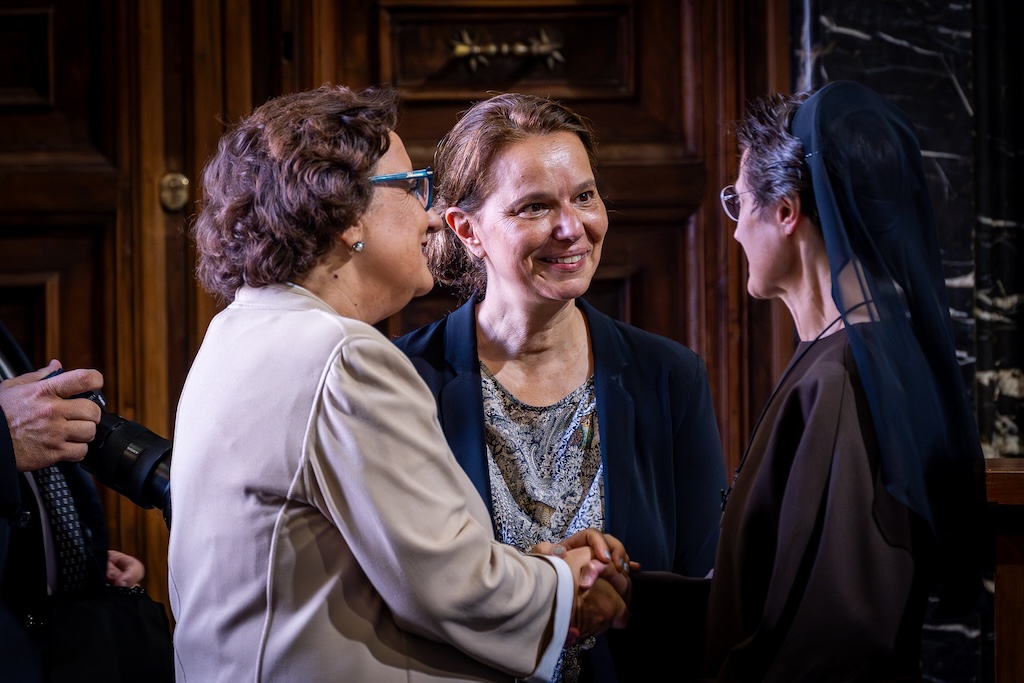
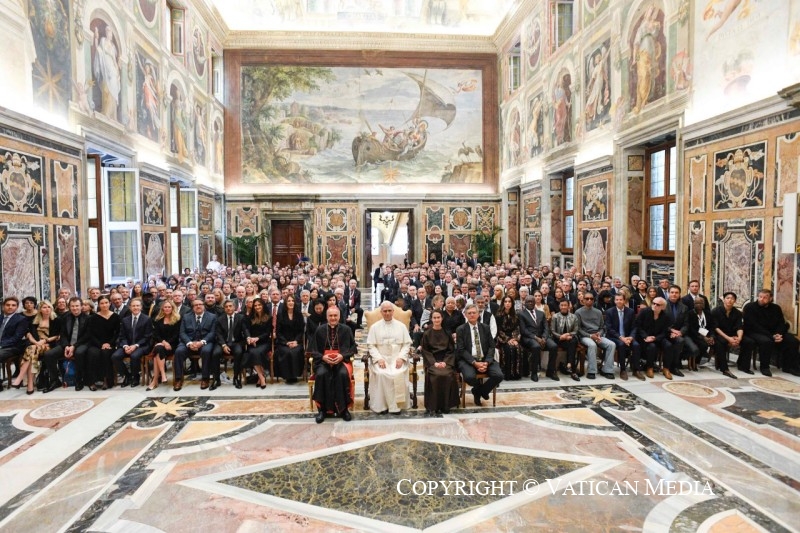
This was the focus of the talk by Sr. Raffaella Petrini, President of the Governorate of Vatican City State, at the working session on economics and finance, titled “For a Human Economy and Finance.” The session took place in Rome during the World Meeting on Human Fraternity 2025, on the morning of Friday, September 12.
Human beings, the President emphasized, are by nature both needy and interdependent and cannot meet their needs on their own. The economy, therefore, should return to its original role: mediating the relationship between humanity and its environment, organizing resources in a way that ensures dignified living conditions for all, without leaving the most vulnerable behind. This means, she explained, moving beyond strictly utilitarian logic oriented toward immediate and individual profit, in favor of a broader and more inclusive vision—one attentive to the long term, to the social and environmental impact of decisions and to solidarity and equity.
Within this framework lies the concept of integral human development, introduced by the Church’s Social Teaching and embraced with renewed vigor by Pope Francis. Sr. Petrini noted that this model does not exclude markets or enterprise but situates them within a larger vision in which the ultimate goal of economic activity is not the accumulation of wealth but the promotion of the human person and the community. It is an economy that recognizes the value of human creativity, of private property understood as responsibility, and of financial transparency as a means for the virtuous circulation of wealth—provided all these serve human freedom and dignity.
This vision, she stressed, while deeply rooted in the Christian tradition, is also shared, at least in part, by many secular thinkers. Amartya Sen, in his famous 1979 lecture “Equality of What?”, broke with traditional economic thinking by questioning classical metrics of equality and well-being, proposing instead a new approach based on capabilities—that is, the real life opportunities available to each person. Alongside him, thinkers such as Martha Nussbaum expanded the notion of well-being to include rights, freedoms, relationships and opportunities for personal flourishing—all essential components of a good life.
In line with these reflections is Pope Francis’s strong call for a return of economics and finance to an ethic centered on the human person so that money may once again be a tool and not an end, serving humanity rather than dominating it. This is an exhortation to avoid falling into the trap of a dehumanizing technocratic system or into the “deification of the Market,” as provocatively denounced by theologian Harvey Cox. The President of the Governorate warned that a new economic culture is needed—one that values relational goods, cooperation, solidarity and trust.
From these premises comes the proposal for an “economy of care”—or an “economy of hope,” as Pope Leo XIV called it—capable of embracing the complexity of human life, promoting organizational and production models that prioritize relationships, collective well-being and the safeguarding of our “common home.” During his address to participants in the Third World Meeting on Human Fraternity, the Pope invited all to seek and promote pathways—both locally and internationally—that foster new forms of social charity, interdisciplinary collaboration, and intergenerational solidarity. These paths, he said, must be rooted among the people and include the poor not merely as recipients of aid but as active protagonists, capable of reflection and of making their voices heard. He also encouraged ongoing, steady work that can spark a shared process of reflection on humanity and fraternity—a process that does not stop at the proclamation of rights but leads to concrete choices and genuine motivations capable of transforming daily life.
The Pope emphasized the need to build a great “alliance for humanity,” founded not on domination or economic interest but on mutual care; not on profit, but on the capacity to give; not on suspicion, but on trust. Care, generosity and trust are not secondary virtues to be practiced in one’s spare time; they must become the foundation of an economy that does not destroy but rather nurtures and broadens participation in the life of all.
In this model, ruthless competition gives way to collaboration; the short-term, maximum-profit mentality is replaced by a long-term strategy rooted in sustainability, participation, and shared responsibility.
Such an economy, Sr. Petrini explained, can and must be integrated into a broader political, cultural and social vision aimed at the common good. As Pope Francis affirms, only then can we “channel in new ways” the extraordinary energy of human creativity, ensuring that it is not manipulated by distorted interests and that the relationship between means and ends is restored to balance. The former—economic and financial techniques—must remain tools, while the latter—the dignity of the person, social justice, peace—must remain the ultimate goal.
From this perspective, the President emphasized, work, business and organizations must be reimagined with a human-centered approach to resource management. These should no longer be mere arenas of competition but environments capable of fostering meaningful relationships, encouraging cooperation, rewarding virtuous behavior and cultivating trust. This means promoting genuine participation in decision-making processes, recognizing the value of work as a source of growth and fulfillment, and supporting alternative economic models that prioritize care, service, and mutual responsibility.
Ultimately, she concluded, an economy centered on the human person and supported by a coherent and ethical financial system is not merely a theoretical possibility but a concrete necessity. It can become a tool of care and justice, inclusion and solidarity. It can foster networks of exchange based on respect and reciprocity. Above all, it can respond to the shared fragility that unites us as human beings—all interdependent and called to walk together toward a future of greater justice, freedom and shared contentment.