

Meeting on Women's Leadership and Catholic Universities Promoted by the International Federation of Catholic Universities (IFCU)
 "Pin It")
The human person and their needs are at center
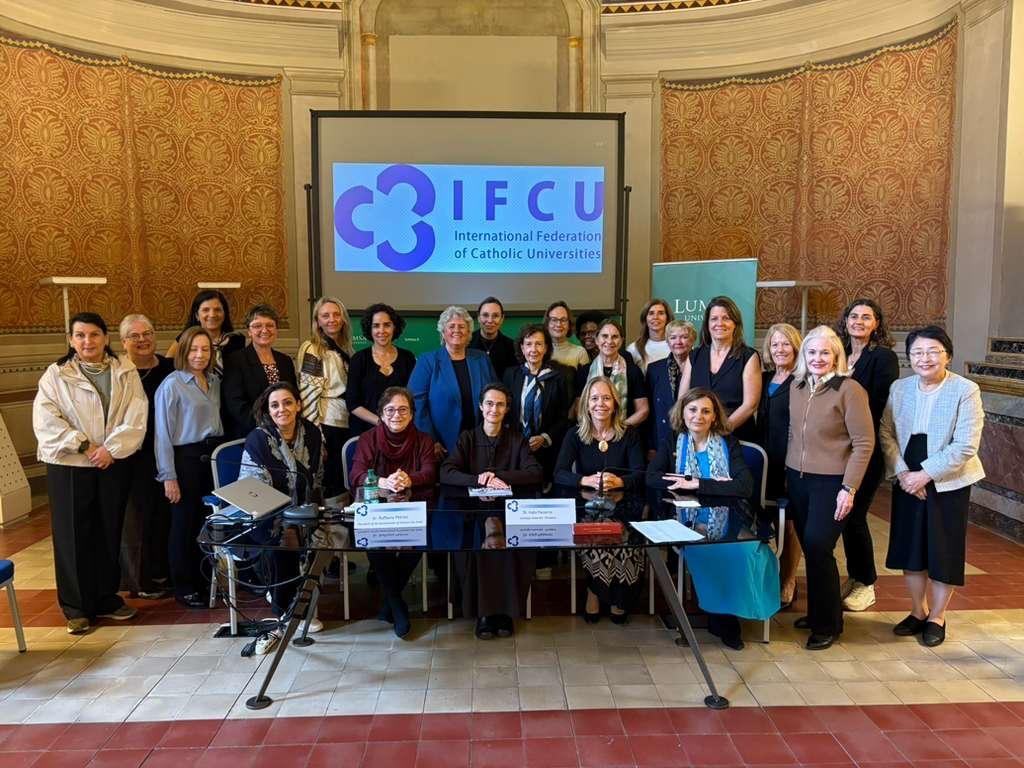
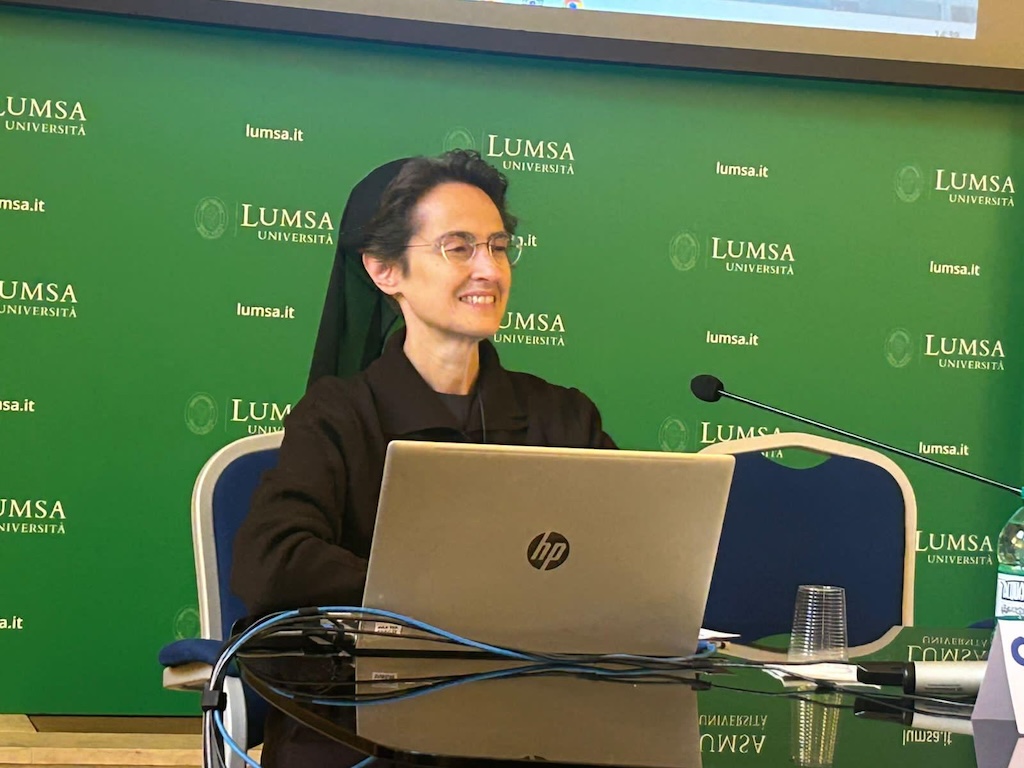
Governing a complex organization like the Vatican City State, oriented to the common good and the integral development of the human person, requires multiple skills and collaboration between individuals and departments. This was emphasized by Sister Raffaella Petrini, President of the Governorate of the Vatican City State, on Saturday, October 25, during the meeting on "Women’s Leadership and Catholic Universities," held in Rome on Saturday, October 25, promoted by the Executive Program of the International Federation of Catholic Universities (IFCU).
A good governance model—the President explained in her speech on "Governance, Financial Sustainability, and the Challenge of a Multi-stakeholder Institution"—must put the human person and their needs at the center. It must also manage limited resources fairly, transparently, and responsibly, and monitor and evaluate the effects of decisions on the external environment.
Furthermore, those who lead must be mindful and aware that every daily choice directly or indirectly impacts the three basic dimensions of human existence: God, others and creation.
The "Women Leadership and Catholic Universities" Executive Program is an immersive experience designed for rectors, presidents, and vice-chancellors ready to engage in the future of leadership. Participants reflected on the connection between governance, faith and innovation. More than training, it is a catalyst: providing leaders with the skills, vision and networks needed to shape Catholic higher education in a rapidly evolving global context.
Furthermore, according to IFCU data, women are currently an underrepresented resource in Catholic higher education leadership, holding only 8% of top positions worldwide. The Executive Program offers a unique opportunity to train and strengthen a new generation of women leaders capable of combining academic excellence with Catholic values, leading institutions with confidence, integrity, and boldness.
The IFCU aims to contribute to the advancement of knowledge and the construction of a more just and humane world in the light of Christian faith and the leaven of the Gospel. The Federation pursues this goal by promoting shared reflection on the mission of universities and through active cooperation among Catholic institutions of higher education and research. It represents Catholic universities in their relations with international organizations and institutions. It contributes to the development of higher education with a Catholic approach. It aims, above all, to ensure high quality university work and to ensure an adequate distribution of Catholic academic institutions throughout the world.
It was under the impetus of the Università Cattolica del Sacro Cuore in Milan and the Katholieke Universiteit Nijmegen in Nijmegen that the first efforts to unite Catholic universities into a Federation were made in 1924. In 1925, at a meeting at the Institut Catholique de Paris, fourteen institutions were represented in the first General Assembly. In 1927, the first list of Catholic universities was published. It was only after the Second World War that the Fœderatio Universitatum Catholicarum truly took off. Established by decree of the Holy See in 1948, it was recognized by Pope Pius XII in 1949. The name International Federation of Catholic Universities (FIUC) was adopted in 1965. FIUC collaborates with the Secretariat of State, the Dicastery for Culture and Education, AVEPRO, and various dicasteries, including the Dicastery for Promoting Integral Human Development.
Below is the speech in its original language, by Sister Raffaella Petrini, President of the Governorate:
Governance, Financial sustainability
and the Challenge of a Multi-stakeholder Institution
I would like to extend my sincere thanks to the chairs of the IFCU Executive Program for their kind invitation. It is indeed a pleasure and honor to be here today. In this talk, I will share some reflections on the topic of governance from the management perspective of a unique organization: the Vatican City State. I trust that some aspects of these reflections may be relevant to your experience in leading smaller and larger institutions of Catholic higher education.
The Vatican City State is the smallest state in the world, encompassing about 108 acres with currently 887 inhabitants, including both citizens and residents. It was created by the Treaty between the Holy See and Italy on 11 February 1929 (the Lateran Treaty) in order to ensure that the Holy See enjoys “absolute and visible independence and to guarantee its indisputable sovereignty even in the international field”[1]. It has the inspiring yet complex mission of serving the Holy Father in his pastoral work and responding to the needs of the Roman Curia, which assists him in his daily activities. Many organizational entities contribute to the operational functioning of Vatican City State by managing buildings, infrastructure, natural and artistic heritage, financial and economic matters, technology and telecommunications, healthcare, security, and safety.
Thus, the governance of the Vatican City State is expected to carry out three primary tasks that are common to all public management, albeit in a unique manner[2]:
- Managing networks of relations with multiple entities.
- Managing common goods.
- Interpreting the ideals, needs, interests, and expectations of its working community.
Regarding the first task, we must acknowledge that any organization today needs to interact with the external environment because it is never fully self-sufficient. Transnational legality also sometimes makes compliance more difficult to achieve. The complexity of global challenges requires a multi-dimensional approach, which often necessitates multiple competencies and skills. Successful leadership requires networking, the capacity to bring people together, openness to learning multiple skills, and the ability to combine specific knowledge synergistically. It is crucial to create a working environment that supports and facilitates information exchange within and outside the organization and enhances active participation. A culture of trust and collaboration among people and departments, supported by upper management, can facilitate this exchange.
With reference to the second task - the economic dimension is of particular concern - regarding the protection and use of territory, the construction and maintenance of infrastructure, and the protection of the State's artistic and cultural heritage, particularly through the activities of the Vatican Museums. Economic choices are never ethically neutral. They can promote man in his totality or favor exclusion. They can cultivate communion and fraternity or provoke inequality and inequity.
As required by canon law, the "diligence of the good father of a family" is the general principle to which all administrators must adhere in carrying out their duties. This principle is particularly relevant in relation to ecclesiastical goods (can. 1284 § 1 CIC)[3]. As managers, we are called to act as enlightened stewards of limited resources. Any administrator is responsible for caring for, protecting, and managing with fidelity and prudence what has been entrusted to him or her for a certain time. Particular attention should be given to the most vulnerable. This is especially true for leaders and organizations that work for the common good and for the integral development of the person[4].
Managing shared goods becomes a testimony to coherence, reliability, and service to a human economy centered on satisfying needs rather than pursuing profits[5]. In the broader context of this responsibility, today, the Church knows the need to review management methods at all levels and in various domains, especially in light of her openness to the outside world and interaction with the multiplicity of actors operating within it according to defined norms. This is, in part, the "premise" of the economic reform initiated by Pope Francis. Control, reporting, and supervision should not be seen as limitations of autonomy but as tools that promote communion and responsibility[6].
Principles of transparency and accountability are now mandatory for all those Catholic entities that intend to operate in a balanced and conscious manner in the economic field[7]. This requires competence and professionalism. It is essential, therefore, to ensure that religious men and women also be formed with adequate professional skills[8].
The economic dimension of sustainability requires keeping clear the distinction between means and ends. Reversing this distinction is one of the great challenges of the third millennium[9], when the objectives are dictated by economics and technology, instead of providing the tools to achieve the common good, which must be increased and preserved for future generations[10].
The third task requires particular attention to human resources. A sensitivity to integral human development—a core principle of Catholic Social Teaching—calls for a humanistic management model focused on the needs of individuals and their overall development. A recent McKinsey article about the evolution of leadership in contemporary organizations stated that, rather than directing and controlling people, leaders should serve the people they lead[11]. In other words, the focus is shifting from maximizing value for shareholders to making the lives of team members easier physically, cognitively, and emotionally.
Modern organizational leadership involves bringing people together to encourage interaction, multi-disciplinary exchange, and collaboration[12]. Mastering this type of leadership requires developing and maintaining positive relationships with others[13]. Empathy and understanding are key factors today, especially as research has shown an increase in mental health issues and incivility at work following the pandemic, which negatively impacts personal well-being[14].
When discussing integral human development, it is important to mention the current challenges and opportunities posed by the recent development of artificial intelligence (AI)[15]. The Governorate of the Vatican City State has begun taking steps to encourage internal reflection on the ethical use of AI by promoting regular training courses on digital technology, particularly artificial intelligence. Furthermore, on January 1, 2025, the Pontifical Commission for the Vatican City State issued guidelines on artificial intelligence that are now in effect.
These guidelines promote concrete measures to ensure the ethical development and use of AI in Vatican City. They address the need for security and transparency. Furthermore, the guidelines provide a framework for technological advancement committed to fraternity and peace while ensuring the fair and sustainable distribution of the benefits of AI.
Finally, the overarching principle that comprises the three tasks I briefly described in relation to the governance of Vatican City State is the environmental dimension. Many of the Vatican City State’s current efforts are related to protecting our common home, a value upheld by both Pope Francis and Pope Leo. On 6 July 2022, the Vatican City State applied for accession to the United Nations Framework Convention on Climate Change (UNFCCC). The application was ratified and entered into force on 4 October 2022, on the condition that the Vatican commit to applying its provisions within the Leonine walls. The limited geographical size of Vatican City makes it possible to pursue ambitious green energy and self-sufficiency objectives. However, due to its important mission of serving the Holy Father and the Roman Curia, positive strategies in this area of development adopted by Vatican City State can also profoundly impact the international community and set an example for other countries and organizations to follow.
In conclusion, governing any complex organization – like the Vatican City State – that strives to be oriented to the common good and to pursue the integral human development of its members requires decision-makers who can combine skills and cultivate collaboration. This model of governance must remain centered on the needs of the human person; allocate limited resources to satisfy those needs while guaranteeing transparency and accountability; and verify and monitor the impact of implemented strategies on the external environment. It is a governance model that requires leaders capable of care, aware of the fact that their day-to-day decisions affect, directly or indirectly, the three basic dimensions of human existence: God, others, and creation.
Thank you.
[1] Treaty agreed between the Holy See and Italy, Preamble, 11 February 1929.
[2] Cf. E. Borgonovi, I manager pubblici tra evoluzione e cambio di paradigma, «Rivista Italiana di Public Management» 3 (2020) 17-40.
[3] Cf. Motu Proprio On Transparency, Control and Competition in the Procedures for the Award of Public Contracts of the Holy See and Vatican City State (19 May 2020).
[4] It is so stated in the incipit of the Motu Proprio Fidelis Dispensator et Prudens (24 February 2014).
[5] Cf. Francis, Evangelii Gaudium, 53-57; R. Petrini – A. Sacco, Arricchirsi, Cittadella Editrice, Assisi 2024, 57-59.
[6] Congregation for Institutes of Consecrated Life and Societies of Apostolic Life, Economy at the Service of the Charism and Mission, LEV, Vatican City State 2018, 41-44.
[7] In the synodal perspective, the need to introduce structures and processes of verification that help to account for the exercise of one's responsibilities in the local Churches was reconfirmed (cf. General Secretariat of the Synod 2024:3b).
[8] Carolyn Woo (2022) believes that modern leadership operates through the ability to gather people together and the capacity to promote relationships, in order to enhance consistence and reciprocity within an organization.
[9] Hence Pope Francis’ explicit call on politics not to submit to the economy, just as the latter must not submit to the efficiency-oriented paradigm of technocracy, as expressed in his social encyclical Laudato Si’ (2015),109.
[10] Cf. E. Beccalli, Per una nuova economia, Il Sole 24 Ore, Milano 2024, 3-6.
[11] Cf. McKinsey Explainers, What is leadership?, August 2022, 2.
[12] Cf. C.Y. Woo, Rising, Orbis, New York 2022, 21-23.
[13] Cf. J.M. Kouzes and B.Z. Posner, The Leadership Challenge, John Wiley & Sons Inc., Hoboken 2017, 17-18.
[14] Cf. T. Brower, Empathy Is The Most Important Leadership Skill According To Research, «Forbes», 19 September 2021; see also C. Porath, The Price of Incivility”, «Harvard Business Review» 91 (2013) 114-121.
[15] Cf. Dicastery for the Doctrine of the Faith and Dicastery for Culture and Education, Note Antiqua et Nova, 2025, 1; Leo XIV, Message to the Participants in the Second Annual Conference on Artificial Intelligence, Ethics, and Corporate Governance, 19-20 June 2025; Decree n. DCCII of the Pontifical Commission of Vatican City State, Guidelines on Artificial Intelligence, 16 December 2024.