

A Conversation with Fr. Richard Anthony D’Souza, Director of the Vatican Observatory, on the 2026 Program

Scientific priorities
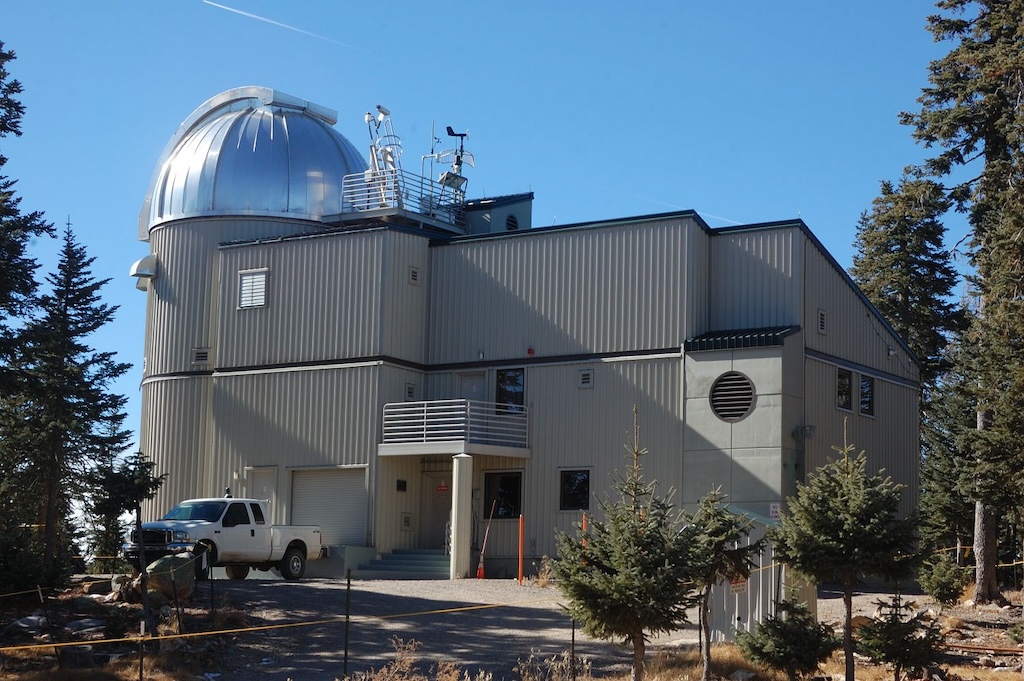
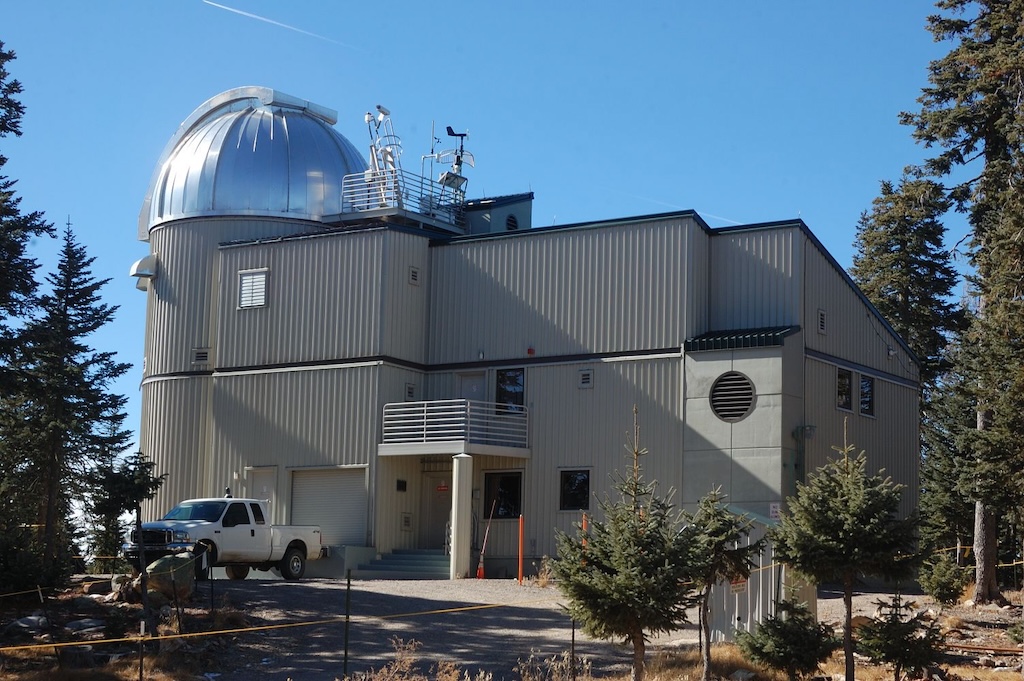
Completing the robotization process of the VATT (Vatican Advanced Technology Telescope) on Mount Graham in Arizona. Finishing the 3D scanning and documentation of the approximately 1,200 meteorites preserved in the laboratory and, in the observatory at Castel Gandolfo, introducing the first GPUs (Graphic Processing Units) to enhance computational capabilities and the theoretical program, also through a new series of theoretical seminars on physics. These are the priorities indicated for 2026 by its Director, Jesuit Fr. Richard Anthony D’Souza for the Vatican Observatory in this interview for the Governorate’s website www.vaticanstate.va.
What are the scientific priorities of the Vatican Observatory in 2026?
Like other modern observatories today, the members of the Vatican Observatory are involved in several scientific fields: from quantum gravity to cosmology, from galaxy formation to stellar and solar system science. Therefore, it is difficult to speak of a single scientific priority, since each researcher has their own scientific priority associated with their respective field. However, at the institutional level, our priorities are to enable a significant investment of resources to support and enhance the research of individual members and of the group.
Our main priority is to complete the robotization process of the VATT (Vatican Advanced Technology Telescope) on Mount Graham in Arizona. Although 95% of the telescope is already robotized, the current camera used for astronomical observations must be filled with coolant every 12 hours, which forces us to maintain a human presence on the mountain. Obtaining a new camera will allow us to operate the telescope without human presence, in a fully remote mode, enabling a wide range of different projects and operational strategies.
The priority of our meteorite laboratory, led by Fr. Bob Macke, is to complete the 3D scanning and documentation of the approximately 1,200 meteorites in our collection. This catalogue, once made publicly available on our website, will allow for a further level of international cooperation and research.
At the Observatory, this year we will introduce our first GPUs (Graphic Processing Units) to enhance our computational calculations. Although machine learning has traditionally been used in astronomy and the sciences for a long time, this year we will experiment to see how certain astronomical and scientific software can be rewritten to take advantage of GPU hardware, especially in the domain of machine learning. Finally, we hope to strengthen our theoretical program at the Observatory through various initiatives, launching a new series of theoretical physics seminars.
How does the 2026 program fit into the Observatory’s medium- to long-term vision?
The Observatory’s vision over the next 3–5 years is to strengthen our four main scientific programs: astronomical observation, meteoritic science, theoretical/cosmological physics, and astronomical/meteorological computation.
We have two main projects for the VATT in Arizona for the next 3–5 years. The first is to convert the telescope from a traditional observational model to a “service” mode. Over the last 30 years, astronomers have been assigned entire nights (typically 3–7 consecutive nights) to observe on the telescope for their respective scientific programs. However, this traditional observing mode has not allowed for more sophisticated observational programs, such as long-term monitoring of interesting astronomical objects over longer periods (several months). By switching to “service” mode, the telescope can observe different types of objects in a single night—covering a range of scientific projects and directives—under the guidance of a single telescope operator. The robotization of the VATT is an additional aid in using the telescope in service mode.
Our second vision is to open 20% of the telescope time to education, so that selected undergraduate students from around the world, especially from under-resourced universities, can learn how to use a research telescope and propose small research projects for the VATT. We will develop observational exercises to help professors and students begin this process.
Over the past 15 years, the meteorite laboratory has rendered a great service to the solar system community by innovating and providing measurements of the physical properties of meteorites. Now we need to equip the laboratory to provide the next generation of meteorite measurements for solar system studies. We are exploring ways to perform spectroscopic measurements on meteorites to understand their chemical composition. Br. Guy Consolmagno will take a sabbatical this year at Le Moyne University to deepen his studies, while Fr. Bob Macke will explore a sabbatical program to learn new techniques for the meteorite laboratory.
We also want to strengthen our theoretical group in the coming years. Today, the core team leading this program is composed of Fr. Gabriele Gionti and Don Matteo Galaverni. We hope that new team members will join us in the coming years.
Finally, upon my arrival and that of Fr. Robert Janusz, the Observatory entered the domain of high-performance computing in 2020. The addition of meteorological studies to the Observatory with Fr. Bayu Risanto has accelerated this process. Machine learning and AI will be an essential part of this process in the coming years.
Are new lines of research planned in 2026?
With the arrival of new Jesuit researchers at the Vatican Observatory this year, the Observatory will open up to new lines of research. In particular, we are planning to launch studies in group theory and perturbations in mathematics, stellar nuclear theory and astrobiology. The expansion into new research areas will allow the Observatory to reach researchers in these new fields, bearing solid witness to the compatibility of faith and science.
What criteria guide strategic choices for annual programming?
The criteria are: improving facilities/infrastructure that enable greater productivity in scientific research, and investing in the continuous training of astronomers; opening the Observatory’s resources to invite visits and collaborations with external researchers; investing in the education of junior researchers, especially from developing countries, through summer schools, scholarships, and projects.
Which ongoing research projects will see key developments in 2026?
Projects that could yield immediate short-term results include the search for a measurable signature of quantum gravity within formulations of discrete gravity, and the calculation of black hole entropy using alternative theories of gravity.
In addition, the study of asymptotic giant branch (AGB) stars together with the Rome Observatory could see important developments. This project will help researchers use AGB stars to study distant galaxies with new space telescopes such as JWST, Euclid, and the Roman Telescope.
Are there plans to introduce new technologies or methodologies such as AI or advanced data analysis?
Due to the large volume of data in astronomy, the community has employed machine learning to understand and reduce data. The 2023 Vatican Observatory Summer School was held on the theme “Machine Learning and AI in Astronomy”. This year at the Observatory, we plan to acquire a GPU (Graphic Processing Unit) to accelerate our machine learning applications. This will also give us the opportunity to understand how to rewrite existing software to run on GPUs.
Are new or strengthened scientific collaborations planned?
Fr. Gabriele Gionti and Don Matteo Galaverni are actively collaborating with Prof. Sergio Cacciatori and Dr. Federico Scali of the University of Como in northern Italy. The team is exploring “alternative theories of gravity,” trying to understand whether the laws written by Einstein are the only possible explanation or whether other paths exist to describe the cosmos. The goal is to understand what really happens to the fabric of the universe when we try to unite gravity with the infinitesimal world of quantum mechanics.
This year, the Vatican Observatory together with the Catalan Sky Survey submitted a project to NASA for funding to continue research and follow-up of asteroids with the VATT. The Catalan Sky Survey is an international survey that has discovered the largest number of asteroids. They will use the telescope in remote mode for about 15–20 nights to search for new asteroids and confirm existing discoveries.
The long-term collaboration with Vilnius University in Lithuania continues, led by Fr. Richard Boyle and Fr. Robert Janusz. Using the VATT, they study a large number of open clusters (collections of stars) and discover new asteroids.
The Department of Information Engineering, Electronics and Telecommunications of Sapienza University of Rome is collaborating with the Observatory on AI techniques for the doctoral thesis of Sabereh Taghdisi Rastkar on processing the meteorological data of Fr. Bayu Risanto, S.J., using artificial intelligence techniques to see whether the results already obtained by Fr. Risanto using the laws of meteorology can be reproduced.
I myself collaborate with the Rome Observatory to study how luminous giant stars can be used to investigate the history of galaxies. In addition, together with researchers from the University of Michigan and the Space Telescope Science Institute, we continue to use the Hubble and JWST telescopes to study the outskirts of nearby Milky Way–sized galaxies, as well as their dwarf galaxies.
Also, a new Jesuit student from Fordham University will spend a summer at the Observatory to study how machine learning can be used to classify stellar spectra from the new European Euclid satellite.
Is greater involvement of the Observatory expected in international projects or missions?
Fr. Bob Macke, S.J., continues to collaborate with the LUCY space mission. LUCY is a NASA exploratory space mission directed toward four Jupiter Trojan asteroids, which share their orbit around the Sun with Jupiter. Fr. Gabriele Gionti and Don Matteo Galaverni will collaborate with the theoretical program of CERN in Europe, the world’s largest particle physics laboratory, located on the border between France and Switzerland, on the western outskirts of Geneva.
Are specific programs planned for young researchers or students?
In 2026, a five-day conference on open questions in quantum gravity will be organized in Castel Gandolfo: “Vatican Observatory Lectures in Quantum Gravity”: (https://indico.global/event/16082/).
Some places will be reserved for doctoral students and young researchers training in this field.
We have launched a unique pilot program by opening the VATT telescope to undergraduate students from Jesuit universities in the United States, thanks to a major grant. Fifteen to twenty nights of telescope time will be reserved for this program. Students will be able to use the telescope in remote mode under the guidance of a local professor from their university. The Observatory will develop several exercises to help them learn how to use the telescope before proposing research projects with their professors.
In 2026, several students in scientific disciplines, mainly at the master’s and doctoral levels, will continue collaborations with various Observatory researchers, both remotely and through planned visiting periods on site. They come from the University of Bologna, Sapienza University in Rome, Fordham University, and Boston College in the United States.
Fr. Bob Macke is collaborating with Jesuit Worldwide Learning (JWL) to develop an online astronomy course aimed at students in refugee camps and conflict zones, including girls in Afghanistan.
What specific contribution can the Vatican Observatory offer to the dialogue between faith and science in 2026?
In addition to the constant participation of many staff members in seminars and conferences, in 2026 several specific initiatives will be organized to show how the Observatory continues to be a bridge between science and faith through scientific research.
Two special courses are organized this year in the context of dialogue between faith and science for those interested in deepening their understanding of how faith and science go together. The first is the “Spirituality and Astronomy 2026 Workshop” scheduled for the end of August: (https://indico.global/event/16377/).
The other is held in the USA in Tucson, Arizona and is called the ACME event -“Astronomy for Catholics in Ministry and Education”: (https://www.vaticanobservatory.org/education/acme/). Both events are held every two years.
What are the main challenges the Vatican Observatory expects to face in the coming year?
The main challenges for the Vatican Observatory are twofold. The first is attracting new, younger Jesuit talent to conduct research at the Observatory. The second challenge is developing long-term (5–10 year) projects and collaborations that are vital for the fruitful use of the VATT telescope. This includes long-term monitoring of astronomical objects as well as detailed follow-up of objects discovered by larger survey telescopes. This second challenge critically depends on how quickly we can fully robotize the VATT and convert it to the “service” mode of operations.