

Conference on “AI & Faith Dialogues”

Ethics, Responsibility and Dignity at the Heart of the Digital Future
The “Guidelines on Artificial Intelligence” issued by the Governorate are built on solid pillars, which are not mere words but operational principles.
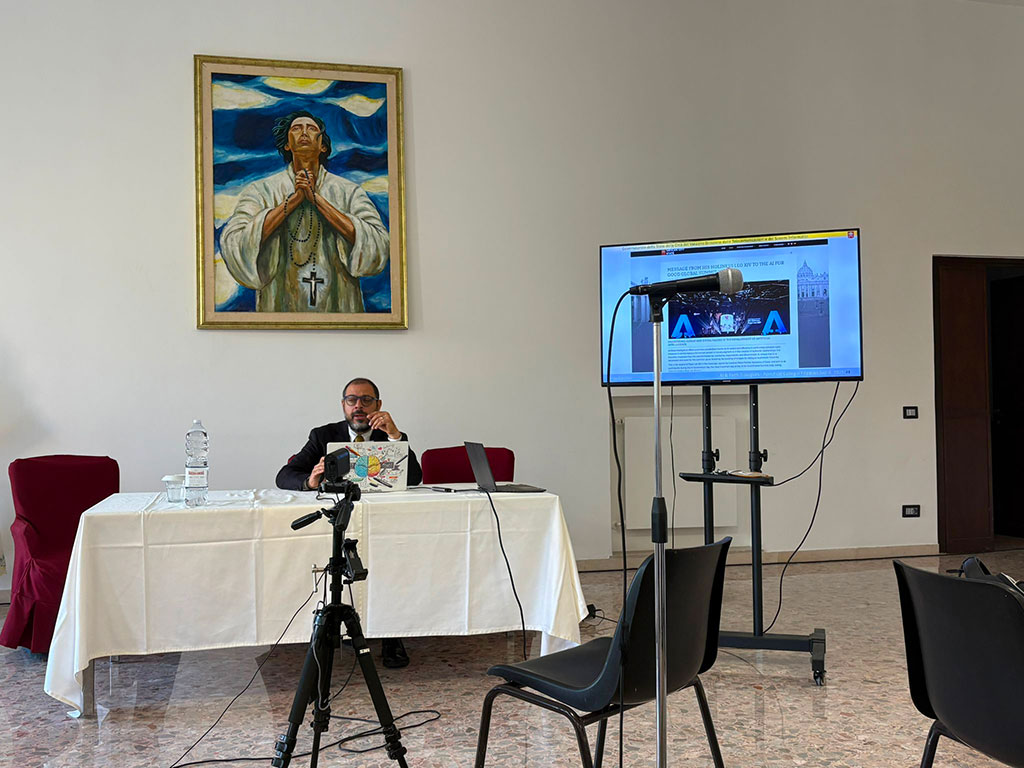
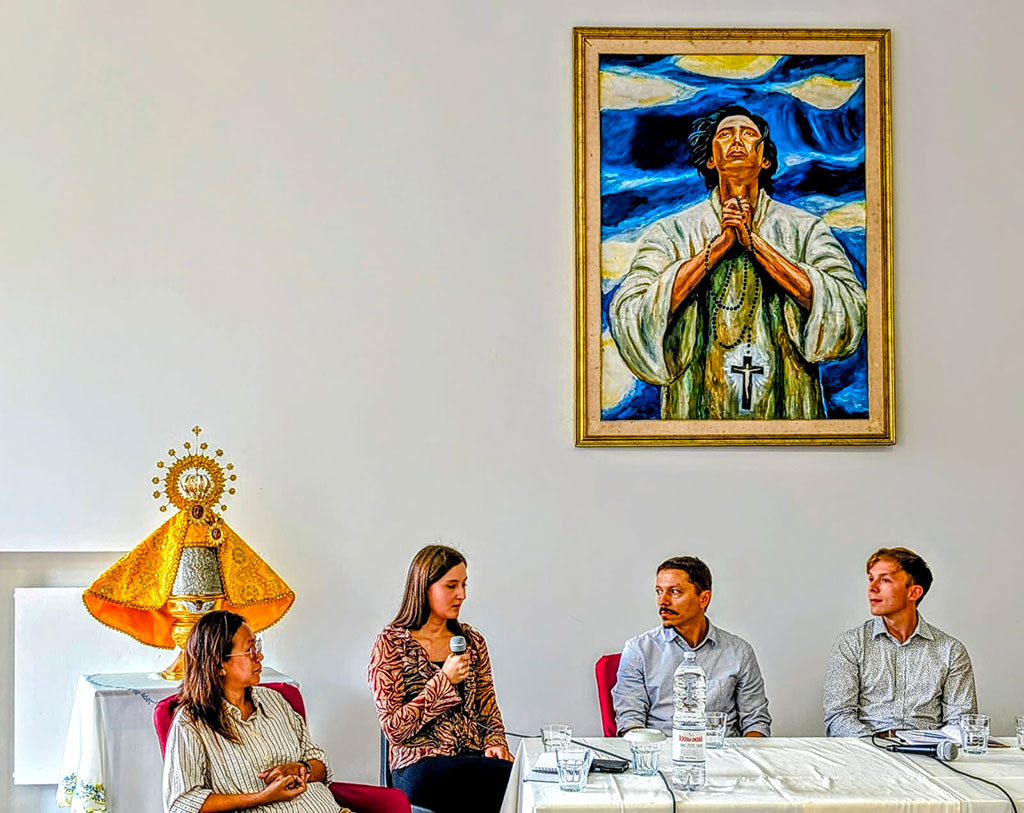
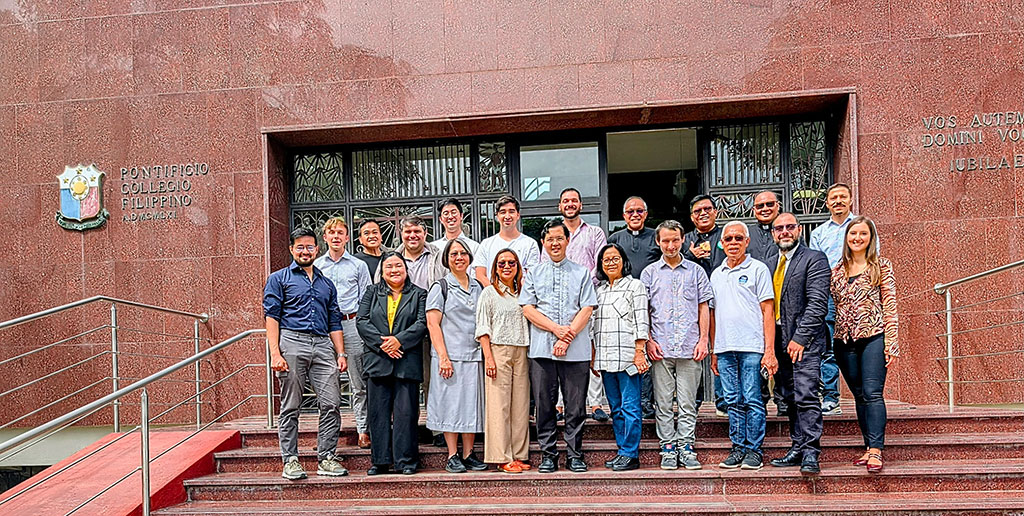
This was emphasized by Davide Giordano of the Directorate of Telecommunications and Information Systems of the Governorate of Vatican City State and a member of the Artificial Intelligence Commission. He spoke during the conference on the theme “AI & Faith Dialogues,” organized by the Pontifical Filipino College and held on Monday, September 8. Giordano delivered a well-structured speech to present the content and rationale behind the Artificial Intelligence Guidelines, made public in 2024 by the Governorate of Vatican City State.
Rich in historical, cultural and ethical references, his speech offered a profound and forward-looking vision – that Artificial Intelligence is not merely a technological challenge but an anthropological, social and moral crossroad.
The presentation began with a historical reflection: every great technological revolution—from the printing press to the steam engine, from the Copernican revolution to the digital age—has transformed society, bringing progress but also risks and inequalities. Today, Artificial Intelligence similarly demands a clear stance.
The Guidelines, Giordano explained, are not a symbolic gesture but a concrete and operational choice based on solid principles that place human beings at the center of digital transformation.
At the heart of the document are four fundamental principles. First, human dignity: the human being is irreplaceable. No machine can or should make ultimate decisions on matters involving life, health, or freedom. Doctors, judges, citizens—each retains an irreplaceable role.
Second, the common good: Artificial Intelligence must serve the entire community, not be a tool for profit for a few. The use of data, described as “the new currency,” must be directed toward collective interest, not power or the market. Third, transparency: technologies must be understandable, explainable and accessible. Only transparency can foster trust and inclusion.
Finally, responsibility: even if delegated to machines, responsibility can never be shifted onto an algorithm. Accountability must always rest with humans.
The Guidelines go beyond defining general principles, establishing clear limits and prohibitions as well. Artificial Intelligence cannot replace human judgment, such as in legal or medical contexts - AI can assist but not decide. A ruling or a diagnosis requires empathy, contextual understanding and attentive listening—human qualities no machine possesses. There are also explicit prohibitions; AI must not be used to discriminate, exclude or harm. Even unintentionally, an algorithm can become a tool of exclusion as in facial recognition systems or automated hiring processes based on biased data.
A crucial point is the protection of biometric data; safeguarding data such as fingerprints or facial scans is urgent. These are “unique keys” that cannot be replaced. Improper use can irreversibly compromise personal security and dignity. Regarding culture and creativity, AI can support cultural heritage preservation but cannot replace artistic sensitivity. Works of art, as well as creative content, must be treated with respect and artificially generated content must always be clearly identified. In matters of justice and administration, AI can help streamline bureaucratic processes and support judicial activities (for example, legal research), but decisions must always remain human. No algorithm should write rulings or decide on people’s rights and obligations.
To ensure compliance with these directives, the Governorate has established an Artificial Intelligence Commission—an operational body tasked with monitoring technology use, proposing regulatory updates, and assessing the risks and impacts of innovations. This is a concrete step that confirms the Vatican’s commitment to move from theory to practice. In a message from Pope Leo XIV, transmitted during the “AI Governance Day” at the AI for Good Global Summit 2025 in Geneva, the ultimate purpose of this position was reaffirmed: Artificial Intelligence must promote dialogue, fraternity, and justice—not replace humanity but help it live its humanity more fully.
The speech concluded with a strong call: true progress is not about outpacing machines but safeguarding what makes us human—dignity, freedom, the ability to love and to serve others. At a time when many wonder whether we will be able to control Artificial Intelligence, the real question now is: how will we measure the real progress we are making toward an ethical and human future?
With these Guidelines, the Vatican City State positions itself as a moral and cultural voice in an increasingly urgent debate—not to halt innovation, but to guide it. Technology, even the most advanced, remains a tool. And like every tool, it must be used with responsibility, vision and respect for the person.
At a time when Artificial Intelligence seems to promise solutions for everything, the Church’s contribution reminds everyone—believers and non-believers alike—that the real challenge is not to build perfect machines, but to remain human.