

Interview with Engineer Salvatore Farina on the Role of the Directorate of Infrastructure and Services in Recent Construction Works

Fifty building sites underway
There is no doubt that the prestigious palaces, structures and buildings of the Vatican require constant conservation work and, at times, more substantial interventions. This was the case for the barracks of the Gendarmerie and the Pontifical Swiss Guards at Castel Gandolfo, but also for the installation of photovoltaic roofing over the Courtyard of the Corazze at the Vatican Museums and on the Vignaccia warehouse in the Vatican Gardens. All of this falls under the responsibility of the Directorate of Infrastructure and Services of the Governorate of Vatican City State, as explained in this interview with www.vaticanstate.va by its Director, Engineer Salvatore Farina.
What role did your Directorate play in the refurbishment of the Papal Villas?
The Directorate of Infrastructure and Services acted promptly when the need arose to reactivate all the facilities around the Papal Villas of Castel Gandolfo, such as the Apostolic Palace and Villa Barberini. The buildings requiring the most work were the two barracks: that of the Pontifical Swiss Guard and that of the Gendarmerie. Not only had they been unused for nearly 15 years, but they also lacked systems and facilities that are now standard, such as air conditioning and their heating systems with boilers required regeneration. Their interiors had outdated layouts, like large dormitories. It was as though we were starting construction anew, even though the walls already existed. A major renovation of both barracks was required, with decisive interventions. This was completed in record time—just 4 weeks—working around the clock. On average, there were 30 workers per day at the Swiss Guard barracks and 15 at the Gendarmerie, with full compliance with safety regulations and the dedication of the personnel involved.
Goals were to both preserve the architectural heritage and achieve significant renewal with objectives such as energy savings, environmental sustainability, and improved staff wellbeing - heat pump air conditioning, data and Wi-Fi networks, new electrical systems, more bathrooms and showers and modern kitchen equipment.
The role of our Directorate was to design, set up and carry out the contracting procedures, direct the works, coordinate safety and provide the support and oversight of our technical staff. We began the works on June 8, after completing the contracting procedures in May, and delivered the two ready-to-use barracks on June 30.
What support do you provide to the Directorate of the Papal Villas?
The support offered to the Papal Villas is ongoing. It is not limited to the work on the two barracks and other buildings. Clearly, with the summer presence and occasional visits of Pope Francis to Castel Gandolfo during the rest of the year, the Directorate of the Papal Villas faces greater responsibilities across its area of competence. We can say that the Papal Villas have only minimal staff for ordinary management. The Directorate of Infrastructure and Services of the Governorate is instead responsible for extraordinary maintenance and plant systems, but it also provides, upon request, technical assistance through specialized staff such as electricians, plumbers, carpenters, upholsterers, and painters.
In addition to the works completed at the end of June, we currently have several ongoing projects, such as the refurbishment of heating plants, new air-conditioning systems, electric charging stations, new medium-voltage electrical substations, fire prevention systems, and so on.
How do you approach the planning of ordinary and extraordinary maintenance?
It is a very important issue because in a small State like Vatican City, with buildings of inestimable historic value, both ordinary and extraordinary maintenance are crucial. They must be addressed in parallel, with extraordinary maintenance always supporting the ordinary. Our planning foresees more substantial interventions, not just the simple replacement of lighting fixtures, but works such as the renewal of sections of heating loops or the waterproofing treatment of roof terraces.
Thus, extraordinary and ordinary maintenance go hand in hand and both must be planned. Preventive ordinary maintenance is a challenge: one must always try to intervene before a component reaches the end of its technical life or before structures are excessively worn. The goal is prevention. We must also consider that during the Covid-19 years, there was a slowdown and some delays accumulated, which we are gradually recovering.
What is important is planning—establishing a medium- and long-term schedule that provides for the allocation of human and financial resources, modulated by timeframes and priorities, and not based on emergencies or individual initiatives.
What skills do you consider essential in an infrastructure and services team?
We are a large operational family, the largest technical division of the Governorate. We have about 300 people, 80 of whom are engineers, architects, surveyors, and technical experts; then there are the operational staff—highly skilled technicians and workers. These latter are the “front line,” the hands that build the projects and work on the systems. Everyone has a vital role, from the Director, who is a servant in the sense that he has the responsibility for planning, medium- and long-term strategies, control and the care and development of personnel at every level.
In my view, the essential skills required of each individual and of the Directorate’s teams fall into three distinct areas: technical, organizational, and ethical.
Firstly, technical competence: the engineer who designs and the technician or worker who builds must thoroughly know their trade, otherwise failure is a risk.
Secondly, organizational ability—of middle managers, team leaders, and even individual operators. This is fundamental, because if timing, priorities, and procurement procedures are mishandled, delays result.
Thirdly, and most important, is the ethical-moral framework that underpins everything, fostering participation, collaboration, teamwork, and motivation. We must always work to nurture and strengthen values and ethics, leaving no one behind, in accordance with Christian ideals.
As Director, I am very satisfied with the performance and cooperation of all my staff, but I continue my daily commitment to further improving their skills and motivation. We are a family that grows together. We are humble executors, striving to act with foresight and competence.
What role do you attribute to environmental and social sustainability in your work?
A fundamental role. Both renovations and new works, as well as outsourced services, must comply with environmental sustainability standards and the proper use of human resources.
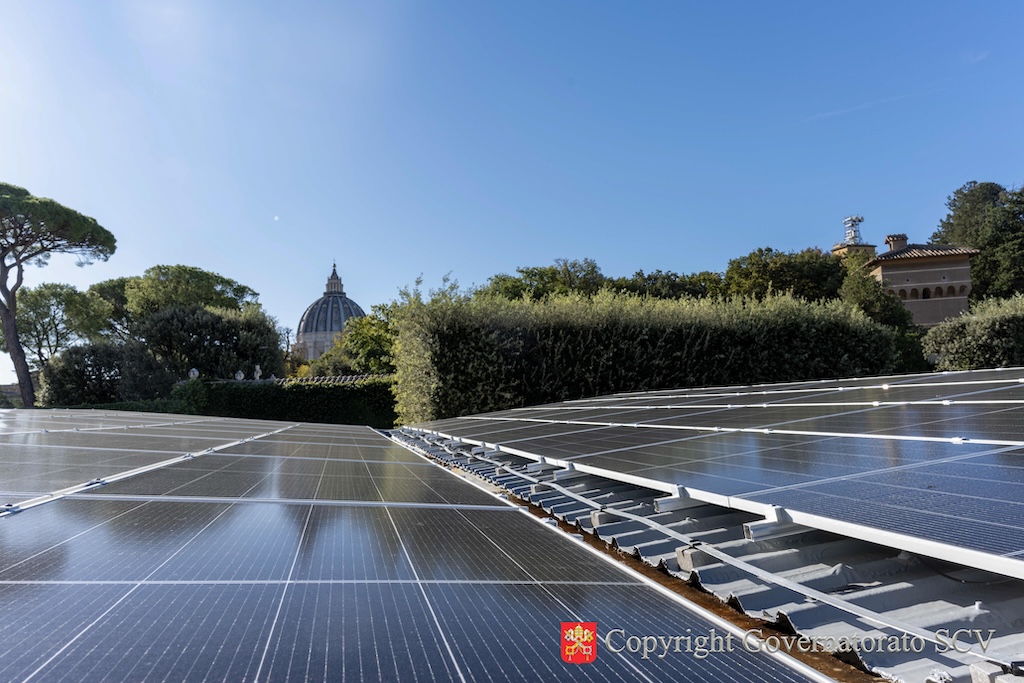
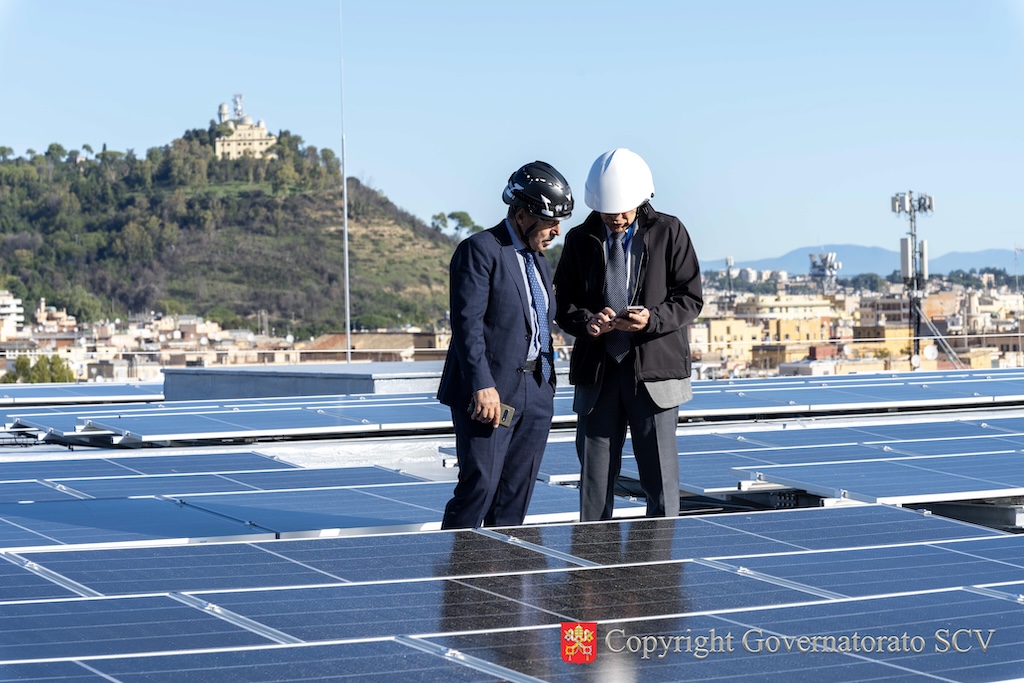
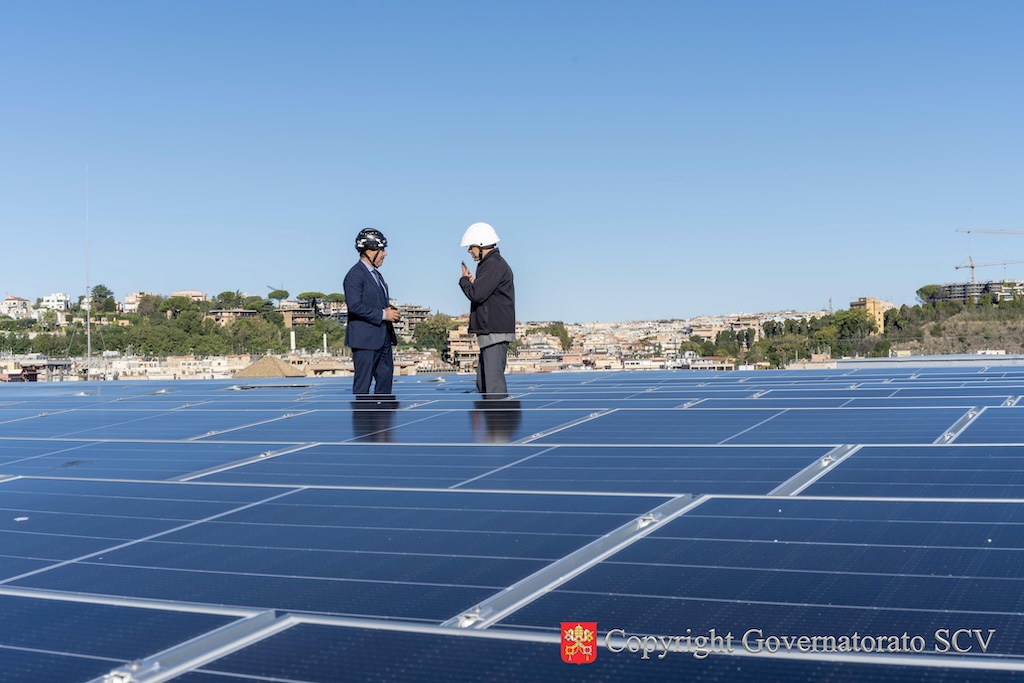
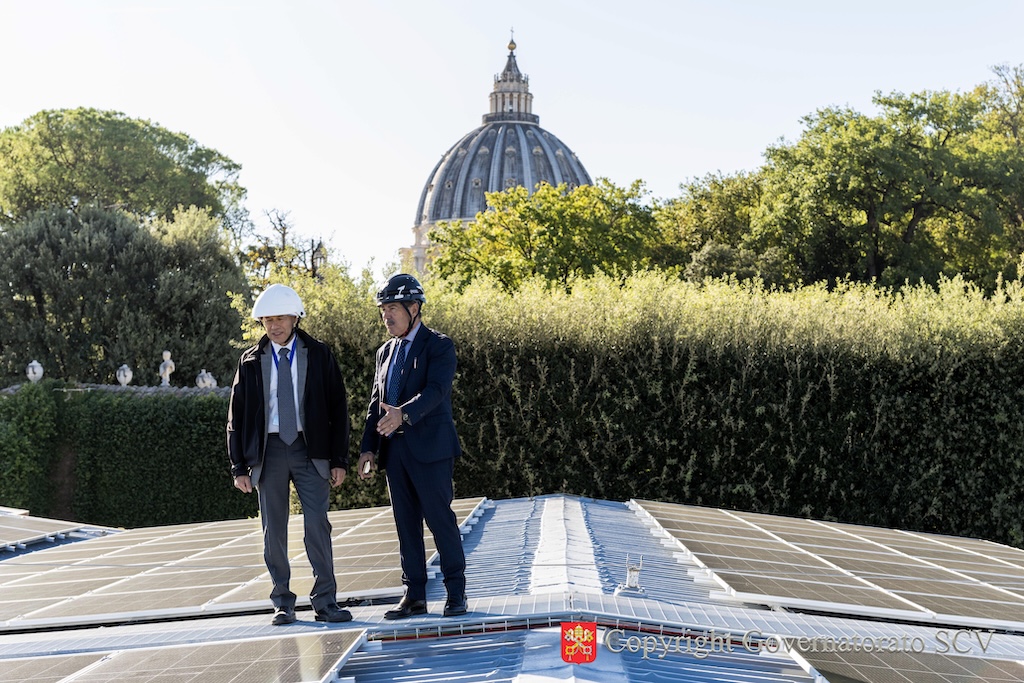
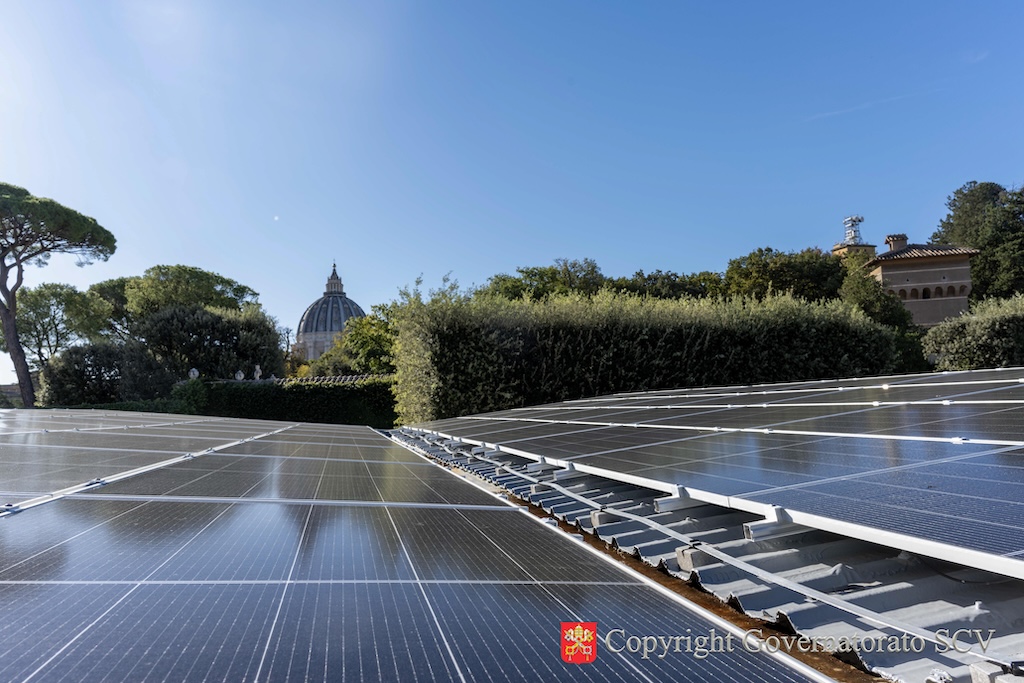
It is important to carry out projects with sustainable materials and with respect for the environment. For example, the photovoltaic system at the entrance to the Vatican Museums, the charging stations for electric vehicles, and the newly completed photovoltaic installation on the roof of the Vignaccia warehouse, which alone generates 250 kW peak of clean electricity from an otherwise unused rooftop.
Social sustainability is also highly important. We pay close attention to the profile of the companies registered in the official roll that take part in our procurement procedures. We ensure that contracts are duly applied, preventing, for example, unauthorized subcontracting, and that workers are properly trained, equipped with personal protective devices, and that worksites comply with all current regulations.
In all major projects, in addition to each company’s appointed safety manager (RSPP), as in the construction sites for the Gendarmerie barracks or the Fire Brigade, we also assign a safety coordinator during execution, to ensure strict monitoring of compliance with regulations.
What upcoming projects will involve your Directorate?
There are currently 50 construction sites underway and many others have been recently completed. Among the latter, I recall the waterproofing of the Tower of the Winds, the renovation of the Sistine Chapel Choir School, the replacement of the elevators in the Old Synod Hall, the completion of the restoration of the Scala Regia at the Constantine Wing exit, the new refrigeration system of the Maggiordomato of the Papal Household, the restoration of statue pedestals in the Vatican Gardens, the installation of new electrical substations at the Papal Villas, as well as the already mentioned works at Castel Gandolfo and the photovoltaic and electric charging projects.
Currently underway are major works such as the new Gendarmerie barracks and the Fire Brigade barracks in Vatican City. These are multi-year projects; the Gendarmerie barracks, for instance, will be ready by the end of June 2026.
We also plan works at the Vatican Museums, such as the renewal of air-conditioning systems in the Galleries and the Pinacoteca. In particular, we are upgrading all the security systems of the Museums. In 2026, the window frames of the Apostolic Palace Loggias will be replaced, after 150 years of service.
Another major project is the relighting of the Paul VI Hall, with technologically advanced fixtures offering significant energy savings. Further photovoltaic projects are planned to continue the path of environmental and energy sustainability.
There are also plans to renew the entire water-based fire prevention system and to redistribute potable water from two supply points instead of one, work which is already partly underway. In the Vatican Gardens, we plan to renew sensors and digitalize management systems.
Finally, there will be works on parts of the Apostolic Palace and other buildings, such as the Casa Santa Marta and the three papal basilicas, where there is a multi-year program of system upgrades, façade restorations and structural works.
There is, therefore, much to do, but this does not discourage us. On the contrary, we are fully aware that, under the guidance of the governing authorities, together with the active collaboration of other Directorates, and above all with the dedication of all the staff of the Directorate of Infrastructure and Services, we will be able to achieve all the objectives set before us in service of the Holy See.