


Interview with Engineer Luigi Salimbeni, Deputy Director of Telecommunications and Information Systems in Vatican City State
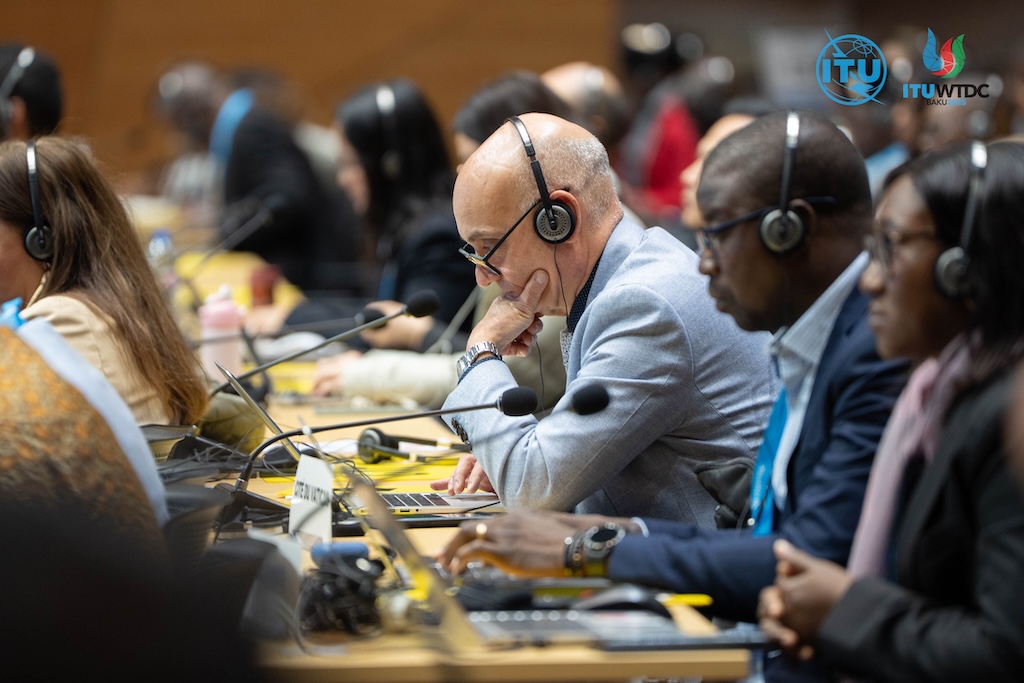

The participation of the Governorate’s Delegation at WTDC-25
A Delegation of the Governorate of Vatican City State took part in the World Telecommunication Development Conference (WTDC-25), held in Baku, Azerbaijan, from 17 to 29 November 2025. Promoted by the International Telecommunication Union (ITU)—of which the State of Vatican City is a member—the United Nations agency for telecommunications, the conference adopted the motto “Universal, meaningful and affordable connectivity for an inclusive and sustainable digital future.”
In this interview with www.vaticanstate.va, Engineer Luigi Salimbeni, Deputy Director of the Directorate of Telecommunications and Information Systems, takes stock of the meeting.
The State of Vatican City has recently taken part in the ITU World Telecommunication Development Conference, WTDC-25. What are the specific features of this conference?
Of the three sectors of the ITU, the “Development” sector—namely the development of telecommunications—is the newest. While activities related to standardization and radiocommunications have always been among the ITU’s core commitments since its foundation, it was only toward the end of the last century that all Member States clearly realized not only that telecommunications constituted a vital technological lifeblood for global progress, but also that this lifeblood had to circulate throughout all parts of the world in order to guarantee technological progress and well-being for all peoples.
The prevailing way of thinking until the 1970s viewed technologically advanced countries as occupying a position that we might today describe as technological neocolonialism in the field of telecommunications: less industrialized countries were unable to independently build their own telecommunications infrastructures and were dependent on technology developed in advanced countries; all the work carried out within the ITU effectively benefited only a few.
A first, embryonic Telecommunication Development Conference was held in 1985 in Arusha, Tanzania. In 1989, at the Plenipotentiary Conference in Nice—attended for the State of Vatican City by Father Antonio Stefanizzi, former Technical Director of Vatican Radio and at that time technical consultant to the Pontifical Council for Social Communications—an office specifically dedicated to telecommunication development, was established and tasked with promoting the active participation of developing countries in telecommunications technologies.
Three years later, at the 1992 Plenipotentiary Conference in Geneva, in which Vatican City was represented by Father Eugenio Matis and Engineer Pier Vincenzo Giudici, the ITU’s structure was profoundly reformed, becoming similar to its current form: telecommunication development was entrusted to a specific sector, ITU-D, operating alongside the two other “traditional” sectors, ITU-R for radiocommunication and ITU-T for standardization.
The first “true” World Telecommunication Development Conference was held in Buenos Aires in 1994, and the first initiatives were outlined, aimed primarily at providing support and training to developing countries so as to enable them to choose more modern approaches to telecommunications, both from a technical standpoint and from a regulatory and legislative one. The conferences that have followed approximately every four years have consistently pursued the objective of reducing, and where possible eliminating, the differences between developed and developing countries in the field of telecommunications.
The issue of differences between developed and developing countries has been discussed for many decades. Do the WTDCs, convened every four years, not risk repeating the same good intentions over and over again?
Such a risk is always present, but an important consideration must be made: technological progress continually highlights new areas in which these differences emerge. If forty years ago the barriers preventing the use and implementation of telecommunications technologies in some countries were purely economic in nature and affected the entire population systemically, today there are factors which, even within countries where telecommunications infrastructures have reached a certain level of development, hinder specific segments of the population, such as women or ethnic minorities—social groups which, due to lack of training or for other reasons, including cultural ones, do not in fact use digital tools to access information and services available to others within the same nation.
Sometimes the barrier lies in the absence of online content that is interesting or accessible to specific groups of people. We are accustomed to seeing adolescents in our cities constantly glued to their mobile devices to communicate or watch videos, but let us try to imagine how different the scenario around us would be if social media content, for one reason or another, were available only in the Tamil language, or if the topics addressed were limited to tropical diseases or maize cultivation. This is a typical example in which the obstacle to the use of telecommunications is not a technological barrier, yet it is no less harmful in preventing people from enjoying the benefits that everyone could otherwise derive. The issues addressed at these conferences therefore evolve, because the obstacles to enjoying the benefits of telecommunications evolve.
What topics, then, were addressed at this conference?
The aim was to focus attention on the obstacles that, in the current historical context, hinder the use of communication and information technologies. For example, strong emphasis was placed on the differences that exist in many parts of the world between urban and densely populated areas—where, often even in developing countries, telecommunications infrastructures and services are adequate—and areas with low population density, such as rural areas and islands. In these latter contexts, the lack of a large user base discourages investment by telecommunications operators, and services are therefore virtually nonexistent.
This does not mean that differences in technological capacity between countries have already been overcome or have become irrelevant. Indeed, the subject of one of the four new resolutions adopted by the conference concerns precisely the use of Artificial Intelligence to improve and make telecommunications more efficient. Artificial Intelligence helps to improve the energy efficiency of telecommunications devices by adapting the transmission power of stations to actual environmental conditions (noise, interference, other sources, and so on). It also helps to make more efficient use of the radio spectrum, since a telecommunications service can identify frequency bands that are less used by other services at a given place and time and employ them as needed, without necessarily having to request the exclusive allocation of a band.
There are radio systems that can communicate, thanks to artificial intelligence, by exploiting the brief pauses in other transmissions or even the frequency intervals left between bands assigned to other communication services to avoid interference. It is therefore clear that those who are more advanced in implementing AI technologies are also able to be more advanced in telecommunications technologies. Consequently, promoting training and the exchange of information on the application of AI in the field of telecommunications helps ensure that all countries are able to make the best possible use of these technologies.