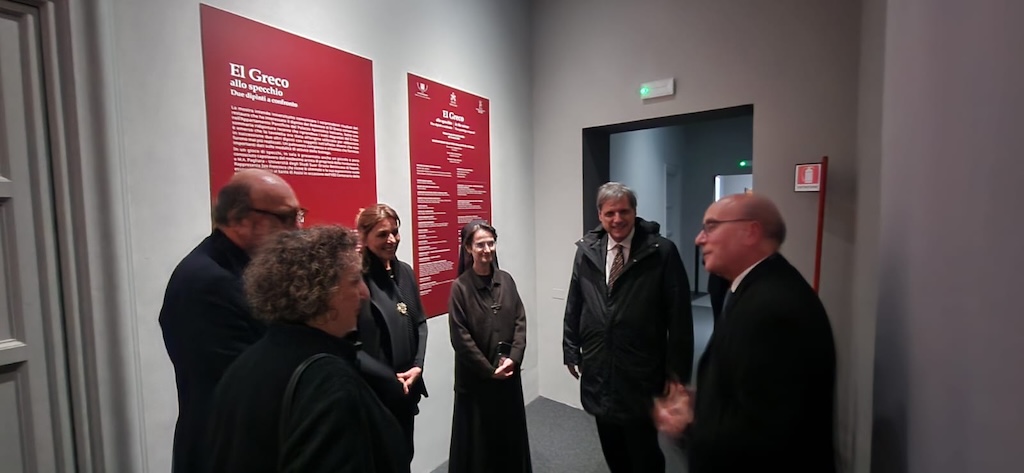


Inaugurated at the Pontifical Villas of Castel Gandolfo the exhibition dedicated to El Greco

Two masterpieces in comparison
“These are works by the great Cretan master El Greco, an unconventional, irregular and pioneering artist who, from his native Candia—where he trained as an icon painter within the Byzantine tradition—first moved to Venice, where he absorbed the light and color of the painting of Titian and Tintoretto, and then to Rome, where he was called to confront the great masters Raphael and Michelangelo, whom he nevertheless struggled to appreciate.”
Thus spoke Sr. Raffaella Petrini, President of the Governorate of the Vatican City State, during the inauguration of the exhibition “El Greco allo specchio: Due dipinti a confronto” [El Greco in the Mirror: Two Paintings in Comparison].
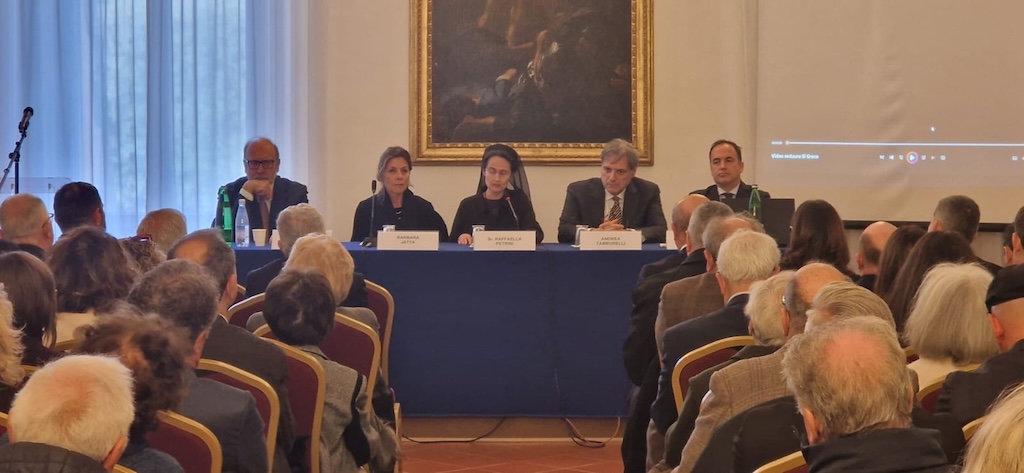
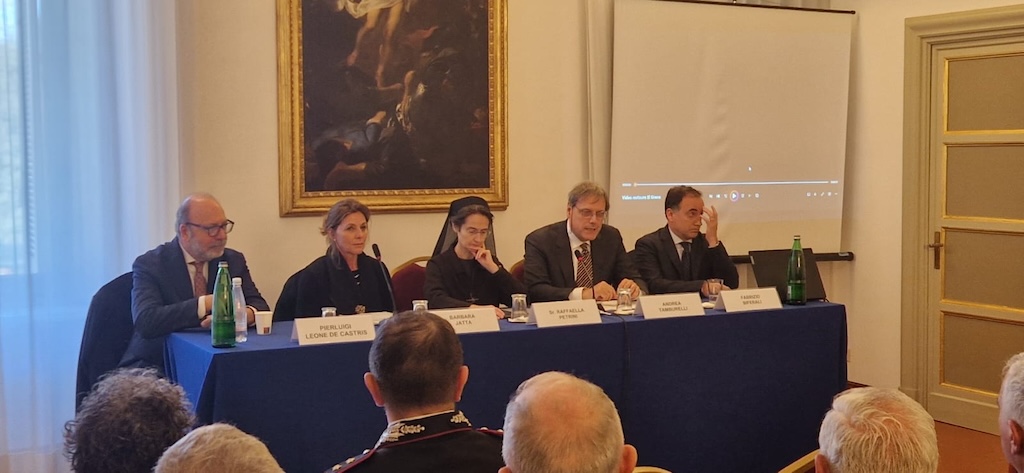
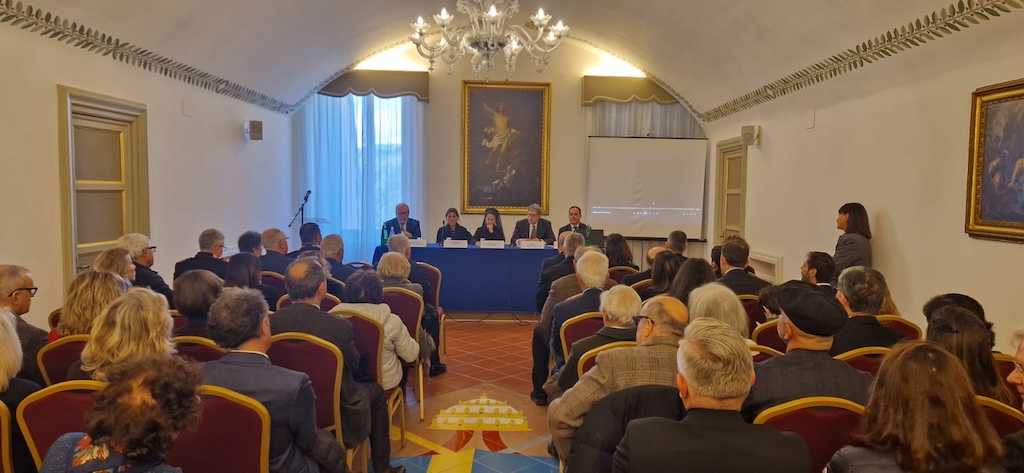
At the opening, held on Saturday afternoon, 14 March, in the Apostolic Palace of Castel Gandolfo, the following speakers were present: Barbara Jatta, Director of Museums and Cultural Heritage, Andrea Tamburelli, Director of the Pontifical Villas, Professor Leone De Castris, Delegate for the artistic section of the Suor Orsola Benincasa University of Naples, representing Professor Lucio d’Alessandro, Rector of the same University, Fabrizio Biferali, Curator of the Department of 15th–16th Century Art of the Vatican Museums, and Alessandra Zarelli of the Restoration Laboratory for Paintings and Wooden Materials of the Vatican Museums. Also present was Giuseppe Puglisi-Alibrandi, Secretary General of the Governorate.
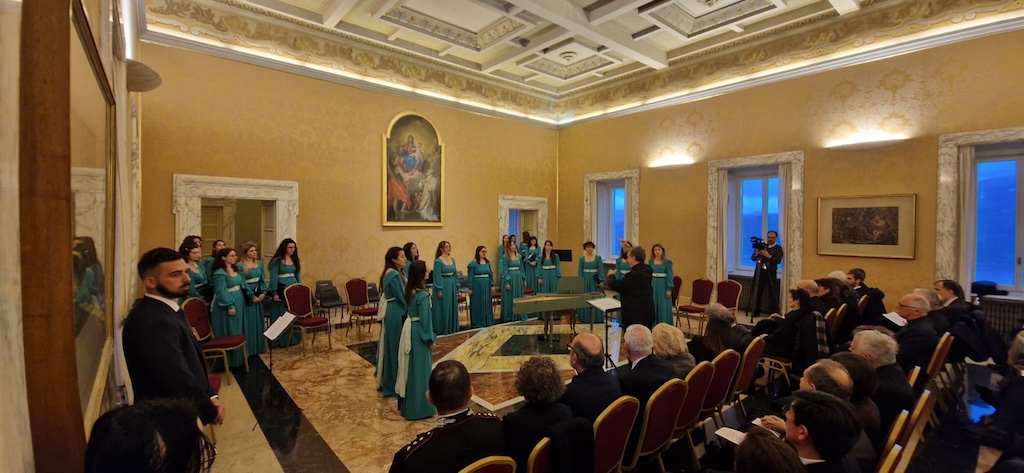
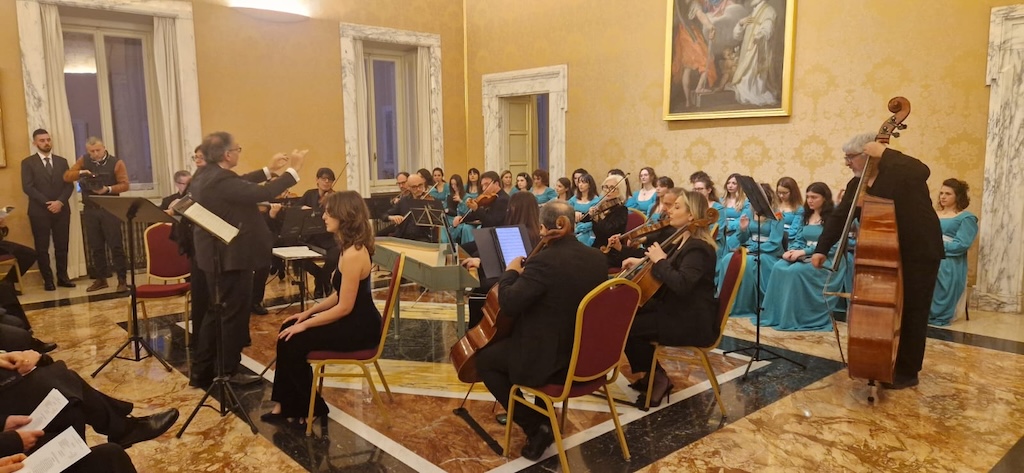
The event was followed by a concert on the theme “Sorrow and Prayer,” featuring Giovanni Battista Pergolesi’s Stabat Mater, performed by the Orchestra delle Cento Città and the Eos Choir, conducted by Mirco Roverelli.
The exhibition aims to compare two masterpieces by the artist from Candia. One is an unpublished painting, The Redeemer (45 × 29 cm), preserved in the Hall of the Ambassadors of the Pontifical Audience Apartment of the Apostolic Palace; the other is a small tempera on panel (28 × 20 cm) depicting Saint Francis, loaned by the A. and M.A. Pagliara Foundation of the Suor Orsola Benincasa University of Naples. The exhibition has been curated by Fabrizio Biferali, Head of the Department for 15th–16th Century Art of the Vatican Museums.
The Redeemer was attributed as early as 1970 to El Greco in José Camón Aznar’s catalogue Dominico Greco. It belonged to the collection of the Catholic intellectual and politician José Sánchez de Muniáin in Madrid, who donated it on 5 June 1967 to Pope Paul VI. The small tempera on panel on display, signed in Greek capital letters DOMÉNIKOS THEOTOKÓPOULOS EPOÍEI, combines the Byzantine tradition with the innovations of the mature Italian Renaissance.
Address by the President of the Governorate
I greet the Secretary General of the Governorate, Attorney Giuseppe Puglisi Alibrandi,
Dr. Barbara Jatta, Director of the Vatican Museums, together with her Deputy Directors;
Dr. Andrea Tamburelli, Director of the Pontifical Villas;
the Curators of the Exhibition, Dr. Fabrizio Biferali and the restorer Alessandra Zarelli;
and all of you gathered here—thank you for your presence.
Less than two years after the first exhibition set up in this hall of the Castel Gandolfo Museum Complex, dedicated to Correggio’s Redeemer from the collections of the Vatican Pinacoteca, we have now reached the sixth edition of this series of initiatives. Their aim is to enhance and deepen the knowledge of works that, for various reasons, we wish to present to the public of this Museum Complex, sharing their beauty and uniqueness.
In light of the experience gained so far, I believe we can say we are fully satisfied with the goal achieved. The Pontifical Villas of Castel Gandolfo are increasingly becoming a cultural reference point both for local communities and for pilgrims and visitors who come here from various parts of the world.
The exhibition inaugurated today presents two works—just two panels of rather small dimensions—that nevertheless have much to tell.
They are works by the great Cretan master, El Greco, an unconventional, irregular and pioneering artist who, from his native Candia—where he trained as an icon painter within the Byzantine tradition—first moved to Venice, where he absorbed the light and color of the painting of Titian and Tintoretto, and then to Rome, where he was called to confront the great masters Raphael and Michelangelo, whom he nevertheless struggled to appreciate.
The final stage of his artistic experience was Toledo during the Counter-Reformation, where he established himself as an original interpreter of a more intense religious spirituality and a new mystical sensibility—very distant from the Renaissance conception of drawing and the imitation of antiquity and nature. Instead, his art is entirely directed toward exalting movement and the vertical thrust of the figures depicted. This distinctive and immediately recognizable stylistic hallmark would later determine his success in the Romantic nineteenth century and among the avant-garde movements of the twentieth century.
I would like here to express special thanks—even though he was unable to attend at the last moment—to Professor Lucio D’Alessandro, President of the Pagliara Foundation and Rector of the Suor Orsola Benincasa University of Naples, for the generosity with which he made available one of the two works on display: Saint Francis Receiving the Stigmata, a precious panel signed by the artist and attributable to his Roman period. With us today, however, is Professor Leone De Castris, Delegate for the University’s artistic section, whom I also warmly thank for his availability. In this way, the exhibition also offers us the opportunity to commemorate the eighth centenary of the death of the Saint of Assisi, who is particularly dear to me, which falls in the course of the current year.
The other work on display, The Redeemer, is in many respects a mysterious painting whose recent restoration has revealed a complex and articulated history, involving several layers of different subjects that, over time, came to overlap. From this emerge interesting insights into the working methods of the artist’s workshop. The work can be dated to the 1590s, when El Greco was already in Spain.
The painting, with which we intend to celebrate the upcoming feast of Easter and the Resurrection, is also a work that—since it is historically displayed in the Pontifical Reception Apartment within the Vatican City State—is known and accessible to only a small number of people.
I therefore wish everyone a pleasant continuation of the event, once again thanking all the collaborators of the Governorate’s departments involved—the Directorate of Museums and Cultural Heritage and the Directorate of the Pontifical Villas—who, working in effective synergy, with that collaborative spirit and team approach that we are striving to cultivate and promote together, have made the realization of this exhibition possible.
Thank you.