

In the Vatican Gardens, Cardinal Vérgez Alzaga Inaugurated and Blessed the Image of Our Lady of the Pillar

A sign of Spain’s presence in the heart of the Holy See
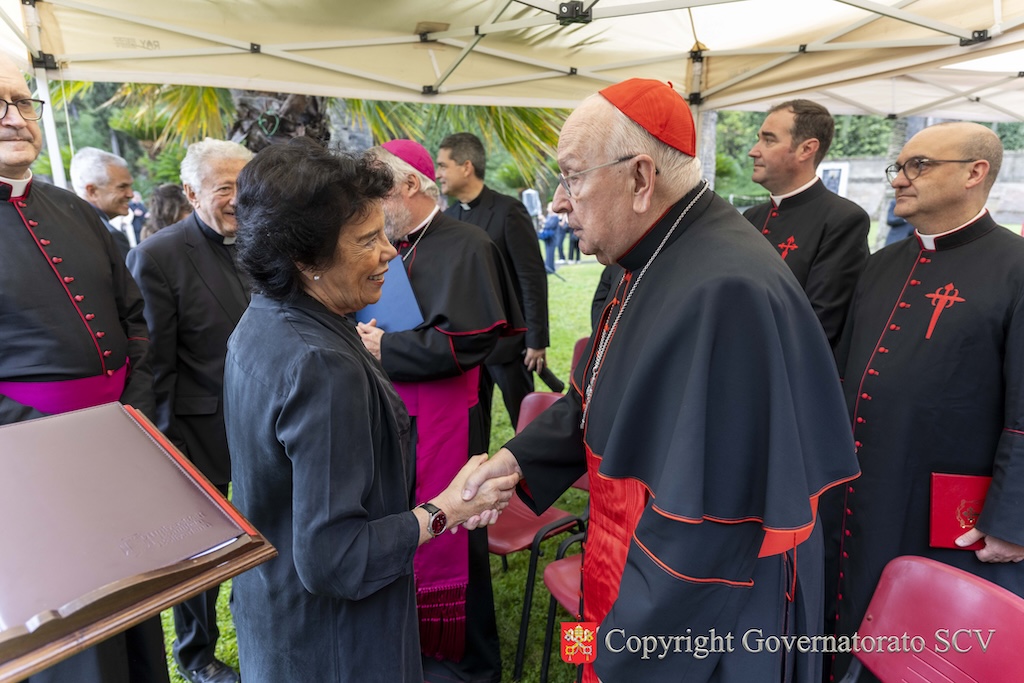
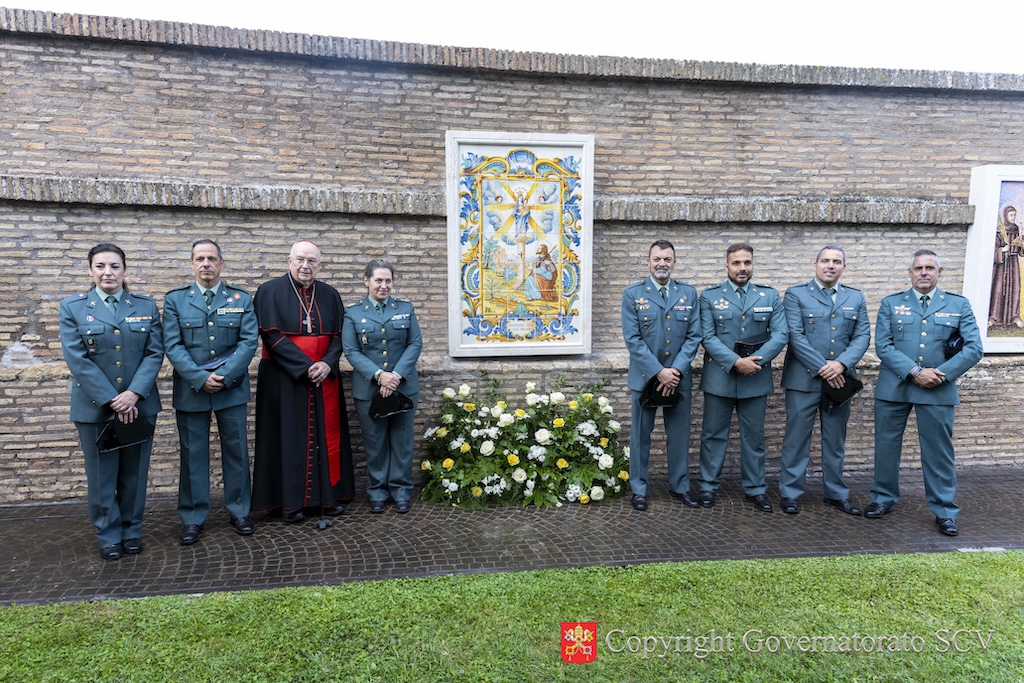
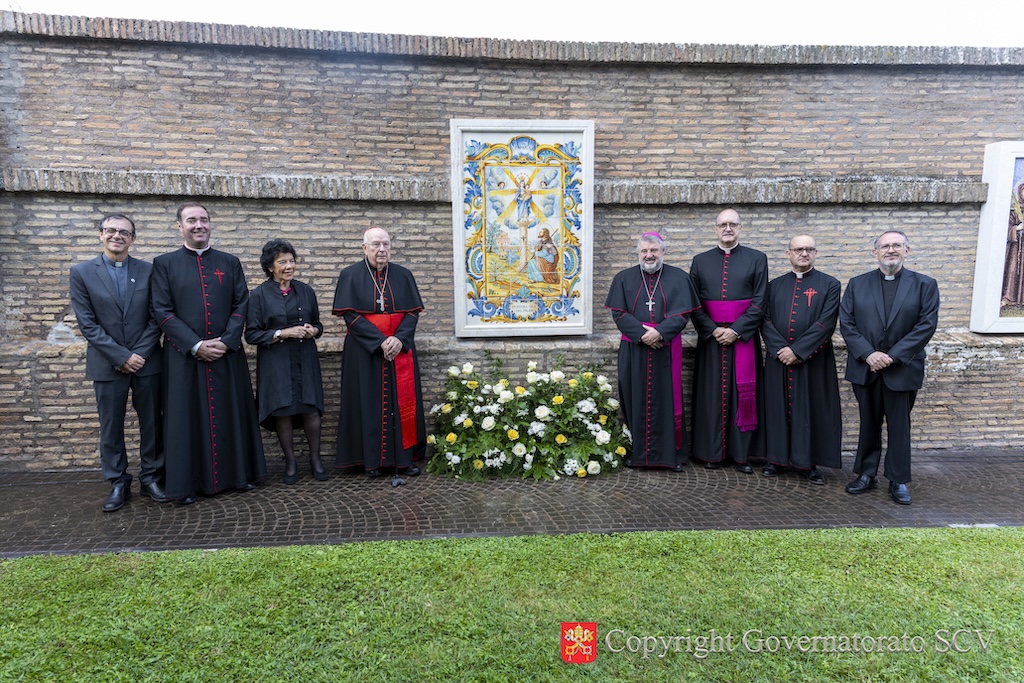
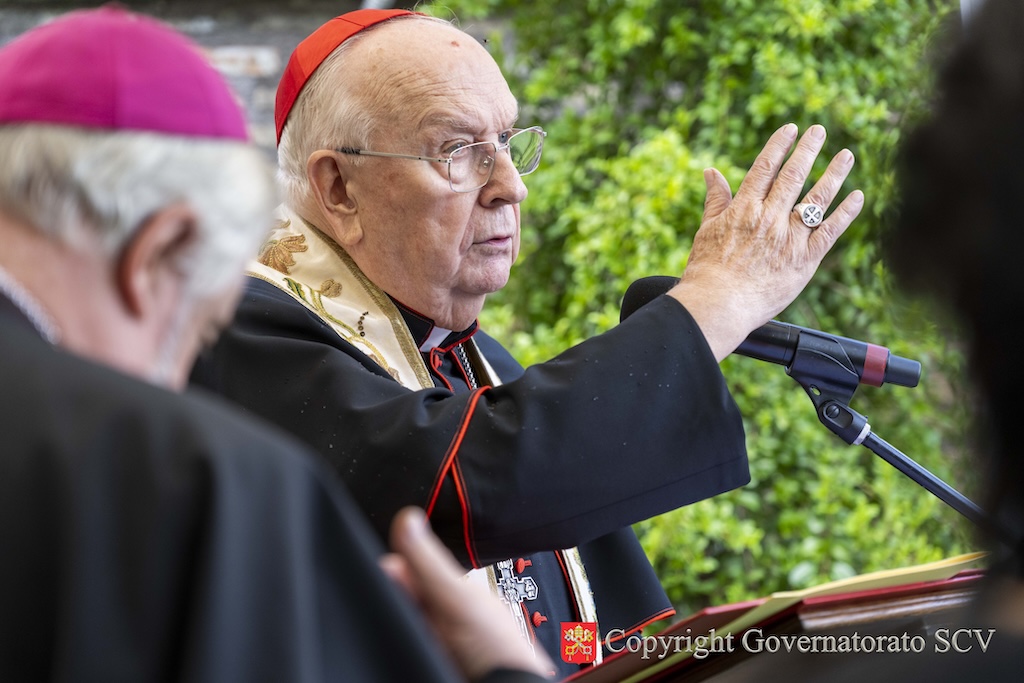
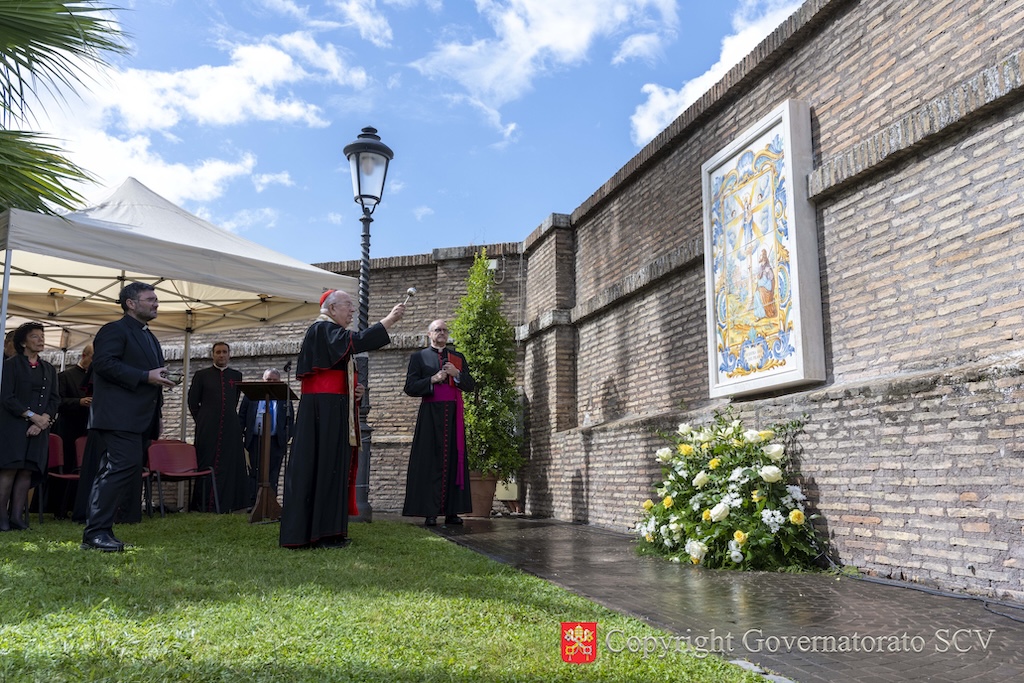
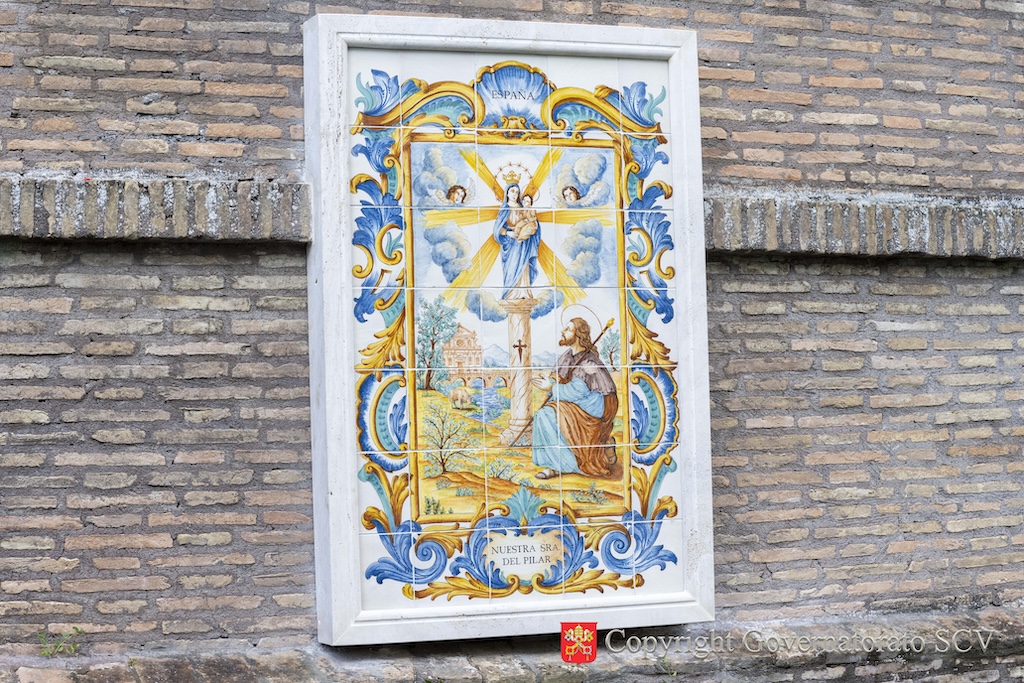
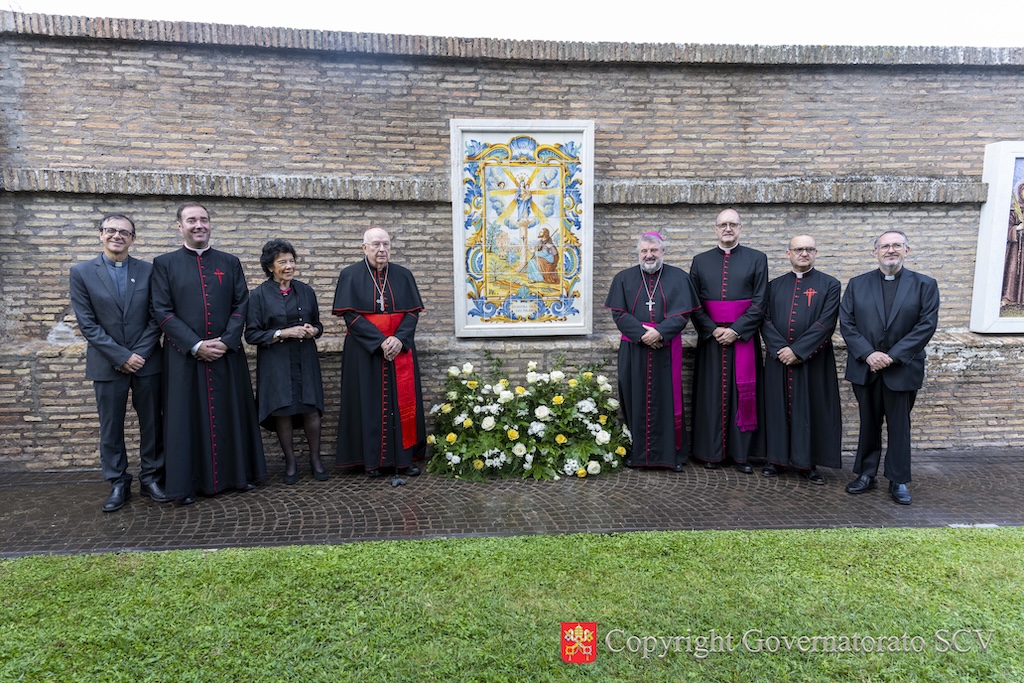
The Virgin most beloved by the Spanish people, she who most influenced the evangelization of the Iberian Peninsula - appearing to the Apostle James in the year 40 A.D. - now has her image reproduced on the wall of the Bastione di Maestro in the Vatican Gardens. It was Cardinal Fernando Vérgez Alzaga, President emeritus of the Governorate of the Vatican City State, who presided over the inauguration and blessing of the new ceramic panel on Wednesday morning, September 24.
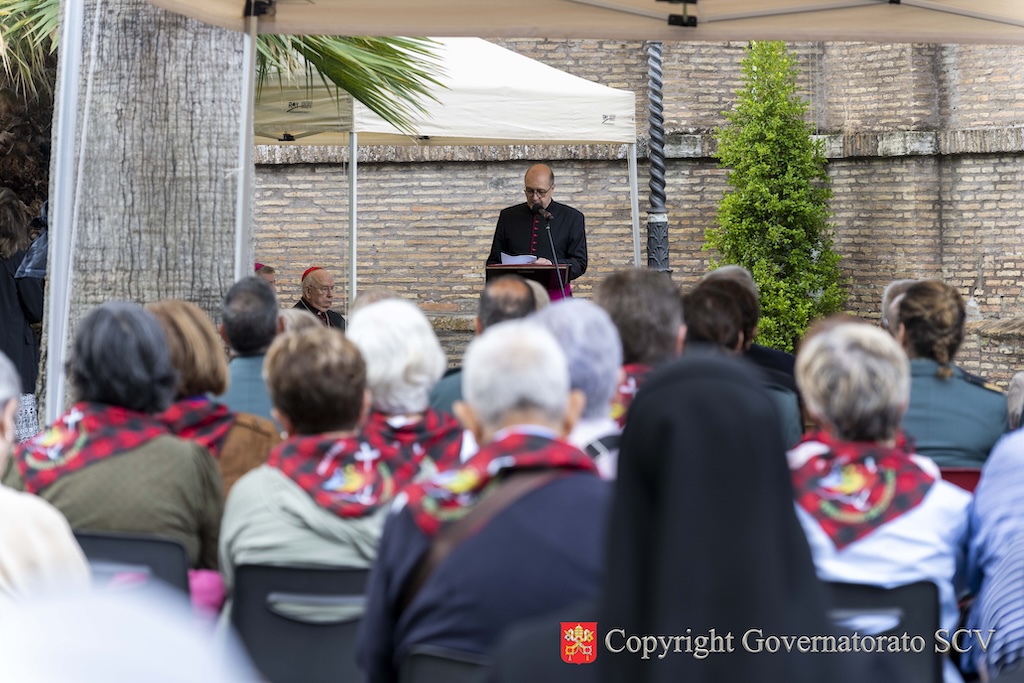
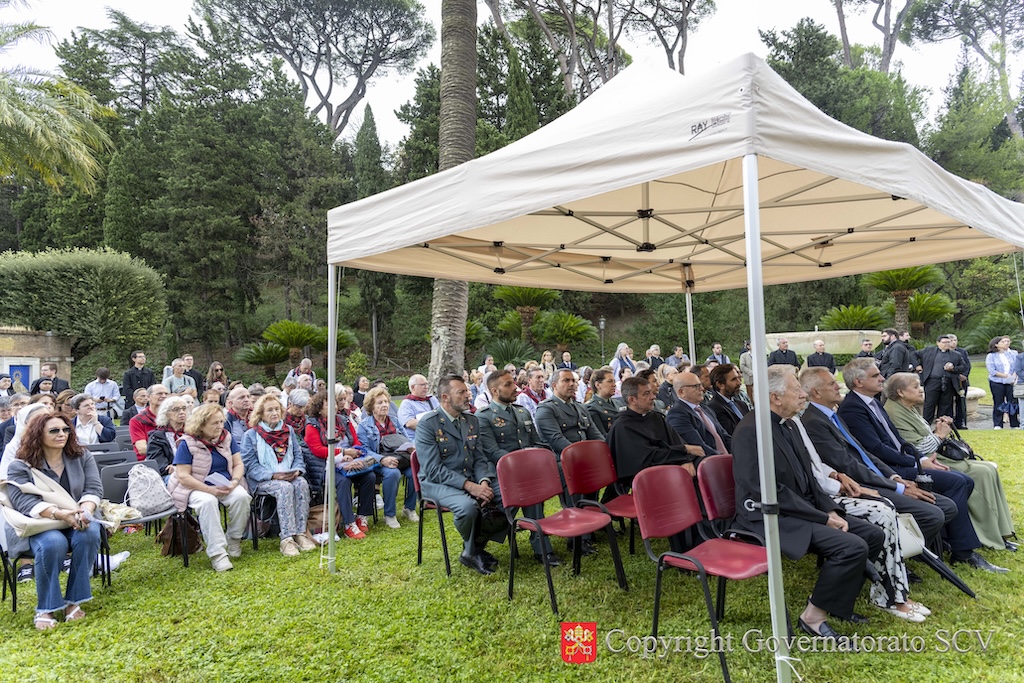
Before a group of faithful from Zaragoza, the Spanish city where the Basilica that houses the image of the Virgin of the Pillar is located, the Cardinal delivered a speech in which he emphasized that the presence of this image is a sign of hope.
The Rector of the Spanish National Church in Rome, Monsignor José Jaime Brosel Gavilá, remarked that “The initiative is a joint project of the Spanish Episcopal Conference and the Church of Santa Maria of Montserrat of the Spaniards in Rome, conceived and promoted as an expression of Spanish faith and devotional tradition. This shared effort made it possible to coordinate the various aspects of the project and ensure that Spain now has a representation in the Vatican Gardens, in the heart of the Holy See.”
For his part, the Archbishop of Zaragoza, Monsignor Carlos Manuel Escribano Subías, pointed out that by inaugurating and blessing this mural, which represents the moment of the Virgin’s arrival to encourage the Apostle James in his evangelizing mission, the traditions of Santiago and of the Pillar—inseparably united—become more Catholic, more universal.
Her Excellency Isabel Celaá, Ambassador of Spain to the Holy See, also highlighted that this work “will be kept, from today, in the Pope’s Gardens as an emblem of Spain, a sign of hope and of the history shared between our country and many peoples of Latin America.” In particular, it will shine in the Bastione di Maestro “thus joining about ten other Ibero-American Marian images in an artistic and spiritual harmony fostered by silence and a natural setting of incomparable beauty.”
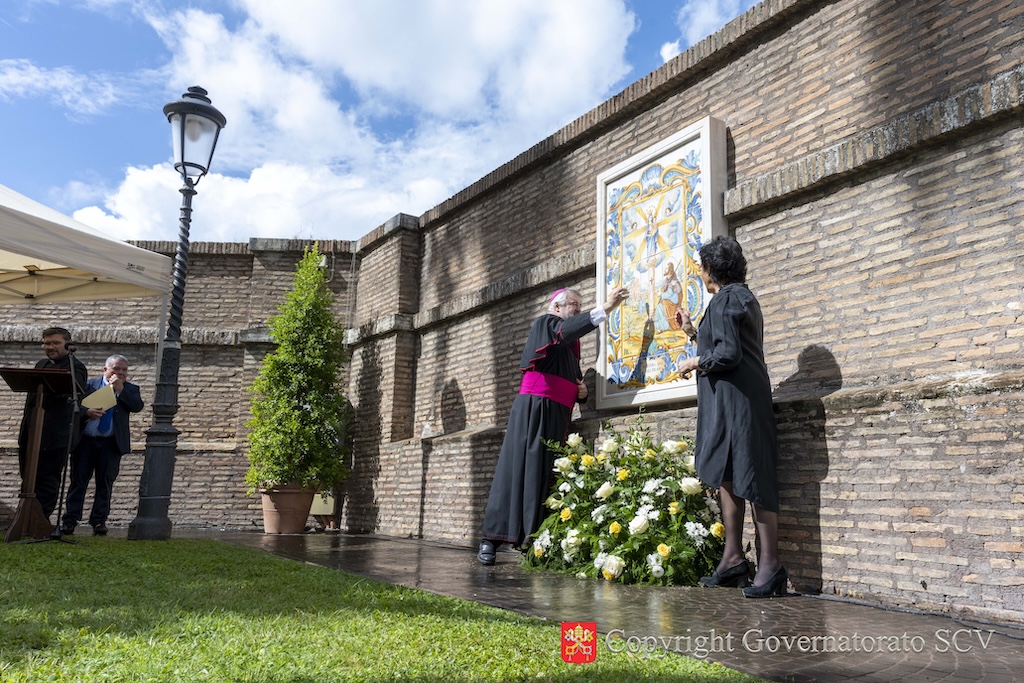
Subsequently, the Archbishop of Zaragoza and the Ambassador of Spain unveiled the image of Our Lady of the Pillar, which was then blessed by Cardinal Vérgez Alzaga. During the event, both the Hymn of the Virgin of the Pillar and the Hymn of the Apostle Santiago were sung.
Among those present were Father Juan Sebastián Teruel Pérez, Dean-President of the Chapter of Zaragoza, and Father Manuel Jesús Formoso Fernández, Dean-President of the Chapter of Santiago de Compostela.
As explained by Monsignor Brosel Gavilá, this ceramic panel was created by La Ceramica Valenciana. Successors of José Gimeno Martínez, S.L., a renowned artisanal company. The tiles were crafted and decorated by hand, following the style of 18th-century Valencian ceramics. The altarpiece measures 140 cm in height by 90 cm in width and has been framed in travertine, the same material used in St. Peter’s Basilica in the Vatican.
It should be recalled that the Patroness of Spain is the Immaculate Conception, but this iconographic representation is already present in the Grotto of Lourdes in the Vatican Gardens. For this reason, another Marian devotion deeply rooted in Spain and in many other countries was chosen—Our Lady of the Pillar, Patroness of the Hispanic world. The moment represented allowed for the inclusion of the Apostle James, patron saint of Spain. The composition reflects the traditional iconographic model of the apparition: the Virgin on the column, the Apostle James kneeling as a pilgrim (with staff, cape, scallop shells, sandals…), and an idealized view of Zaragoza along the river Ebro. At the top, the inscription reads: “Spain,” while at the bottom the title “Our Lady of the Pillar.”
The work contains two historical references: the idealized image of the city of Zaragoza is inspired by the ancient façade of the Roman church of Santa Maria of Montserrat of the Spaniards; and the inclusion of an ox, heraldic symbol of the Borja (Borgia) family, to which both Spanish Popes belonged—Calixtus III (1455–1458) and Alexander VI (1492–1503)—both of whom are buried in that church.
Below is Cardinal Vérgez’s speech.
First of all, I greet Archbishop Carlos Manuel Escribano Subías of Zaragoza, representative of the Spanish Episcopal Conference;
Monsignor José Jaime Brosel Gavilá, Rector of the Spanish National Church in Rome;
Her Excellency Isabel Celaá Diéguez, Ambassador of Spain to the Holy See;
Rev. Juan Sebastián Teruel Pérez, President Dean of the Chapter of the Cathedral of Zaragoza;
Rev. Manuel Jesús Formoso Fernández, President Dean of the Chapter of the Cathedral of Santiago de Compostela;
all the authorities and all of you present at this Ceremony.
Today is a day of profound joy for me, for the Spaniards residing in Rome, and for all Catholics who belong to that great Hispanidad, of which Our Lady of the Pillar is the Patroness.
We gather here, in these Vatican Gardens, to inaugurate with faith and devotion the ceramic panel depicting Our Lady of the Pillar, who from this day onward will dwell in these gardens as a visible sign of her maternal presence.
The Virgin of the Pillar is a symbol of hope for many peoples, especially for Spain and the Latin American countries, and she reminds us that we are never alone. She, who appeared to the Apostle James to encourage him in his work of evangelization, continues today to accompany each one of us along our life’s journey.
Tradition tells us that the Apostle, discouraged by the difficulties he was encountering, asked for a sign. And so it was that, on the banks of the River Ebro at the outskirts of Zaragoza, the Virgin Mary appeared to him to encourage him to go forward and gave him this promise: as long as the column on which the Virgin leaned stood, there would always be true disciples of her Son in Spain.
Indeed, the apparition of Mary to the Apostle James is the first recognized by the Church, and it took place on the night of January 2nd in the year 40, when the Virgin was still alive in the Holy Land. This tradition has been expressed artistically in the ensemble of the Holy Chapel of the Basilica of the Pillar in Zaragoza. James and his disciples received from the Virgin the gift of the column, which became the religious center of that small community in Zaragoza.
The bond between the Spanish people and the Virgin of the Pillar is very strong, and the Basilica that houses the wooden statue is one of the oldest in the country. The Shrine survived invasions from various peoples and even the Spanish Civil War of 1936–1939, when three bombs fell on the Basilica but did not explode.
This image is not only a work of art, but also a sign of faith, an invitation to silence and prayer, a spiritual point of reference for all who wish to trust in Mary, entrust themselves to her, and seek her intercession.
In the background of the ceramic panel we have inaugurated, the outline of the Spanish National Church of Montserrat in Rome can be seen. It is a sign of the bond between Zaragoza, Santiago de Compostela, and the Eternal City, united in the memory of the Apostles and in devotion to Mary.
I conclude by sincerely thanking all those who made this initiative possible: those who gave, those who worked, and those who accompanied its realization. This is the fruit of a living community, united in faith and in love for Mary.
We entrust to the protection of Our Lady of the Pillar our Holy Father Pope Leo XIV, the whole Church, and we ask that she watch over our families, our community, and always guide us toward her Son, Jesus Christ.May Our Lady of the Pillar bless us and accompany us every day.