

Interview with Father Richard D’Souza, Director of the Vatican Observatory


A New Asteroid Named After Leo XIII
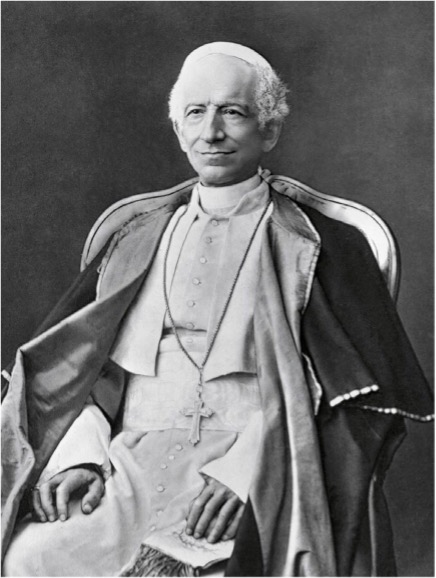
The naming of a new asteroid after Pope Leo XIII is intended to draw public attention to the Pope’s role in the re-establishment of the Vatican Observatory and to his broader interest in the sciences.
The event also provides an opportunity to rediscover the process through which newly discovered celestial bodies are assigned names. Father Richard D’Souza, Director of the Vatican Observatory, discusses this in an interview with www.vaticanstate.va.
What is the process that leads from the discovery of an asteroid to its official naming?
The assignment of a specific name to a particular minor planet is the result of a lengthy process that can take many decades. It begins with the discovery of a Minor Planet or asteroid that cannot be identified with any already known object. These Minor Planets are given a provisional designation. Provisional designations are based on the date of discovery and are assigned by the Minor Planet Center (MPC) according to a well-defined formula that includes the year of discovery, two letters, and, if necessary, additional numbers (for example, 1989 AC or 2002 LM60).
When the orbit of a Minor Planet has been determined with sufficient precision to allow its position to be reliably predicted far into the future (this usually occurs after the Minor Planet has been observed during four or more oppositions), the Minor Planet receives a permanent designation — a number assigned sequentially by the Minor Planet Center, such as (433), (4179), or (50000).
Once a Minor Planet receives a permanent number, the discoverer is invited to suggest a name. The discoverer retains this privilege for a period of ten years following the object’s numbering. The discoverer drafts a brief citation explaining the reasons for the proposed name, following the guidelines of the International Astronomical Union or IAU.
All proposed names are evaluated by the IAU’s Working Group for Small Body Nomenclature (WGSBN), composed of fifteen professional astronomers from around the world whose research interests are connected to Minor Planets and/or comets.
What role does the International Astronomical Union play in the naming process?
The IAU Working Group is responsible for examining the discoverer’s proposed name and verifying that it complies with the established guidelines.
How much time usually passes between the discovery and the possibility of proposing a name?
On average, about ten years may pass between the discovery of an asteroid and the assignment of a permanent name. Sometimes, however, it can take much longer.
Are there specific guidelines for choosing asteroid names?
Names must not exceed sixteen characters and are typically written as a single word. Asteroid names must be pronounceable in at least one recognized language and must not be offensive. The proposed name must not be too similar to an existing name of a Minor Planet or another natural planetary satellite. Names of pets and commercial products are not permitted. Names of people or events known primarily for political or military activities are not eligible until 100 years after the person’s death or the occurrence of the event.
Do discoverers always have the right to propose a name?
Yes, in most cases they do. However, there are more detailed guidelines for particular Minor Planets belonging to certain dynamical groups. Some classes or families of asteroids follow naming traditions: Jupiter’s Trojan asteroids, for example, are named after figures associated with the Trojan War, while the Centaur family is named after mythological centaurs. The Working Group recognizes the need to limit the number of Minor Planets receiving names and therefore asks individual discoverers and teams not to propose more than two names every two months.
Can you tell us about a curious or meaningful example related to asteroid naming?
One of the most curious namings involved an asteroid named after the cat of discoverer James B. Gibson. The feline, like its celestial namesake, was described as “imperturbable, logical, intelligent, and pointy-eared,” according to a statement published by the Minor Planet Center in September 1985. (Today, pets are officially discouraged as sources of inspiration for names, but this one managed to pass.)
How important is the cultural aspect in the choice of names?
Culture plays a fundamental and increasingly important role in the naming of asteroids. The first asteroids were named according to Greco-Roman mythology (Ceres, Pallas, Juno, Vesta). Over time, naming practices expanded to include Norse, Egyptian, Chinese, Mayan, Hindu, and African mythologies, transforming the solar system into a genuine cultural atlas. Scientists, composers, writers, and philosophers from every civilization are honored: there is an asteroid named Beethoven, one Shakespeare, one Confucius, and one Ibn Battuta.
In recent decades, there has been a conscious trend toward including names from historically underrepresented cultures: North American Indigenous languages, African traditions, and Oceanic cultures. Many asteroids bear the names of cities, regions, or peoples, often connected to the discoverer’s origins, thus reflecting their cultural identity.
Can naming an asteroid contribute to science communication?
Public fascination with astronomical objects is enormous. Naming an asteroid after a person helps draw public attention to that individual’s contribution to science or to society in general. In specific cases, it also helps highlight certain scientific laws discovered by that person, such as Einstein’s laws of gravity or the theories of Father Georges Lemaître, the father of the Big Bang theory.
Are there initiatives to involve the public or schools in this process?
In reality, the responsibility for naming an asteroid belongs to the discoverer. I am not aware of initiatives in which the public or schools are involved in this process.
Which asteroid name do you consider the most fascinating or significant, and why?
I am very glad of the new asteroid that has just been named after Pope Leo XIII. The naming of the asteroid draws public attention to Pope Leo XIII’s role in the re-establishment of the Vatican Observatory, after the unification of Italy, and I am pleased that he is finally being honored with this designation. Since he was the head of the Vatican State, we had to wait a long time.