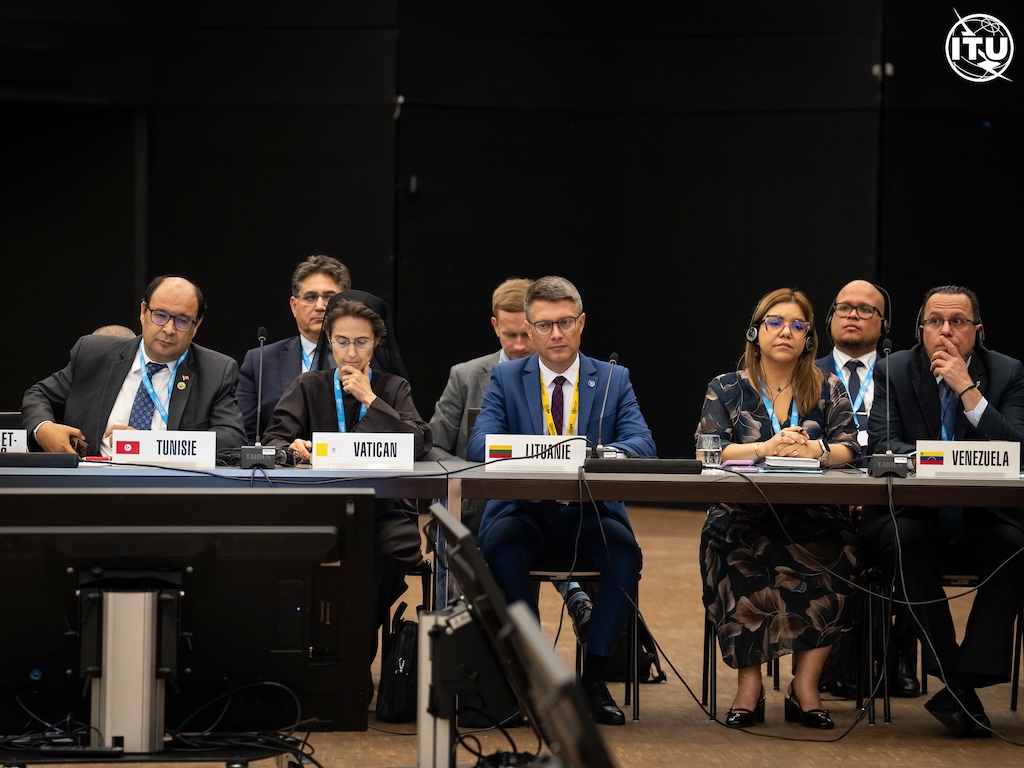
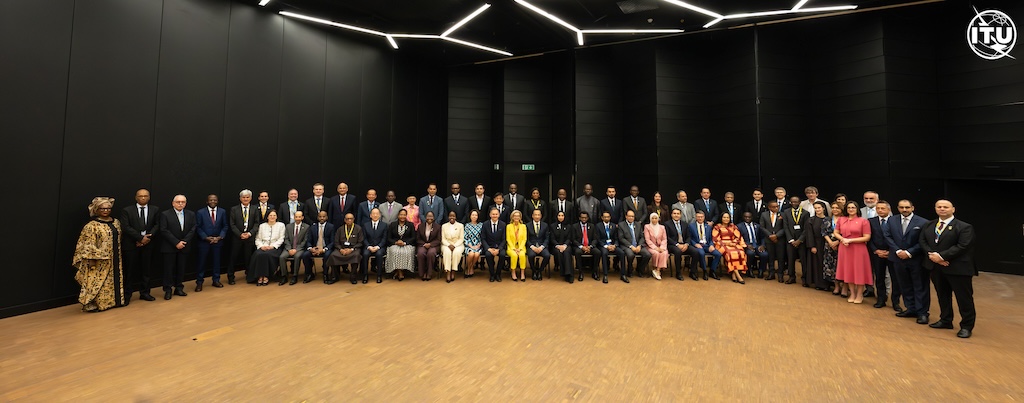
Table ronde ministérielle du WSIS Forum 2026 à Genève

L’utilisation de l’intelligence artificielle n’est jamais une question purement technique
Moment phare du WSIS Forum 2026, organisé par l’Union internationale des télécommunications (UIT), la Table ronde ministérielle – qui constitue le volet de haut niveau (High Level Track) du Forum – réunit des ministres, des autorités de régulation, des dirigeants d’entreprise, des représentants de la société civile, des maires, des ambassadeurs, ainsi que des responsables des agences des Nations Unies. Elle s’est tenue le jeudi matin 9 juillet, au Palexpo de Genève.
Les travaux ont été ouverts par la Secrétaire générale de l’UIT, Doreen Bogdan-Martin, dans le cadre du dialogue ministériel consacré à la coopération numérique internationale, avec une attention particulière portée aux enjeux de la gouvernance de l’intelligence artificielle, qui figurent parmi les priorités définies par le Global Digital Compact.
Les tables rondes ministérielles offrent aux États membres l’occasion de présenter leurs priorités nationales en matière de numérique, d’échanger leurs expériences et d’identifier des domaines d’action collective, renforçant ainsi le rôle du Forum comme trait d’union entre les engagements pris au niveau politique et leur mise en œuvre opérationnelle.
Nous publions ci-dessous le discours de la Présidente du Gouvernorat :
Statement of the Vatican City State on the I.T.U. WSIS Forum 2026
Ministerial Roundtable
Topic 1: “AI Strategy and Policy”
Geneva, 6-10 July 2026
As AI increasingly transcends national borders, how can countries strengthen cooperation and share experiences, and how can the United Nations help facilitate this collaboration for the benefit of all?
Mr. Chairman, Excellencies,
The Vatican City State Delegation would like to thank the International Telecommunication Union for convening this annual WSIS Forum 2026, and is pleased to take the floor in this Ministerial Roundtable.
The increasing potential of digital technologies could be a valuable asset in enhancing cooperation, fostering communication, and facilitating the exchange of information among countries and peoples. Furthermore, advances in AI, cognitive science, nanotechnology, robotics and biotechnology can contribute to integral human development and the stewardship of God’s creation.
However, as with any scientific development, technological progress, needs to be inspired by authentic moral and social values. As recalled by Pope Leo XIV, it requires “careful discernment of the anthropological vision that guides it and the ends it pursues”[1]. In this sense, an ethical framework is necessary to ensure that AI facilitates international cooperation effectively, advances the common good and preserves the human dignity of every person.
The use of AI is never a purely technical matter; it has a profound impact on people’s lives. As Pope Leo XIV underlined in his recent Encyclical Letter Magnifica Humanitas, “responsibility must be clearly defined at every stage: from those who design and develop these systems to those who use them and rely on them for concrete decisions”[2]. International cooperation is needed to achieve this. Moreover, it is important to implement norms that enable the identification of those who will be held accountable for the decisions made. Finally, data ownership must be appropriately regulated.
Mr. Chairman,
This Delegation is convinced that solid legal frameworks are needed to guarantee independent oversight and adequate information for users. To this respect, political will is necessary in order to foster actions and involve communities and intermediary organizations so that they may also bring their own expertise. However, prudence and rigorous evaluation may require a slower pace when adopting AI. This does not mean opposing progress; rather, it is an exercise in responsible care for the human family[3].
The Vatican Delegation believes that ongoing international dialogue among countries is essential, in order to ensure that the use of AI – especially with regard to public goods and fundamental human rights and dignity – is guided by clear criteria and effective oversight, grounded in shared participation and respect of subsidiarity.
Thank you.
[1] Leo XIV, Magnifica Humanitas, 94.
[2] Ivi, 105.
[3] Cfr. ivi, 106.