


Interview with Massimo Toschi on the agreement with the Hera Group for integrated waste management

For energy recovery
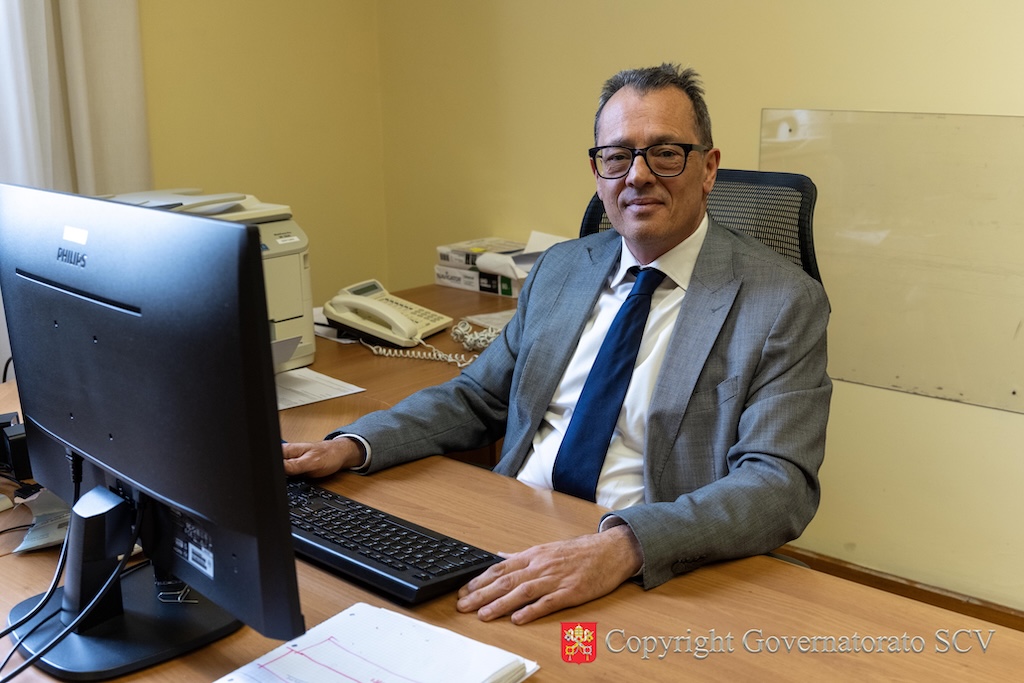
Operational activities involving the collection, recovery, transport, treatment, and disposal of municipal and special waste: this is what the agreement signed last December 12 between the Governorate of the Vatican City State and the Hera Group provides for, through its subsidiary Herambiente S.p.A., a company that specializes in waste treatment and recovery. Massimo Toschi, Deputy Director of the Services Sector of the Directorate of Infrastructure and Services of the Governorate, discusses the agreement in this interview with www.vaticanstate.va.
Which operational activities are included in the agreement, among collection, treatment, disposal, recovery, technological innovation?
The service includes the operational activities of collection, recovery, transport, treatment, and disposal of municipal waste and special waste. In accordance with the provisions of the 1929 Lateran Treaty, this service can be classified as a public service of cross-border interest, as well as one that concerns the protection of hygiene and public health.
What is the strategic objective of the agreement for both parties?
The objective is, as stated in Laudato si’- the Encyclical inspired by the principles of environmental sustainability and the circular economy - to adopt a circular model of waste production. This objective is now shared through facilities that allow for energy recovery.
Are new methods for delivering the service planned?
The main innovation of the requested service is the analytical monitoring of the waste cycle. In short, through the analysis and evaluation of data relating to the quantities produced and the types of waste, the identification of operational critical issues, and the redesign of the collection system, we will be able to improve the environmental and economic impact of the service.
Which environmental and technological standards will be applied?
The standards include the progressive use of environmentally friendly vehicles and the identification and application of new operational procedures, which will also lead to a new rationalization of collection points. Finally, it should not be forgotten that disposal facilities will be used with the aim of transforming waste into energy resources.
Are measurable targets set (e.g. percentage of separate waste collection, reduction of waste sent to landfill)?
The objectives are already measurable, but they can also be achieved thanks to the environmental training courses now planned for employees of the Vatican City State and for those who carry out activities with an environmental impact.
How will the implementation of the agreement be monitored?
Pursuant to the existing regulations, the current Gardens and Environment Service of the Governorate has institutional responsibility for waste management. Monitoring of the agreement is therefore entrusted to this Service; however, given the complexity and importance of the activity, monitoring will also involve the Single Project Manager (RUP), the Legal Office, and the Control and Inspection Unit (UCI), according to their respective responsibilities.
How are special or hazardous waste managed?
Waste is divided into municipal and special waste. Special waste, in turn, is classified as hazardous or non-hazardous. One of the innovations of this agreement is interaction with a single counterpart responsible for its management and disposal.
What is the duration of the agreement?
The duration in the contract with Hera Group is 18 months.