


Pope Leo XIV Establishes the Fratello Sole Foundation
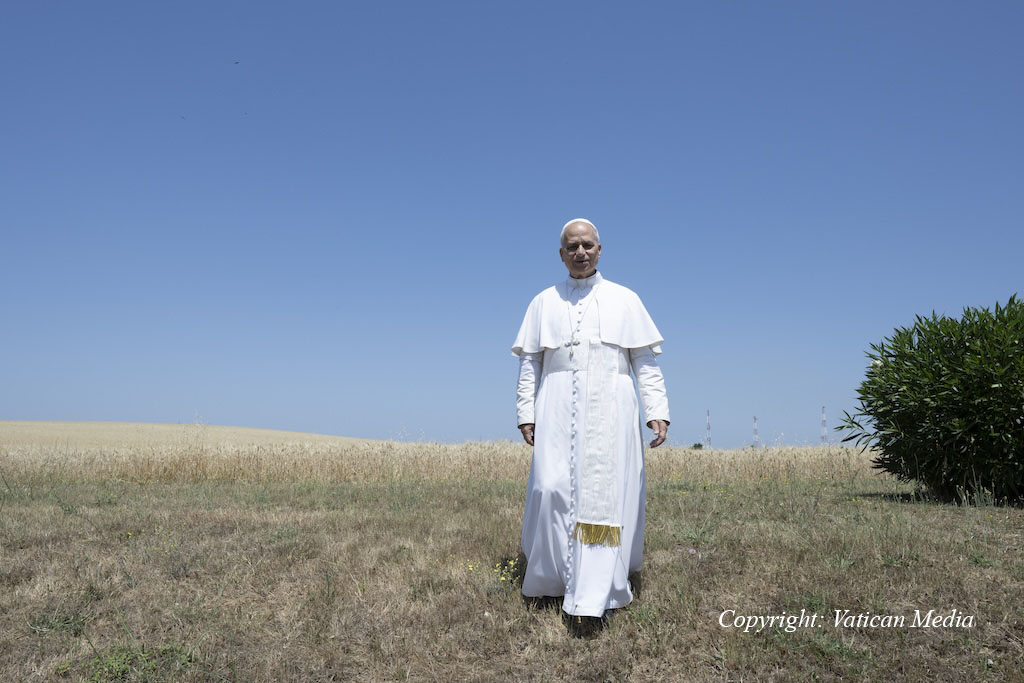

For the construction of an agrivoltaic plant in Santa Maria di Galeria
Pope Leo XIV, through a Chirograph dated 1 June 2026, has established the Fratello Sole Foundation and approved its Statute. As the Pope writes in the Chirograph, “The Foundation represents a sign of hope for the future and an example of how it is possible to reconcile energy production and agriculture while respecting and protecting the environment, in accordance with the principles of environmental sustainability and care for our common home contained in the Encyclical Laudato si’, the Apostolic Exhortation Laudate Deum, the Motu Proprio Fratello Sole and, more generally, in the social Magisterium of the Church.”
The Chirograph states: “The Foundation shall have its registered office in Vatican City State and full operational activity in the extraterritorial area of Santa Maria di Galeria. I establish that this Entity shall be governed by its own Statute, which I hereby approve and which is promulgated through this Chirograph. For the first three-year term, I appoint the President of the Governorate of Vatican City State and the President of the Administration of the Patrimony of the Apostolic See as President and Vice President respectively, granting the aforementioned persons the powers provided for in the Statute.”
Furthermore, the Foundation “pursues objectives of public interest in the fields of energy sustainability, environmental protection, and the responsible use of natural and agricultural resources, in accordance with the principles of the social doctrine of the Church, as well as the guidelines contained in the Encyclical Laudato si’, the Apostolic Exhortation Laudate Deum, and the Motu Proprio Fratello Sole of 21 June 2024.”
The Foundation “shall oversee the construction and management, including financial management, both directly and indirectly, of the planned agrivoltaic plant referred to in Article 1 of the Agreement between the Holy See and the Italian Republic for an agrivoltaic plant in Santa Maria di Galeria, dated 31 July 2025 (the Agreement), for which the area will be granted by the Administration of the Patrimony of the Apostolic See.”
The agrivoltaic plant in Santa Maria di Galeria will combine agricultural use of the land with energy production, protecting the hydrogeological balance, reducing environmental impact, and safeguarding the cultural, archaeological, and landscape heritage of the area.
A step forward in this direction was taken on Wednesday, 7 January 2025, when the Senate of the Italian Republic approved the bill concerning the ratification and implementation of the Agreement between Italy and the Holy See for an agrivoltaic plant in Santa Maria di Galeria.
The Agreement was signed at Palazzo Borromeo, the seat of the Italian Embassy to the Holy See in Rome, on Thursday, 31 July 2025, by Archbishop Paul Richard Gallagher, Secretary for Relations with States and International Organizations, and Ambassador Francesco Di Nitto, Italy’s representative to the Holy See.
The project for an agrivoltaic plant originated at the initiative of Pope Francis, who, through the Apostolic Letter issued Motu Proprio Fratello Sole on 21 June 2024, entrusted the President of the Governorate of Vatican City State and the President of the Administration of the Patrimony of the Apostolic See with “the task of constructing an agrivoltaic plant located within the extraterritorial area of Santa Maria di Galeria, which will ensure not only the electricity supply of the radio station located there, but also the complete energy self-sufficiency of Vatican City State.”
In the Motu Proprio, Pope Francis referred to the Encyclical Laudato si’, in which he invited everyone to adopt more sustainable lifestyles and to use resources and energy more responsibly, as a concrete gesture of love towards the Earth and towards others.
On Thursday, 19 June, 2025 Pope Leo XIV visited Santa Maria di Galeria, the extraterritorial area that hosts the shortwave Radio Centre of Vatican Radio, part of the Dicastery for Communication. The visit also provided an opportunity to examine the extraterritorial area where the agrivoltaic plant will be built.