


March 3: Saint Cunegonde, Empress
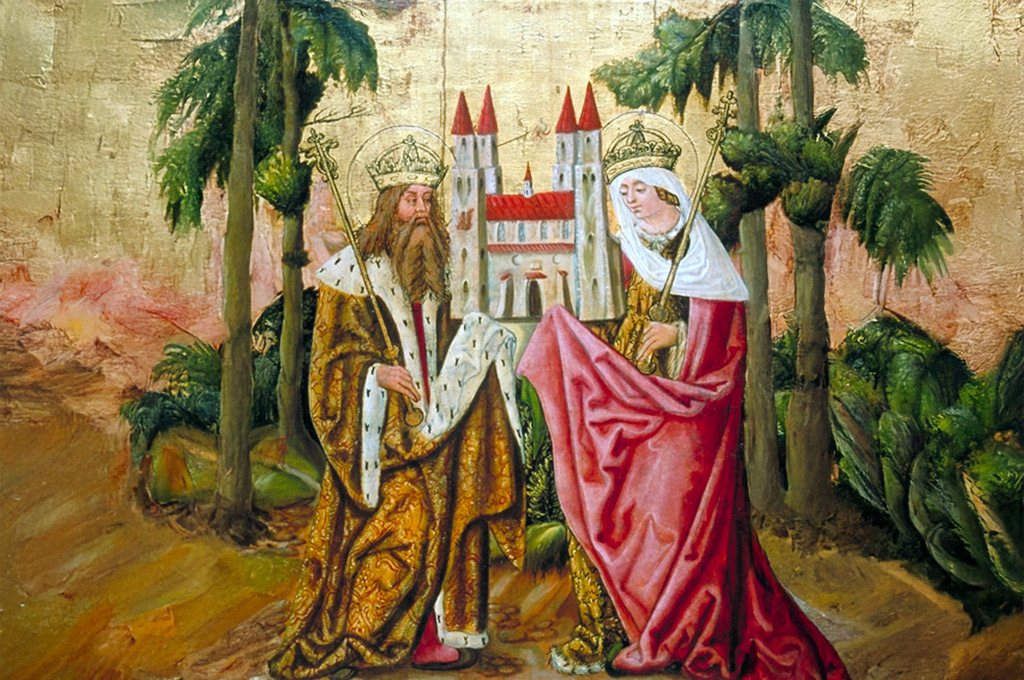

She Renounced Honors to Follow Christ
Cunegonde was born in 978 in Luxembourg to Sigfrid, the first Count of Luxembourg, and Hedwig of Nordgau, a descendant of Charlemagne. In 998 she married Henry IV, Duke of Bavaria, who was later elected Emperor of the Holy Roman Empire as Henry II the Saint. After the death of Otto III, her husband was crowned King of the East Franks on June 6, 1002. Cunegonde was crowned queen on the following August 10 in Paderborn.
According to her contemporary chronicler Rodulfus Glaber, the emperor realized that Cunegonde was sterile, yet he did not repudiate her, as Germanic marital law would have allowed. They lived their marriage in fidelity to the Gospel, performing great works of charity and founding churches and monasteries.
In 1004, the couple had Bamberg Cathedral built, dedicated to Saints Peter and George, which was consecrated by Pope Benedict VIII, as well as a Benedictine abbey under the protection of Saint Michael.
Cunegonde had a monastery dedicated to Saint Stephen erected at her own expense and, in 1021, another dedicated to the Holy Cross in Kaufungen.
Cunegonde and her husband were crowned Emperor and Empress on February 14, 1014, in Rome by Pope Benedict VIII. As was customary, Cunegonde assisted her husband in governing the empire when he was away on missions. After the death of Henry II on July 13, 1024, she ruled for nearly two months as Empress Consort of the Romans.
On the first anniversary of Henry II’s death, renouncing imperial honors, she entered the monastery of Kaufungen, where she lived for fifteen years, devoted to asceticism, prayer, and caring for sick nuns. She died on March 3, 1039, and was buried with Henry II in Bamberg Cathedral, clothed in the coarse woolen habit of a nun.