


April 14: Saint Lidwina

Learning by the Crucifix
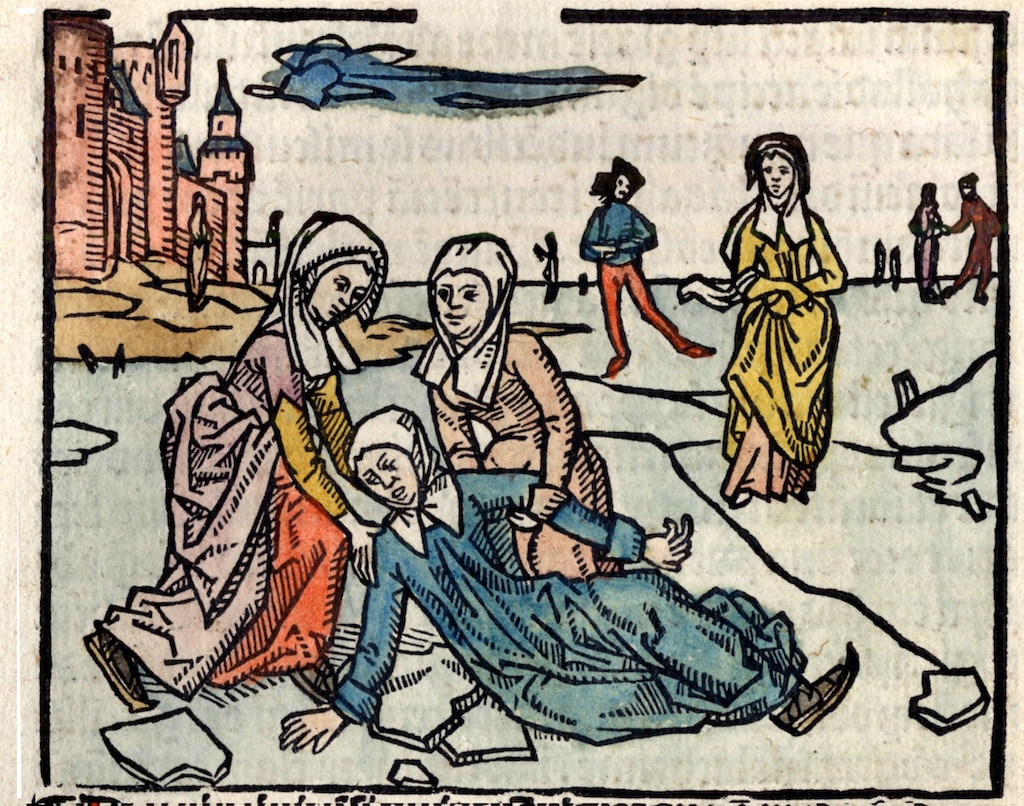
She was skating on ice when, after a bad fall, was left permanently paralyzed. Lidwina was 15 years old in 1395 when, because of this accident, she was forced to remain bedridden and immobile for 38 years. She had been born on March 18, 1380, in Schiedam, in the Netherlands, into a modest family. Her father was a night watchman.
After the fall, Lidwina’s first reaction was to rebel against her dramatic situation and to ask why all this had happened to her. Her encounter with a young priest, John of Pot, changed her life. The priest explained to her that Jesus too had suffered innocently for others, taking upon himself the sins of the world. Lidwina understood that the Lord was asking her to help him convert her brothers and sisters. Thus, she accepted her illness, and mystical phenomena began, including apparitions of angels, the Virgin Mary and Jesus.
It is said that, in spirit, she visited Purgatory and Heaven, accompanied by angels. One day, a Eucharistic host shining with light appeared above her head, which her relatives and neighbors were also able to see. The parish priest interpreted it as a demonic deception, but the bishop confirmed that it was a heavenly sign.
Lidwina was deeply devoted to the Eucharist. One day, to test her, a priest brought her an unconsecrated host. Lidwina sensed that the presence of the Lord was not there and refused to receive it.
Her room became a center of spirituality and a place of pilgrimage. The faithful came not only from her city, but from all of Flanders, from Germany, and even from England. People perceived in her the presence of Jesus. They came to ask for advice, for prayers, and to be freed from the burdens they carried. Lidwina became a beacon of hope for those who turned to her. She not only prayed, but also practiced long fasts.
Her illness steadily worsened, leaving her with the use of only her left hand.
She died on April 14, 1433, on Easter Tuesday. Her tomb became a destination for pilgrimages. In 1890, Pope Leo XIII confirmed devotional practices to her.