


April 27: Saint Zita, Virgin
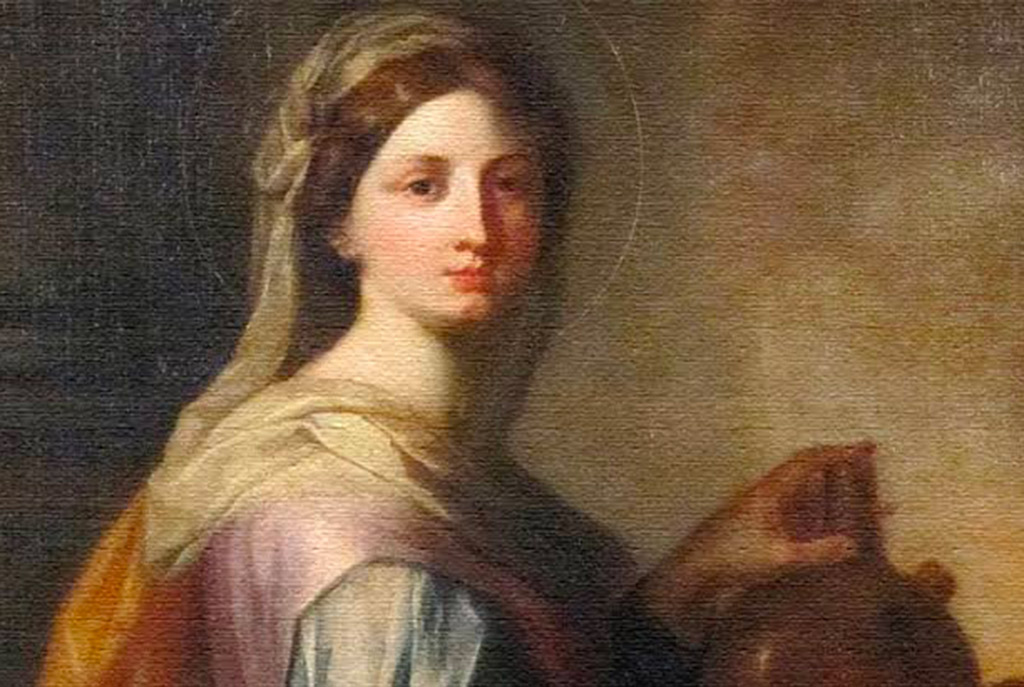

The patron saint of homemakers, domestic workers, and bakers
She was already regarded as a saint to the extent that Dante Alighieri mentioned her in his Divine Comedy shortly after her death. Zita is not only considered a saint by the poet in his own time, but is also identified with the city of Lucca. In fact, he refers to “one of the elders of Saint Zita!” in “Inferno”, Canto XXI. The “elders” were ten magistrates who governed Lucca, and Dante places one of them among those condemned to the punishment reserved to barrators.
Saint Zita was born in 1218 into a poor family in Monsagrati, in the diocese of Lucca. At just 12 years old, she entered service with the noble Fatinelli family of Lucca. She worked tirelessly, devoting herself to prayer and making pilgrimages to Marian shrines in her free time. Her lifestyle was marked by simplicity and modesty. She saved everything she could in order to give it to the poor. In fact, at every meager meal she tried to set aside some food for those in greater need.
In her relationships with others, she faced obstacles due to envy and jealousy, but she always responded with forgiveness. She never failed in charity toward others. She died in the reputation of holiness in 1278.
The people of Lucca wished for her remains to be buried in the Basilica of San Frediano. In 1695, Pope Innocent XII confirmed her cult. In 1955, Pope Pius XII proclaimed “the Virgin Saint Zita Patron before God of domestic workers and all women dedicated to the care of the home.”
The saint is also the patroness of the female congregation of the Sisters Oblates of the Holy Spirit, also known as the Institute of Saint Zita.