


March 11: Saint Sophronius of Jerusalem, Patriarch
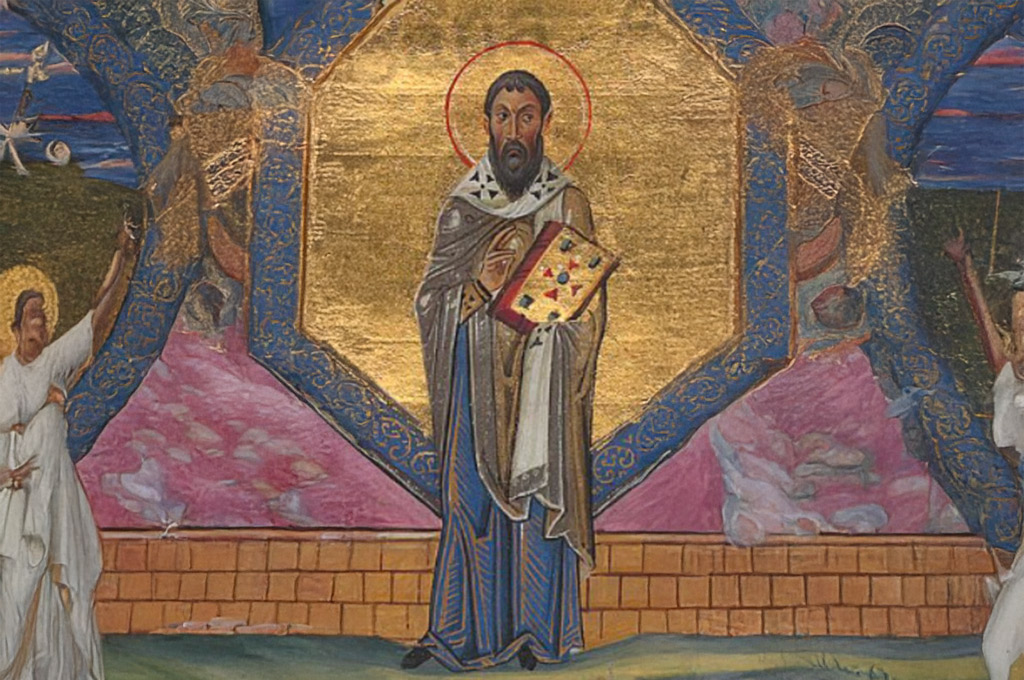

As a tireless opponent of the heresy of Monothelitism and as Patriarch of Jerusalem, he succeeded in preserving the faith of Christians during the Arab conquest. This was Sophronius, born in Damascus, Syria, around the year 550. From a young age he devoted himself to study and later to the teaching of literature and rhetoric.
After completing his studies, he made a pilgrimage to the Holy Land to visit the places where Jesus had lived and to meet the ascetics. He then stayed in the monastic settlement of Saint Theodosius in Judea, where he met John Moschus, a Syrian monk and chronicler, with whom he formed a close friendship. Both opposed the doctrine of Monothelitism, later condemned as heresy by the Third Council of Constantinople (681).
In 578, he departed with Moschus for Alexandria in Egypt to learn from the ascetic community and visit the Egyptian monasteries. He decided to withdraw from worldly life and made his religious profession at the Monastery of Saint Theodosius. Sophronius and Moschus placed themselves at the service of the Patriarch of Alexandria, John the Almsgiver. Later, he undertook various journeys through Asia Minor, Egypt and North Africa to bring the Monophysite communities back to the true faith; these communities had received support from Emperor Heraclius I and from Sergius I, Patriarch of Constantinople.
In 614, the Persians conquered Jerusalem, and Sophronius and Moschus accompanied Patriarch John into exile, first to Cyprus and then to Rome, where Moschus died. In 627, thanks to the victory of Emperor Heraclius I, Jerusalem was liberated.
After returning to the Holy Land, in 634 he was elected Patriarch of Jerusalem and continued his work of bringing the Monophysite communities back into the church. He wrote numerous hagiographical, dogmatic, homiletic, and liturgical works, including the first version of the Reproaches for Good Friday used in the liturgy. His Synodal Letter is particularly famous, a profession of faith concerning the doctrine of the two wills of Christ.
In 637, through his firmness and diplomacy, Sophronius succeeded in securing freedom of worship for Christians during the conquest of Jerusalem by the Caliph Omar.
The Patriarch died on March 11, 638.