


April 13: Saint Margaret of Castello, Dominican Tertiary
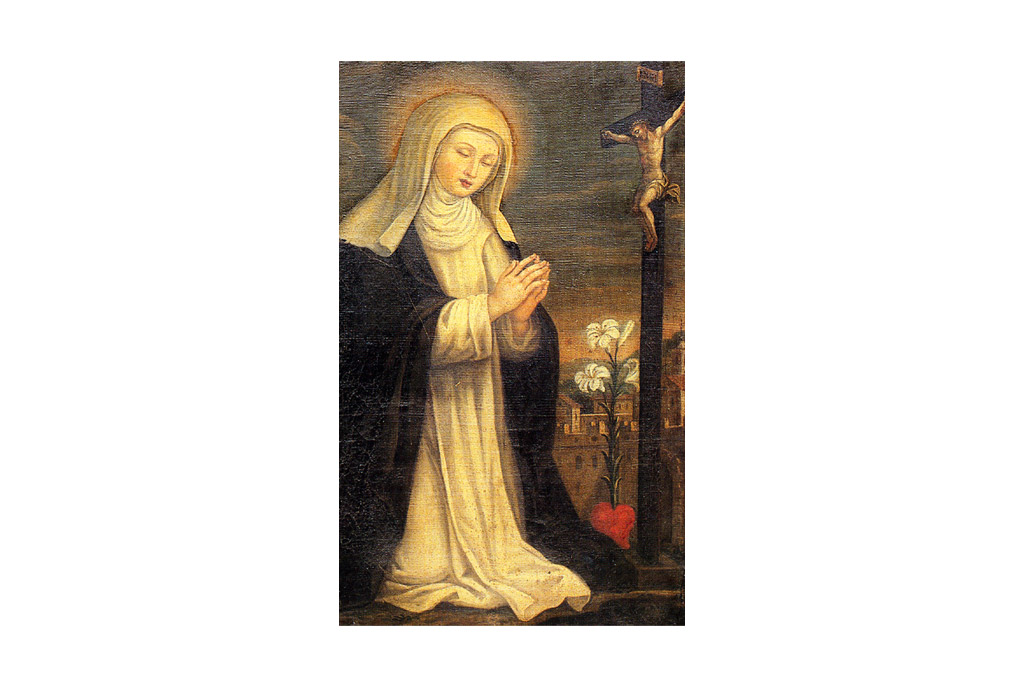

From dark blindness to the light of Christ
She was born blind and deformed, yet she became a radiant beacon, spreading the charity of Christ to all who came into contact with her. This is Margaret of Castello who, abandoned by human beings, found complete trust in Divine Providence the strength to endure adversity and glorify the Lord.
She was born around 1287 in the castle of Metola, near Mercatello sul Metauro in the Marche region, into a family of local nobility. She came into the world blind and deformed, and her parents could not bear the shame of having such a daughter; therefore, they confined her in a cell adjacent to the castle church. The child thus lived in solitude, devoting herself to prayer and contemplation of God.
At about the age of fifteen, her parents took her to the tomb of Brother James of Castello, a Franciscan lay brother who died in 1292 with a reputation for holiness, hoping she might be healed. But the miracle did not occur, and so, cynically and without pity, Margaret was abandoned to herself, without any support.
The young girl began to beg in the streets of the city until the nuns of the monastery of Saint Margaret welcomed her among them. Things, however, did not go well, because the religious could not tolerate Margaret’s example of asceticism and total dedication to God; out of envy and jealousy, they harshly expelled her. It seemed there would be no peace for her.
Through the charity of a married couple, Venturino and Grigia, Margaret found lodging in a small room in the upper part of their house. There she was able to devote herself to prayer and contemplation, while also educating the children of her benefactors.
People began to come to her from every place to ask for prayers and advice, drawn by the charismatic gifts with which the Lord had enriched her. Despite her blindness, she cared for the poor and the needy. She devoted herself to penance, fasting and sleeping on the ground. Admiring the example of Saint Dominic, she asked to be admitted to the Third Order of the Friars Preachers, whose women were called “Mantellate.” She attended Mass daily in the Church of Charity run by the Dominicans, went to confession every day, recited the Office of the Virgin and the Psalter, and meditated on the mystery of the Incarnation.
Gradually, her health worsened, and when she sensed her end approaching, she called the friars to receive the Sacraments. She died on April 13, 1320. Pope Francis, on April 24, 2021, enrolled her among the Saints through equipollent canonization.