


May 11: Saint Ignatius of Laconi
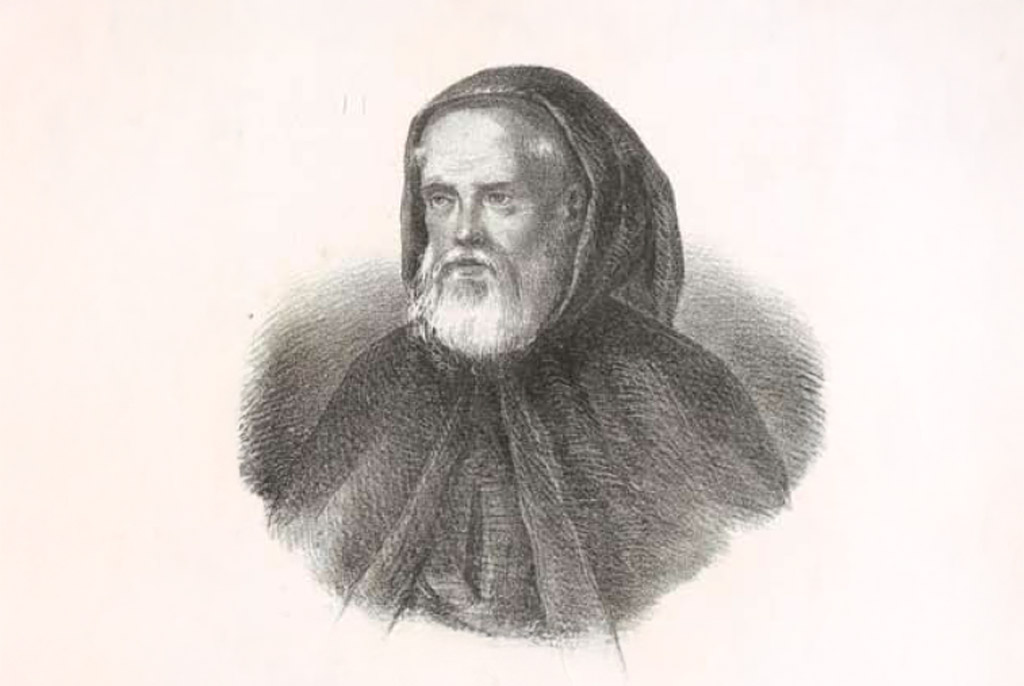

God’s Beggar
He walked through the streets of the city of Cagliari begging for alms and offering the Word of Life to all those he met along his way. He was illiterate and frail in health, yet in the school of Saint Francis of Assisi he learned how to bring peace to troubled souls and convert sinners.
His name in the world was Vincenzo Cadello Pesi. He was born in Laconi, in what is now the province of Oristano, in Sardinia, on December 17, 1701, into a family of humble farmers. Raised in a Christian environment, he was already called “the little saint” as a child.
He was never able to attend school and did not learn to read or write. Every morning he served Mass as an altar boy. At the age of eighteen, due to an illness, he was confined to bed and came close to death. He made a promise to God that, if he recovered, he would join the Franciscans. However, once he regained his health, he did not keep his promise and even lost the fervor that had distinguished him until then.
An episode, however, reminded him of the vow he had made. In the autumn of 1721, while riding a horse, he nearly fell into a precipice because the animal suddenly bolted. Having escaped the danger, he decided to enter the convent.
At the beginning of November 1721, he knocked on the doors of the convent of Buoncammino in Cagliari, asking to be admitted among the Friars Minor Capuchin. The provincial superior, however, refused to accept him because of his poor health, since a lay brother was expected to perform all kinds of work. Together with his father, he then went to the Marquis of Laconi, Gabriele Aymerich, to seek his intervention with the friars. The marquis pleaded his case, and the provincial accepted him. He thus received the habit and changed his name to Ignatius, making his religious profession on November 10, 1722. For twenty years he was assigned to various duties, first in Iglesias, then in Domusnovas, Sanluri, Oristano, and Quartu. Returning to the convent of Buoncammino in Cagliari, he was assigned to the wool workshop, where cloth for the friars’ habits was prepared.
Around 1742 and until his death, he served as a beggar for the city. With a sack over his shoulder, he walked through the streets of Cagliari asking for bread and food for the friars and the poor, offering in return the message of salvation of the Gospel. Children and young people would turn to him to listen to his words of wisdom. He prayed and did penance for everyone. Soon, even important and influential figures of the city sought him out for advice and discernment.
It is said that during his rounds of begging he also performed miracles. One prodigy has remained famous. There was a merchant in the city who had made his fortune by oppressing the poor. Brother Ignatius never stopped at that man’s house for alms, knowing the origin of his wealth. The merchant then turned to the guardian of the convent, who, out of obedience, told Brother Ignatius to go to that house. After receiving the merchant’s gifts, a stream of blood began to flow from Brother Ignatius’s sack all the way back to the convent. When he delivered what he had received and was asked for an explanation by the guardian, he replied: “Father, it is the blood of the poor.”
He died on May 11, 1781, in the convent of Buoncammino. On June 16, 1940, Pope Pius XII declared him Blessed, and on October 21, 1951, he canonized him.