


February 23: Saint Polycarp, Father of the Church
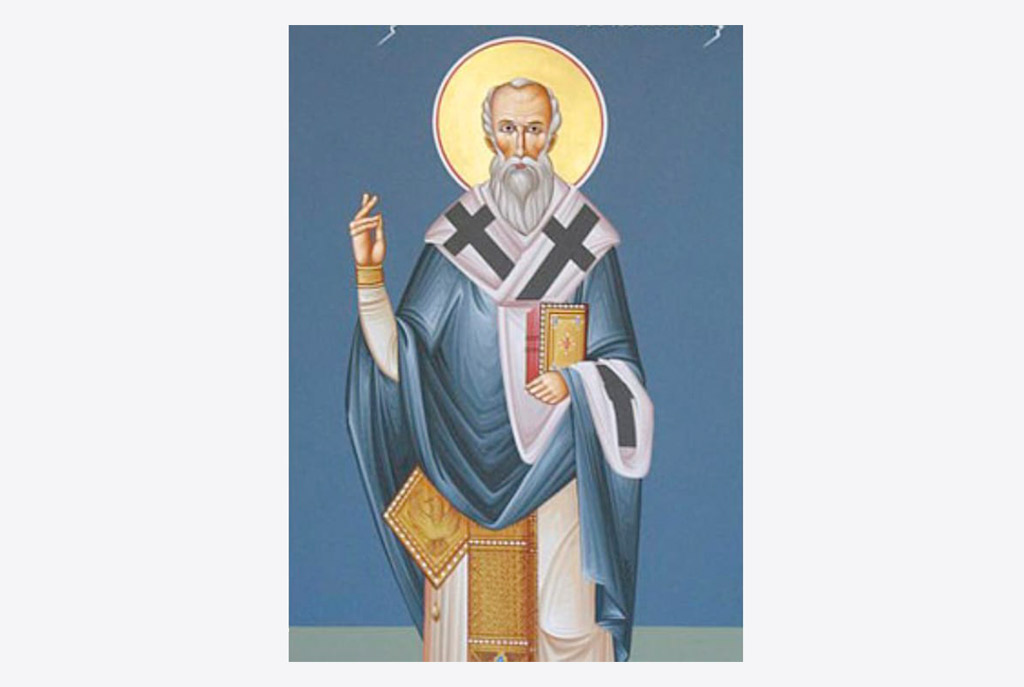

Teacher of Truth and Doctrine
The figure of Polycarp stands as a fundamental pillar of early Christianity. He is the link between the apostolic age and the generations that followed. As Bishop of Smyrna and a key figure in the Church’s earliest theological indications, he embodied an absolute fidelity to the Gospel, lived without compromise. His name, of Greek origin, evokes the idea of abundance and fruitfulness—a meaning that reflects a personality who left a significant legacy in the history of the Church.
Born toward the end of the first century, probably in the region of Smyrna, he lived in an era marked by profound political and religious upheavals. The great apostolic figures had just passed away, and the destruction of Jerusalem had forced many Christian communities to disperse, yet this dispersion also fostered decisive encounters between the new generations and those who had directly known Jesus.
It is said that Polycarp grew up in an already Christian environment. According to tradition, he was converted around the year 80 by the Apostle John himself. This privileged bond with the last surviving member of the Twelve granted Polycarp a unique moral and doctrinal authority, making him a point of reference for Asia Minor.
After exercising priestly ministry, he was ordained Bishop at a relatively young age. His leadership was marked by balance, firmness in doctrine, and attentive care for ecclesial communion.
In the final years of his long life, Polycarp traveled to Rome with a twofold purpose: on the one hand, to manifest communion with the Bishop of Rome, recognized as a point of unity for all Christians; on the other, to address a highly sensitive issue—the date of the celebration of Easter. Customs differed between East and West, and although no common solution was reached, his meeting with the Bishop of Rome took place in a climate of mutual respect.
The political context of the second century, though lacking systematic persecutions, remained hostile to Christians. Social tensions and false accusations often erupted into local violence which was ignored or tolerated by the authorities.
The account of Polycarp’s martyrdom, preserved in one of the earliest Christian testimonies—Martyrium Polycarpi, written in 155–156 in the form of a letter from the Church of Smyrna—describes with precision the Bishop’s final moments. Urged to seek safety, he refused to abandon his community. When arrested, he received the soldiers calmly and asked only for time to pray. Brought before the proconsul, he was repeatedly offered the opportunity to renounce Christ, but his response remained unwavering: he could not betray the One he had faithfully served all his life.
Condemned to be burned at the stake, he faced death as an offering, praising God for having been deemed worthy of martyrdom. According to the testimony of witnesses, the flames did not immediately consume him, and only a final blow brought his life to an end. It was around the year 155, and Polycarp became one of the most radiant witnesses of the Christian faith in its earliest centuries.
His relics were gathered with reverence by the faithful, who kept alive the memory of their Bishop and martyr. His spiritual legacy endured not only in liturgical devotion, but also in the writings and teachings passed on to his disciples, among them Irenaeus of Lyons. His Letter to the Philippians remains a precious source for understanding the life, faith, and organization of the early Church.