


January 30: Saint Martina, Martyr
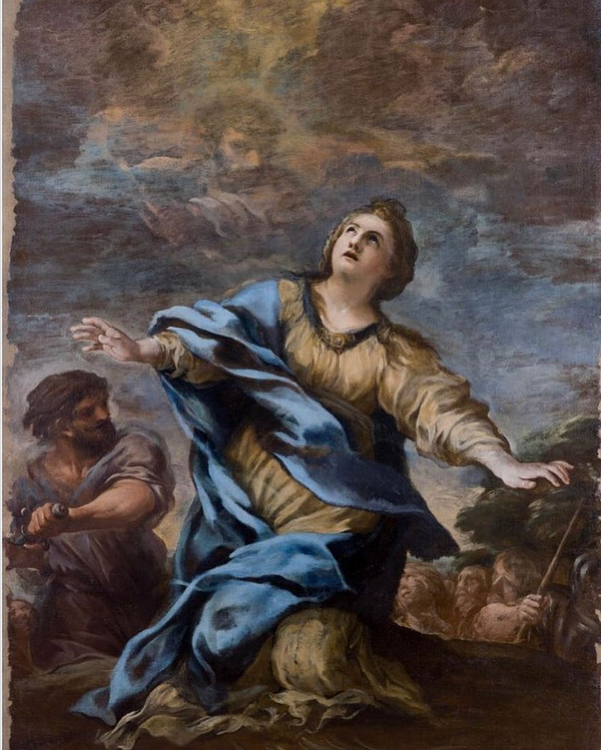

Offered in Sacrifice for Christ
Saint Martina, venerated as a virgin and martyr, lived in Rome in the 3rd century. She belonged to a Patrician family. According to tradition, she was persecuted for her Christian faith during the reign of Emperor Alexander Severus.
Despite the cruel tortures inflicted upon her, Martina remained unharmed until her life was ended by beheading. Her martyrdom took place at the tenth milestone of the Via Ostiense, where a church—now lost—was later built. Her relics were subsequently translated, together with those of the martyrs Epiphanius and Concordius, to the Church of Saints Luca and Martina in Rome.
The earliest historical evidence of her cult dates to the 7th century, when Pope Honorius I had a church erected in her honor near the Roman Forum; this church was later renovated in the 17th century by Pietro da Cortona. The saint’s feast was already being celebrated in the 8th century, but it was only after the rediscovery of the martyrs’ tombs in 1634 that Pope Urban VIII revived popular devotion, fixing the celebration on January 30 and composing a hymn that praised her purity, charity, and courage in bearing witness to Christ.
Beyond Rome, devotion to the saint spread to other places, particularly to Martina Franca, in the province of Taranto. There, in 1730, Cardinal Tommaso Innico Caracciolo arranged for some fragments of Martina’s relics, taken from the Church of Saints Luca and Martina, to be sent to his native city. An altar was erected in her honor, and, sharing the name of the city, she was granted the title of co-Patron Saint.