
Select your language

Saint of the day

Saint of the day

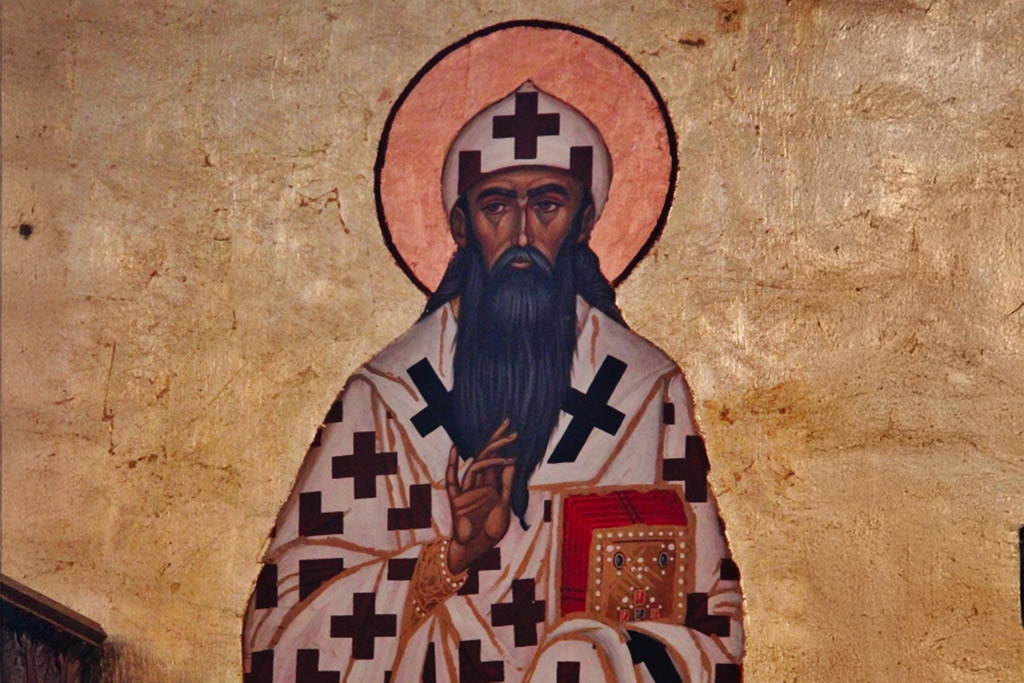
14 February: Saints Cyril and Methodius

Evangelizers of the Slavs

Cyril and Methodius are known for being the evangelizers of the Slavs, for whom they created an alphabet that was understandable to a large part of the people, in order to pass on the teachings of the Scriptures. The two brothers, Cyril and Methodius, were from Thessalonica, today known as Salonika,  in Greece, but then part of the Byzantine Empire. Methodius was born around 825, while Cyril was born two years later. Cyril’s original name was Constantine, but he changed his name when he became a monk on his deathbed.

13 February: Blessed Christina of Spoleto, Augustinian

Prayer, penance and charity toward the poor

Christina of Spoleto’s life changed radically when, around the middle of the fifteenth century, she chose to break with her past. At a very young age—probably shortly after 1450—she left her family to receive the religious habit and enter the order of Secular Augustinians. Until then, very little was known about this young woman named Christina, who wished to follow Christ without reservation. From that moment on, her existence was marked by continual journeys, without a permanent home, in search of God.

February 12: Saint Benedict of Aniane, Abbot

Reformer of Monastic Life

Benedict of Aniane, born Witiza, was born around the middle of the 8th century in southern France, into a noble family of Visigothic origin. At the age of twenty-seven, his life changed dramatically. During a military expedition to Pavia, he risked his life trying to save his brother, who had fallen into the River Ticino. Deeply shaken by the event, he vowed to dedicate himself entirely to God. True to his promise, around 774 he entered the monastery of Saint-Seine, near Dijon.

11 February: Our Lady of Lourdes

I am the Immaculate Conception

Our Lady appeared to the 14-year old Bernadette Soubirous 18 times, between 11 February and 16 July 1858, in the Grotto of Massabielle in Lourdes. She asked Bernadette to become her messenger and to cooperate with her in the conversion of sinners. She also made some requests: to make the Grotto a place of prayer and pilgrimage and spoke to her about the dogma proclaimed by Pius IX in 1854.

10 February: Saint Scholastica

Scholastica, the twin sister of Saint Benedict of Nursia, is inextricably linked to her brother’s name. She served God in contemplation and communal life. Saint Gregory the Great’s Second Book of Dialogues, which focuses on Benedict’s life, contains only a few hagiographical accounts of her life.

February 9: Saint Apollonia, Martyr

A faith that flames stronger than fire

The story of Apollonia is known thanks to an indirect testimony handed down by Eusebius of Caesarea, who lived between the 3rd and 4th centuries. In his work, he refers to a letter written by Bishop Dionysius of Alexandria and addressed to Fabian, Bishop of Antioch. The text describes details of what happened to Apollonia, of which the author claims to have been a direct witness.

Select your language