Select your language

Saint of the day

Saint of the day

8 December: Solemnity of the Immaculate Conception of the Blessed Virgin Mary

Tota Pulchra

Since medieval times, the Church has preserved a profound veneration for Mary, celebrating her conception without sin as early as the 11th century. This feast, placed at the heart of Advent, illuminates the expectation of the Messiah by recalling the unique bond between the Mother and the Son: Mary, shaped by the Spirit as a new creature, is presented by tradition as the one foretold in the promise made to the first parents, the woman destined to share in the victory over evil and to give birth to Emmanuel.

December 7: Saint Ambrose, Bishop and Doctor of the Church

A spiritual and civic guide

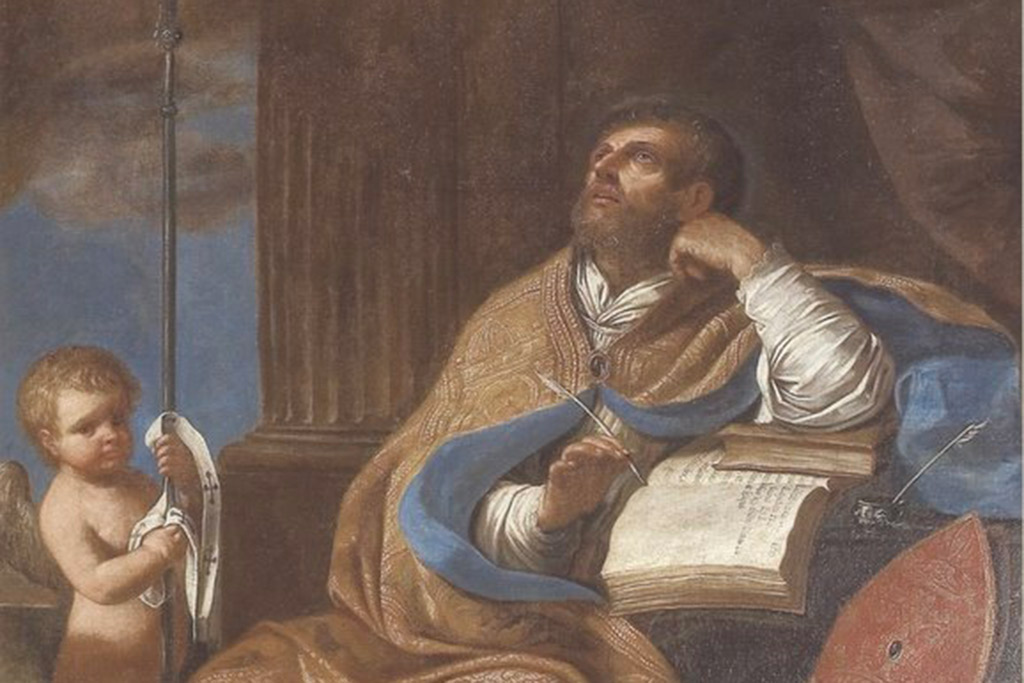
Dedicated to intense pastoral activity, without neglecting his constant study of Scripture - this is Saint Ambrose, born in 339 in Trier, into a Roman family already deeply rooted in the Christian faith; his father at the time held the prestigious post of Prefect of the Praetorium of Gaul.

6 December: Saint Nicholas of Bari

An Ecumenical Saint

Nicholas of Myra, also known as Nicholas of Bari, was a Bishop born in Patara, Lycia (modern-day Turkey), around 270 A.D. He is a Saint that brings together most of the Christian Churches and Confessions, and is venerated both in the East and the West. His memorial is 6 December, the day of his death, but he is also remembered by the Church on 9 May, in memory of when his remains were translated to Bari.

Francisco Goya, Santa Barbara, 1773, Museo del Prado (Madrid)

4 December: Saint Barbara, Patron Saint of Firefighters

Witness of Christ who donated her life

Saint Barbara, a martyr from the third century, is the Patron Saint of Firefighters. Her liturgical memorial is celebrated on 4 December. Devotion to the Saint began to spread in the seventh century, when the first Acta of her martyrdom began to appear.

3 December: Saint Francis Xavier, Patron of the Missions

The Apostle of the Indies

Francisco de Jassu y Xavier, known as Francis Xavier, was the “Apostle of the Indies”, the Patron Saint of the Missions, the great Evangelizer of Asia and one of the first to follow Saint Ignatius of Loyola.

He was born in 1506 in Xavier Castle near Pamplona, to a noble family. In September 1525, he travelled to Paris to study at the College of Saint Barbe, where he shared a room with Pierre Favre, the first priest of the Society, who was joined by Ignatius of Loyola. At first, Francis and Ignatius had a strained relationship because Francis wanted to pursue his academic career.  Ignatius described him as the “lumpiest dough he had ever kneaded”. In 1530, he became Magister Artium and obtained a chair at the College of Dormans-Beauvais.

December 2: Saint Bibiana, Martyr

Steadfast in the Face of Persecution

One of the earliest documentary traces of the story of Saint Bibiana appears in the Liber Pontificalis, where it is recalled that Pope Simplicius had a basilica erected in honor of the young martyr, located near the Palatium Lucianum and intended to house her relics. This church still stands in Rome today, not far from Termini Station.

Select your language