


December 18: Saint Gratian (Gatianus) of Tours, Bishop
%20of%20Tours,%20Bishop "Pin It")
Evangelizer of Gaul
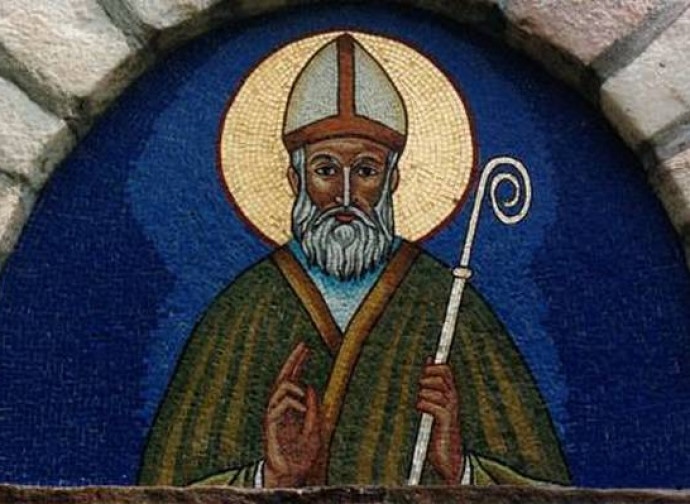
He was one of the earliest pioneers of the faith in Gaul, a remote foundation of the Christian tradition throughout the region. Gaziano or Graziano—known in ancient sources as Catianus, Gatianus, or Gratianus, and in France as Gatien de Tours—is remembered as the first enduring preacher of the Gospel in the city of Tours and as the founder of its diocese. Information about him is scarce and comes chiefly through the work of Gregory of Tours, the great sixth-century historian, who gathered oral traditions and popular accounts preserved in the Christian memory of Gaul.
According to the most widespread account, in the third century a group of seven missionaries set out from Rome to evangelize the Gallic provinces; Gaziano was among them. Gregory attributes the decision to send them to a pope of the mid-century, probably Pope Fabian. Gaziano’s name appears consistently among those said to have been the first to bring the Christian faith to the region of Tours.
Upon arriving in Gallia Lugdunensis, he chose Tours as the permanent center of his apostolic work. There he spent about fifty years, facing a hostile and often dangerous environment, to the point that he had to celebrate the Eucharist and instruct catechumens in the catacombs or in secluded places. When he died—probably between 301 and 307—he was buried in a Christian cemetery located in a suburb of the city, recalled by Gregory with the expression in ipsius vici cimiterio, qui erat christianorum [in the cemetery of that very village, which belonged to the Christians], a precious testimony to the existence of an organized Christian community on the outskirts of Tours.
The chronology reported by Gregory in the Historia Francorum was probably reworked to harmonize the account of the diocese’s origins with the celebrated figure of Saint Martin, the third bishop, ordained in 371 or 372. A century after Gaziano’s death, it was Martin himself who gave greater prominence to the devotion of the first evangelizer of Tours, transferring his relics to the church built by his predecessor Lidorio. On that building later arose the city’s cathedral, originally dedicated to Saint Maurice and officially bearing, since the fourteenth century, the name Saint-Gatien, commonly called by the people La Gatianne.
In addition to being venerated as the founder of the Christian community of Tours, he is counted among the patrons of those who seek lost objects, together with Saint Onuphrius the Hermit and Saint Anthony of Padua.