


September 11: Saints Proto and Hyacinthus, Martyrs
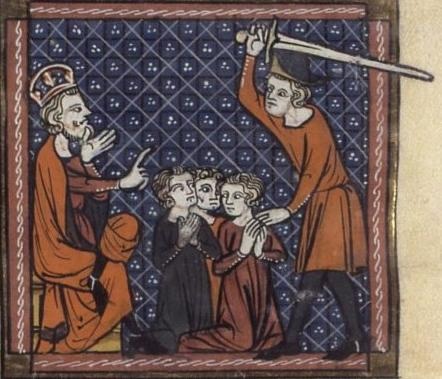

Two Brothers United in Witness of Christ
Of these two martyrs, Saint Proto and Saint Hyacinthus, only their names, the place of their burial and the date of their death—September 11, the day on which the Church commemorates them—are known. However, according to ancient sources such as the Depositio Martyrum of Rome and the Gelasian and Gregorian Sacramentaries, their martyrdom is a historically certain event from antiquity as was their widespread veneration.
According to tradition, Proto and Hyacinthus were brothers and Christian slaves in the service of Eugenia, the daughter of the Roman nobleman Philip, prefect of Alexandria in Egypt. After converting to Christianity, Eugenia returned to Rome and dedicated herself to spreading the faith. She entrusted her two slaves to her friend Bassilla, so that they could instruct her in the Gospel.
When Bassilla converted, she was denounced by her husband and sentenced to death along with Proto and Hyacinthus, who were guilty of having guided her to the Christian faith. Thus, the two brothers were martyred, likely by fire, as suggested by burn marks found on the remains of Saint Hyacinthus.
The two martyrs were buried in the cemetery of Bassilla, along the Via Salaria in Rome, later known as the cemetery of Saint Hermes. They were laid to rest in a burial chamber which, in the 4th century, Pope Damasus made accessible to the faithful, as evidenced by a plaque he had placed there.
As happened with many martyrs, it was believed that the remains of Proto and Hyacinthus had been transfered during the 8th or 9th century to churches within the city to protect them and make them more accessible to veneration. Indeed, the relics of Saint Proto were transferred to the Church of San Giovanni dei Fiorentini in Rome.
However, an exceptional discovery took place on March 21, 1845, during an archaeological excavation led by Jesuit Father Marchi: the tomb of Saint Hyacinthus was found intact, still in the catacombs of Saint Hermes. This discovery is unique, as it is the only known tomb of a catacomb martyr that has survived intact to this day. Examination of the remains showed signs of burns on the bones, confirming that Saint Hyacinthus was martyred by fire, and it is likely that Saint Proto met the same fate.
Today, the relics of Saint Hyacinthus are preserved and venerated at the Pontifical College of Propaganda Fide in Rome.