

High-Level Conversation in Geneva on the Encyclical Magnifica Humanitas, the First Encyclical of Pope Leo XIV

Safeguarding the Human Person in the Age of Artificial Intelligence
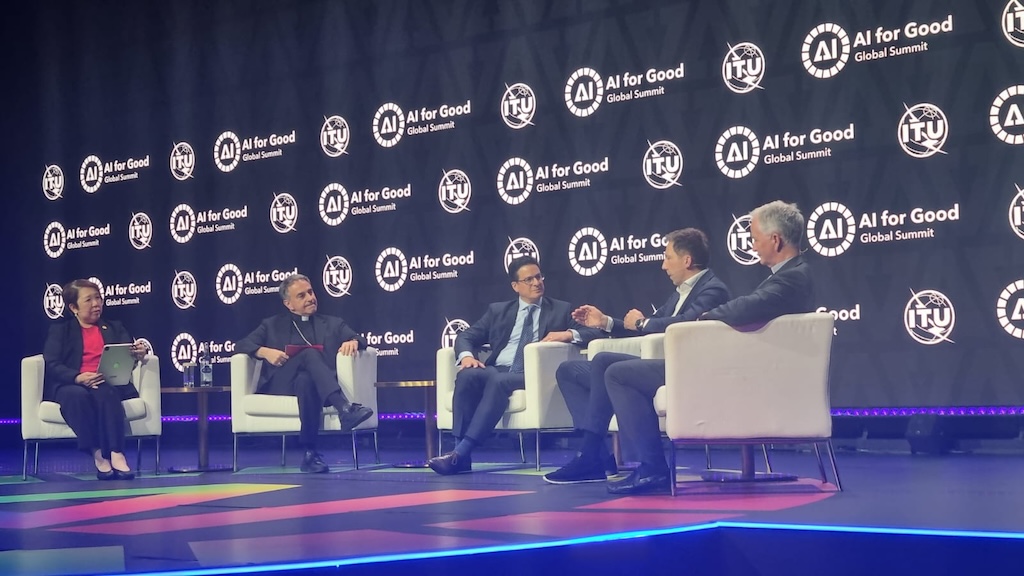
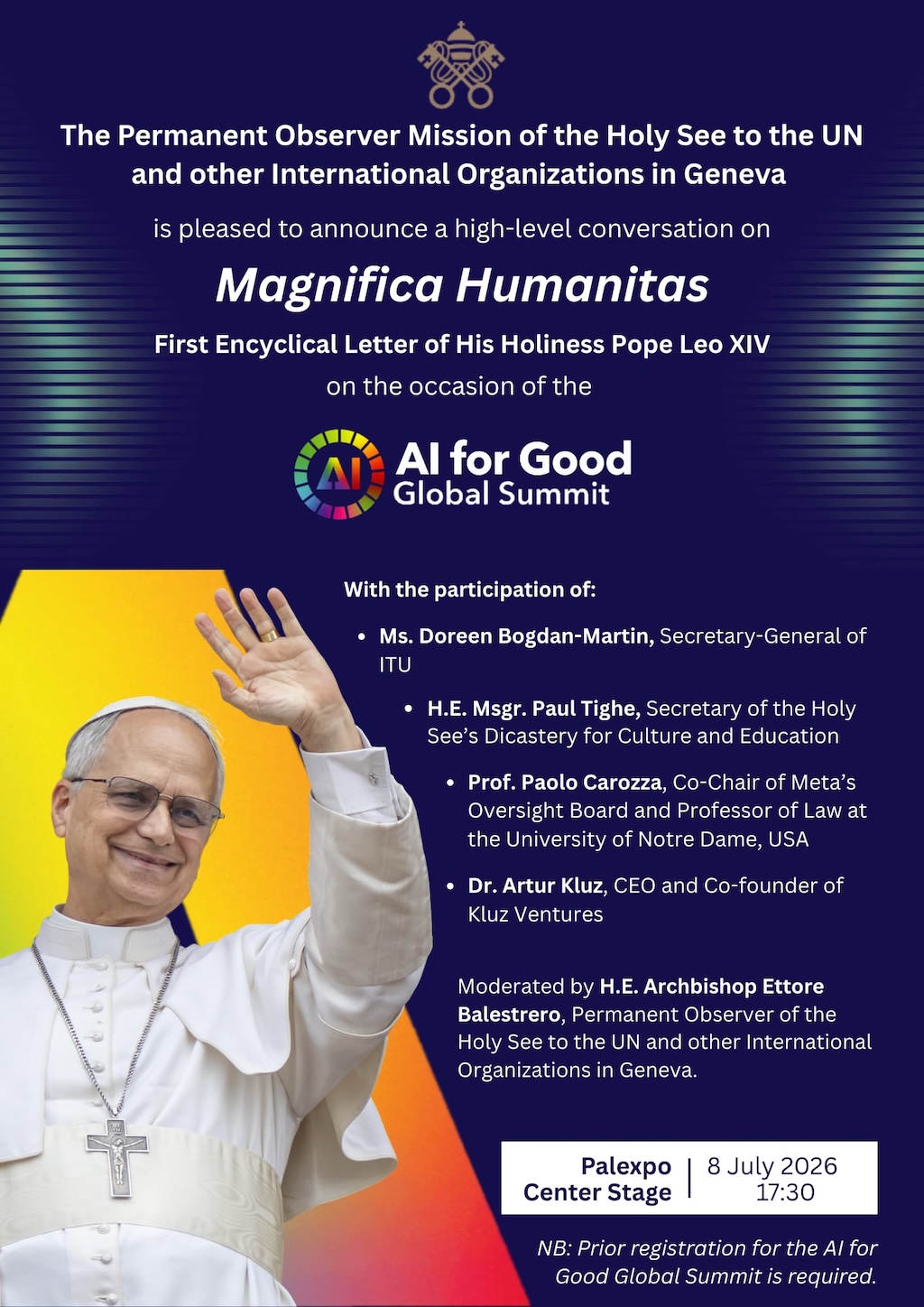
Against the backdrop of the Center Stage at Palexpo, a high-level conversation was held in Geneva on the afternoon of Wednesday, 8 July, dedicated to Magnifica Humanitas, the first Encyclical of Pope Leo XIV, which focuses on safeguarding the human person in the age of artificial intelligence.
The initiative was promoted by the Permanent Mission of the Holy See to the United Nations Office and Other International Organizations in Geneva as part of the program of the AI for Good Global Summit 2026, organized by the International Telecommunication Union (ITU) together with other United Nations agencies and co-hosted by the Swiss Government.
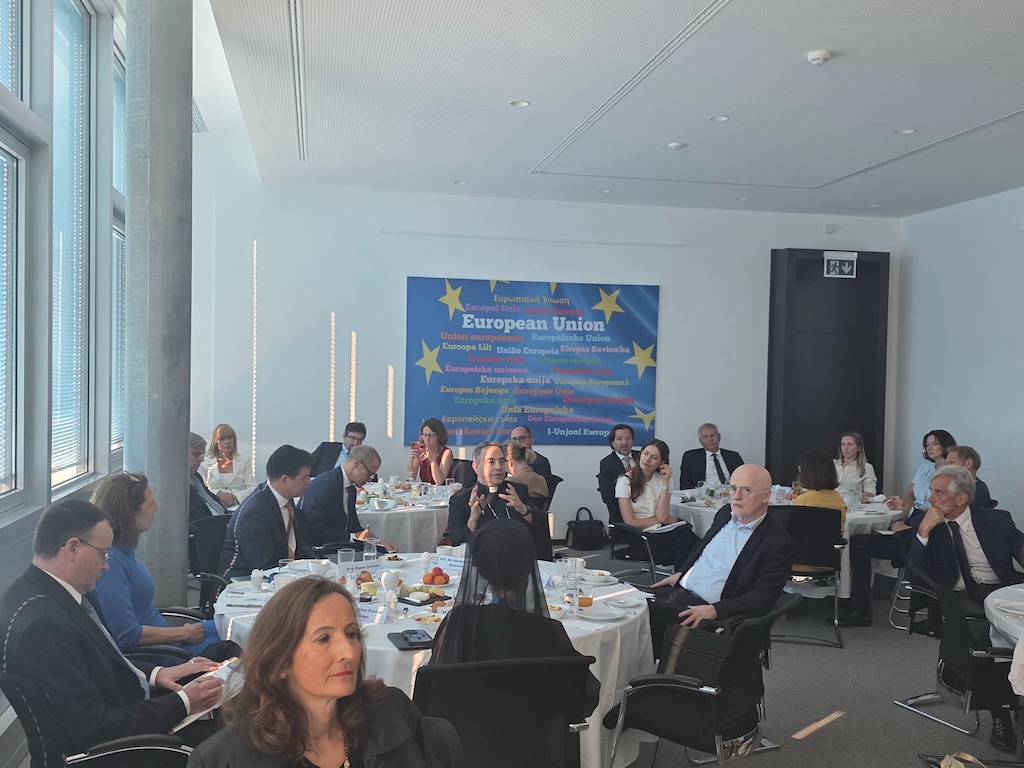
Among those in attendance was the delegation of the Holy See and the Governorate of Vatican City State, led by the President of the Governorate.
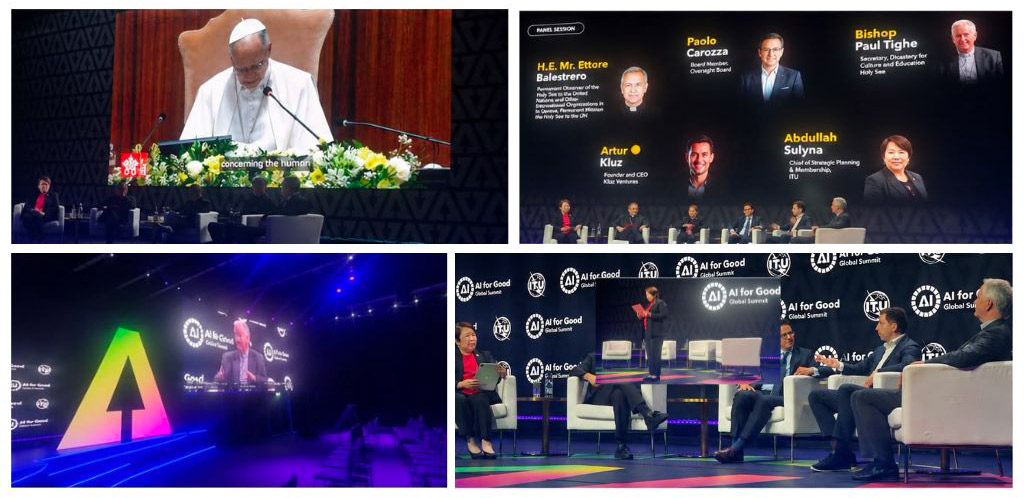
Nur Sulyna Abdullah, Chief of Strategic Planning and Membership at the ITU and Special Advisor to the Secretary-General, opened the conversation by introducing a short presentation video on the Holy Father's Encyclical. She thanked Pope Leo XIV for his message and for his commitment to the issue of artificial intelligence, while also expressing her gratitude to the speakers.
The ensuing discussion, moderated by Archbishop Ettore Balestrero, Permanent Observer of the Holy See to the United Nations Office and Other International Organizations in Geneva, Permanent Observer to the World Trade Organization (WTO), and Representative of the Holy See to the International Organization for Migration (IOM), brought together three complementary perspectives.
Paolo Carozza, Co-Chair of Meta's Oversight Board and Professor of Law and Political Science at the University of Notre Dame, examined the central themes of the Encyclical from the perspective of AI ethics. He highlighted what Magnifica Humanitas can offer both the academic community and major technology companies seeking to reconcile innovation with respect for human dignity.
Artur Kluz, CEO and Founder of Kluz Ventures and Founder of the Kluz Prize for PeaceTech, offered the perspective of an entrepreneur working at the forefront of technological innovation. He reflected on how the teaching of Pope Leo XIV can help guide the safeguarding of the human person in the age of artificial intelligence.
Monsignor Paul Tighe, Secretary of the Dicastery for Culture and Education and a member of the recently established Interdicasterial Commission of the Holy See on Artificial Intelligence, explained the reasons behind the Holy See's active engagement in the global debate on AI. He placed this commitment within the Church's enduring concern for the human person and the common good, emphasizing that an Encyclical continues its journey when it is received, interpreted, and embodied in the concrete life of communities.
In her concluding remarks, Nur Sulyna Abdullah thanked the Holy See for its presence and willingness to engage in public dialogue on artificial intelligence. She stressed that safeguarding human dignity and the common good must remain the fundamental criteria for assessing whether technological developments truly serve humanity.