


September 10: Saint Nicholas of Tolentino
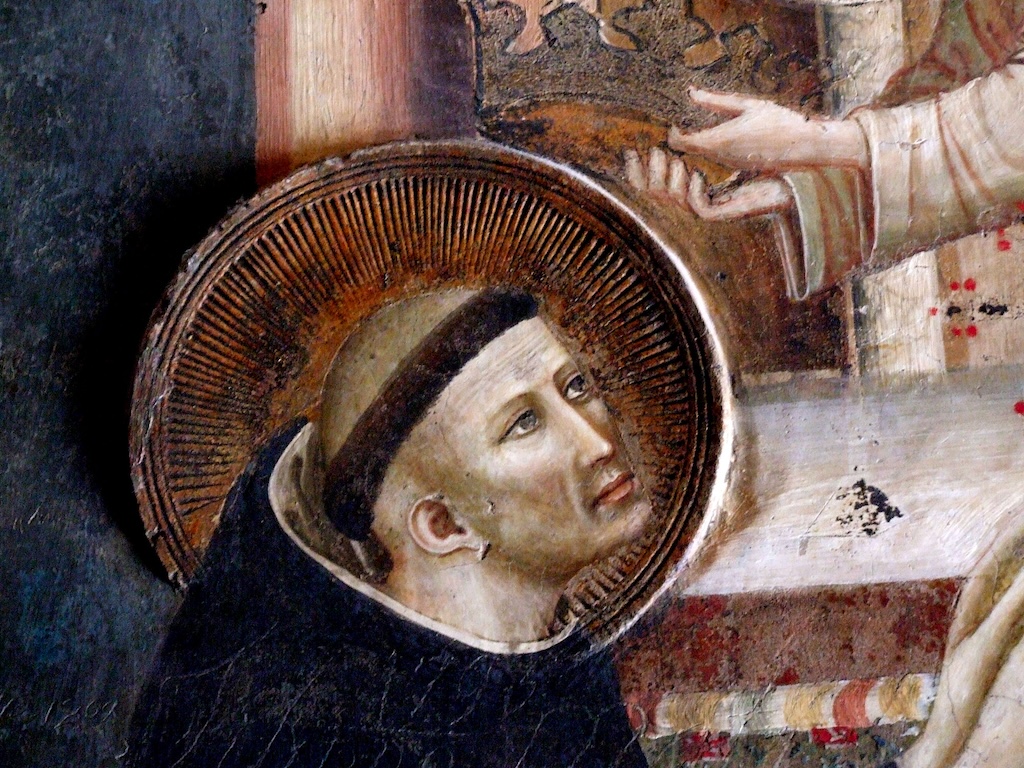

Patron of the Souls in Purgatory
He dedicated his time to the sick, helped those in need, and supported even those who were spiritually weak. He prayed, fasted, celebrated Mass, and wept for the sinners who came to him for confession, pleading with God to free them from the slavery of sin.
This is Saint Nicholas of Tolentino, who, because of his great charity, is often depicted with a burning sun on his chest—a symbol of a heart ablaze with love.
He was born around 1245 in Sant’Angelo in Pontano (province of Macerata in Italy). As a child, he entered the Augustinian convent in his town, first as a student, then as a novice. He was ordained a priest around 1273 and was later sent to the town of Tolentino, where he carried out his entire ministry.
He was not famous for scholarly work or writings, but was widely known for his captivating sermons, his dedication as a confessor, and his service to the poor and the sick. Moved by deep charity, he would visit the poorest neighborhoods, care for the dying and tend to both the material and spiritual needs of the people.
In him, spiritual life and active commitment were united—prayer combined with attention to others' needs. He was austere and mystical, but also beloved for his charity, especially for his presence among the most humble, whom he comforted and blessed with great affection.
When Saint Nicholas arrived in Tolentino, he was already known as a holy man – with very strict self-discipline yet kind and virtuous toward others. He was also known for some extraordinary gifts, including a vision he had some time earlier in Valmanente, near Pesaro. In that vision, the souls in Purgatory urgently asked him to celebrate Mass for them. A week later, he saw them again—joyfully ascending to Heaven. He personally recounted this episode, which deeply marked his life. For this reason, the Church proclaimed him “Patron of the Souls in Purgatory”.
Perhaps because of this, Saint Nicholas was especially devoted and careful in celebrating daily Mass at the earliest hours of the morning. At the time, even in convents, it was not common for priests to celebrate Mass so frequently. For him, that moment was so important that he prepared for it each day with long prayers and, above all, by going to confession daily, so he could approach the altar with a heart as pure as possible.
When he was near death, someone asked him why he was so serene. Saint Nicholas replied: “Because my God and Lord Jesus Christ, with His Holy Mother and my Holy Father Augustine, are saying to me: ‘Come, good and faithful servant, enter into the joy of your Lord.’” He died on September 10, 1305.
Pope Boniface IX, with the Bull Splendor paternae gloriae on January 1, 1390, granted a plenary indulgence to anyone who visited the saint’s tomb in the Cappellone of the Sanctuary of Tolentino on the Saturday following his Feast Day, similar to what had already been granted for the church of the Porziuncola in Assisi.
Nicholas was canonized by Pope Eugene IV on June 5, 1446, on the solemnity of Pentecost.