


September 15: Our Lady of Sorrows
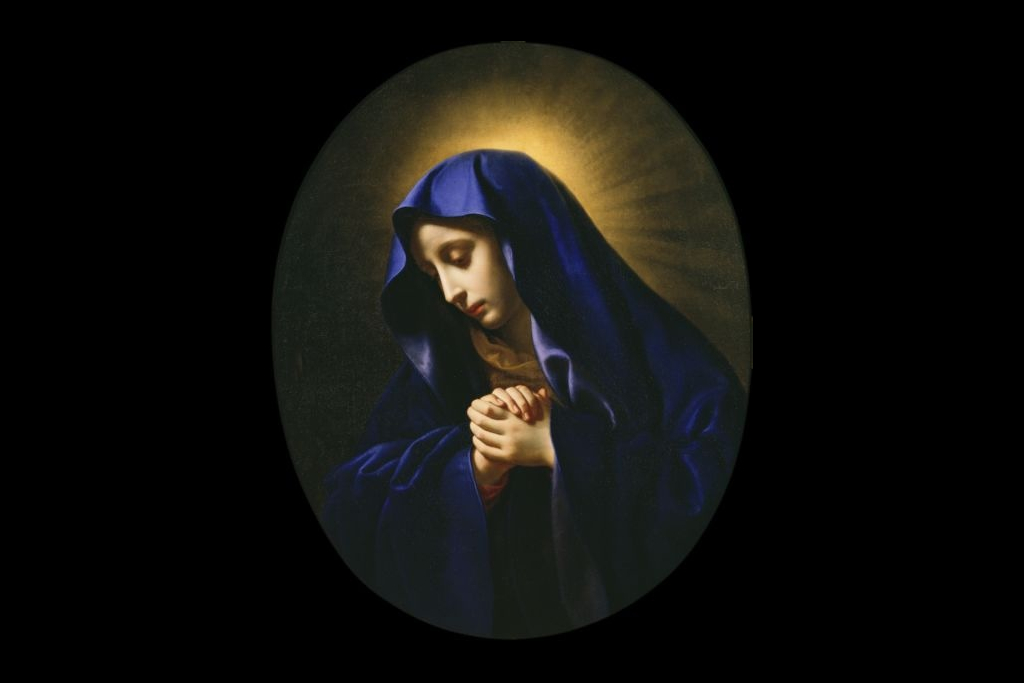

Sharing the Wounds of her Son
In the Middle Ages, Christians began to reflect more deeply on the suffering of Mary, the Mother of Jesus, especially at the time of the Passion. Mary was the only person who remained completely faithful to Christ, from his birth to the Cross.
Devotion to the Sorrows of the Virgin developed during that period, focusing on seven sorrowful events in her life, known as the Seven Sorrows of Mary:
the prophecy of Simeon, the flight into Egypt, the loss of Jesus in Jerusalem, meeting Jesus on the way to Calvary, the death of Jesus on the Cross, the deposition of his body from the cross, and finally his burial.
This popular devotion eventually led to the institution of a liturgical commemoration: Pope Pius VII extended it to the whole Church in 1814, in gratitude to Mary for her maternal protection during the political unrest linked to the European revolutions.
The feast is celebrated on September 15, the day after the Exaltation of the Holy Cross, to recall that Mary shared wholeheartedly in the sacrifice of her Son, as affirmed by the Second Vatican Council. The Blessed Virgin suffered alongside Jesus and accepted, with unconditional love, the sacrifice of the Son she herself had brought into the world.
On this day, the Church invites the faithful to pray and meditate, also singing the Stabat Mater, an ancient and moving hymn dedicated to Our Lady of Sorrows. As Saint Bernard affirmed, the Blessed Virgin took part in Christ’s Passion through compassion, uniting herself deeply to the suffering of her Son. At the foot of the Cross, Simeon’s prophecy was fulfilled: Mary’s Heart was pierced just as Jesus’ body was torn by the torture of crucifixion. Her presence beside her Son until the end was a sign of faithful love and shared suffering, making her a participant in the work of redemption.
For this reason, Our Lady of Sorrows is often depicted with her heart pierced by seven swords, symbolizing the seven principal sorrows that made her the Queen of Martyrs.