

October 25: Blessed Father Carlo Gnocchi
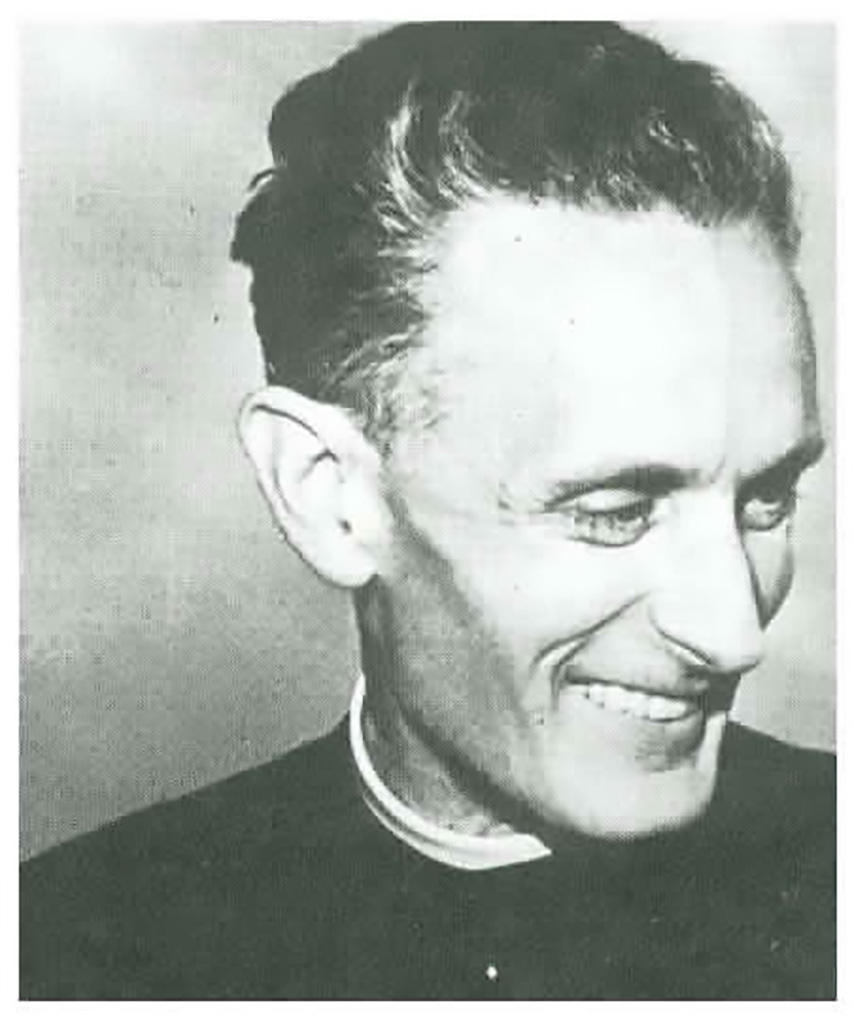

A life given to the “mutilatini”
Carlo Gnocchi was born on October 25, 1902, in San Colombano al Lambro, a small town in the province of Lodi. The third son of Enrico, a marble craftsman, and Clementina, a seamstress, he grew up in a modest family marked by early suffering: his father died when Carlo was only five years old and not long afterward his two brothers, Mario and Andrea, also succumbed to tuberculosis. His mother, left alone, moved with young Carlo to Milan, where she tried to rebuild a future for them both.
From an early age, Carlo showed a deep spiritual vocation. He entered the seminary under the guidance of Cardinal Andrea Ferrari and, despite fragile health that often forced him to recover at an aunt’s home in Montesiro, he pursued his path to the priesthood with determination. He was ordained a priest in 1925 by Archbishop Eugenio Tosi, celebrating his first Mass in Montesiro—a place very dear to him.
His first pastoral assignment was as an oratory assistant, first in Cernusco sul Naviglio and then at the parish of San Pietro in Sala in Milan, where he soon earned the esteem of the community for his educational dedication and kind character. His talent as an educator did not go unnoticed; in 1936 Cardinal Alfredo Ildefonso Schuster appointed him spiritual director of the prestigious Gonzaga Institute, run by the Brothers of the Christian Schools. At the same time, he devoted himself to pedagogical studies, publishing several short essays.
In the following years, Cardinal Schuster entrusted him with the spiritual care of university students of the Second Legion of Milan, many of whom were students at the Catholic University or former Gonzaga pupils. When Italy entered World War II in 1940, many of these young men were drafted. Motivated by a strong sense of educational responsibility, Father Gnocchi decided to follow them to the front as a volunteer chaplain with the Alpine Battalion “Val Tagliamento,” leaving for the Greek-Albanian front.
After returning to Italy, he did not hesitate to volunteer again in 1942 with the Tridentina Division, heading to Russia. It was during the disastrous retreat of January 1943 that he experienced one of the most tragic and formative moments of his life; exhausted, he was close to death in the snow when some comrades saved him on a sled. During those days, beside wounded and dying young men, the idea took root in him to dedicate his postwar life entirely to caring for the most vulnerable.
Back in Italy, he undertook a long and moving journey through the mountains to visit the families of fallen soldiers, offering them comfort. During those dramatic years, he also helped many political refugees escape to Switzerland, risking his own life. He was in fact arrested by the SS on charges of espionage but was later released thanks to the intervention of Cardinal Schuster.
When the war ended, he began giving concrete form to the dream born in the trenches: offering shelter and care to children mutilated by the war. He became director of the Istituto Grandi Invalidi in Arosio (Como), where he welcomed the first mutilatini—child amputees—and orphans. The facility soon filled and in 1947 Father Gnocchi managed to rent a large house in Cassano Magnago, which became a new cornerstone of his work.
In 1948 he founded the Federation for Mutilated Children (Federazione Pro Infanzia Mutilata), officially recognized the following year by the President of the Republic. Alcide De Gasperi appointed him advisor to the Presidency of the Council for policies supporting mutilated children. In just a few years, he opened homes throughout Italy - in Parma, Pessano con Bornago, Turin, Inverigo, Rome, Salerno, and Pozzolatico. In these institutions, at a time when rehabilitative medicine was still in its infancy, Father Gnocchi introduced an innovative model—not just shelter and assistance, but also medical rehabilitation, education, and vocational training.
His work received support from the highest authorities; he was received by Pope Pius XII and met Italian Presidents Einaudi and Gronchi. He also engaged the worlds of entertainment and sports in extraordinary fundraising campaigns. In 1948, a small aircraft nicknamed “The Children’s Angel” flew to Argentina to collect donations, and in 1949 a scout expedition rode motorcycles all the way to the North Cape in support of his mission.
In 1951, the Federation gave way to the new Pro Juventute Foundation, to which all assets and activities were transferred. Father Gnocchi’s most ambitious dream materialized in 1955 with the laying of the first stone of a major rehabilitation center in Milan, near the San Siro soccer stadium, in the presence of President Gronchi.
But Father Gnocchi, by then gravely ill, did not live to see the work completed. He died on February 28, 1956, at the Columbus Clinic, due to cancer. Over one hundred thousand people attended his funeral, celebrated in the Milan Cathedral by Archbishop Giovanni Battista Montini (later to be Pope Paul VI). Four Alpini soldiers carried the casket, while others lifted the small, weeping mutilatini onto their shoulders. The entire city mourned, and many whispered, “A saint has died.”
His final act was profoundly prophetic: he left written instructions to donate his corneas to two blind young men, Silvio Colagrande and Amabile Battistello—at a time when no law on transplants yet existed in Italy. The operation, successfully performed by Professor Galeazzi, made national headlines and prompted both political and ecclesiastical authorities to address the issue. On the Sunday following his death, Pope Pius XII publicly praised the gesture during the Angelus.
He was beatified on October 25, 2009. His mortal remains rest in the church dedicated to him in Milan.