


Participation of the Vatican State Customs Services in the General Assembly of the Italian Customs and Monopolies Agency 2026 - Third Edition
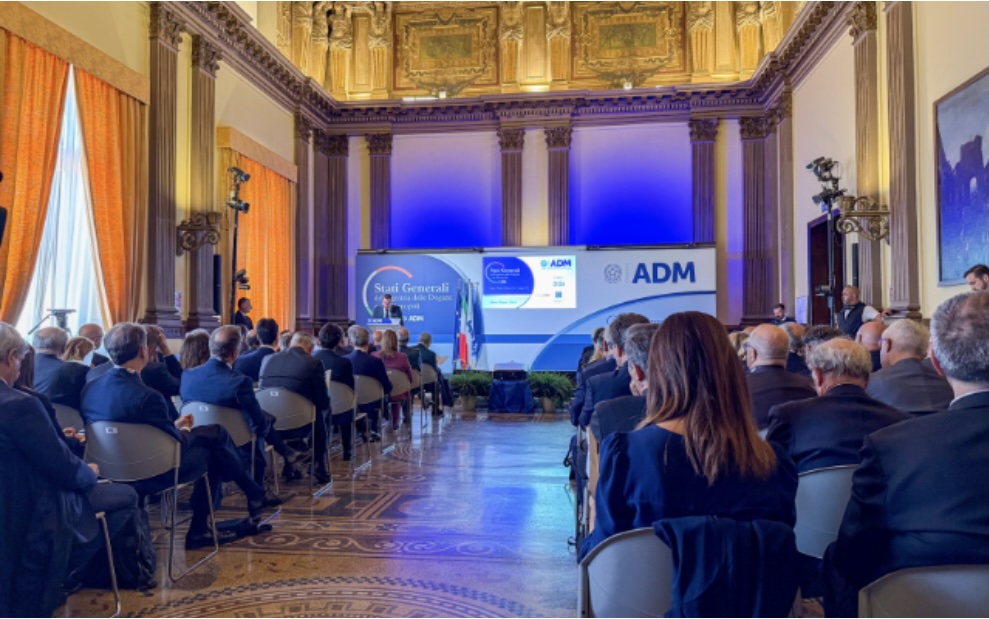

The third edition of the General Assembly of the Italian Customs and Monopolies Agency concluded on Thursday, 21 May, at Palazzo Wedekind, in the prestigious Angiolillo Hall, in the city of Rome. The event represented an authoritative institutional forum for discussion on key issues concerning the evolution of the European customs system and the future of international trade.
Representing the Governorate of Vatican City State were the Secretary General, Attorney Giuseppe Puglisi-Alibrandi, accompanied by the Coordinator of Customs Services, Mr Gianni Lasaracina.
The opening session began with a recorded message from the Minister of Economy and Finance, Hon. Giancarlo Giorgetti, who expressed strong appreciation for the Agency’s ongoing institutional commitment, followed by remarks by Deputy Minister Hon. Maurizio Leo.
Subsequently, the Director of the Italian Customs and Monopolies Agency, Roberto Alesse, presented the achievements accomplished over the past year, while also emphasizing the need for an increasingly efficient and innovative customs administration capable of responding promptly and effectively to the growing complexities arising from the evolution of markets and international trade flows.
During the afternoon session, proceedings continued with panel discussions on the theme “European Border: Customs Reform, E-commerce and Compliance”, during which the strategic role of customs institutions within the current international economic and geopolitical landscape was examined in depth.
Particular attention was given to the future EU Customs Data Hub, which is expected to profoundly reshape the role of customs authorities, increasingly oriented toward advanced functions of management, interoperability, and analysis of data related to global trade flows.
During the discussions, particular emphasis was also placed on the growing centrality of Artificial Intelligence in digitalization processes, data analysis activities, and the optimization of customs operational procedures, as essential tools for ensuring high standards of efficiency, security, and control.
In this context, institutional initiatives of such a high profile assume significant strategic value, not only as opportunities for technical and regulatory analysis, but also as fundamental occasions for professional development, specialized training, and the exchange of experiences, expertise, and forward-looking perspectives concerning the future of the European and international customs system.
Indeed, the ongoing dialogue among administrations, institutions, and stakeholders represents an essential element in effectively supporting the transformation processes currently underway and contributing to the development of a modern, integrated customs model fully aligned with the needs of both the European Union and the wider international context.