


8 November: Saint Elizabeth of the Trinity, religious sister
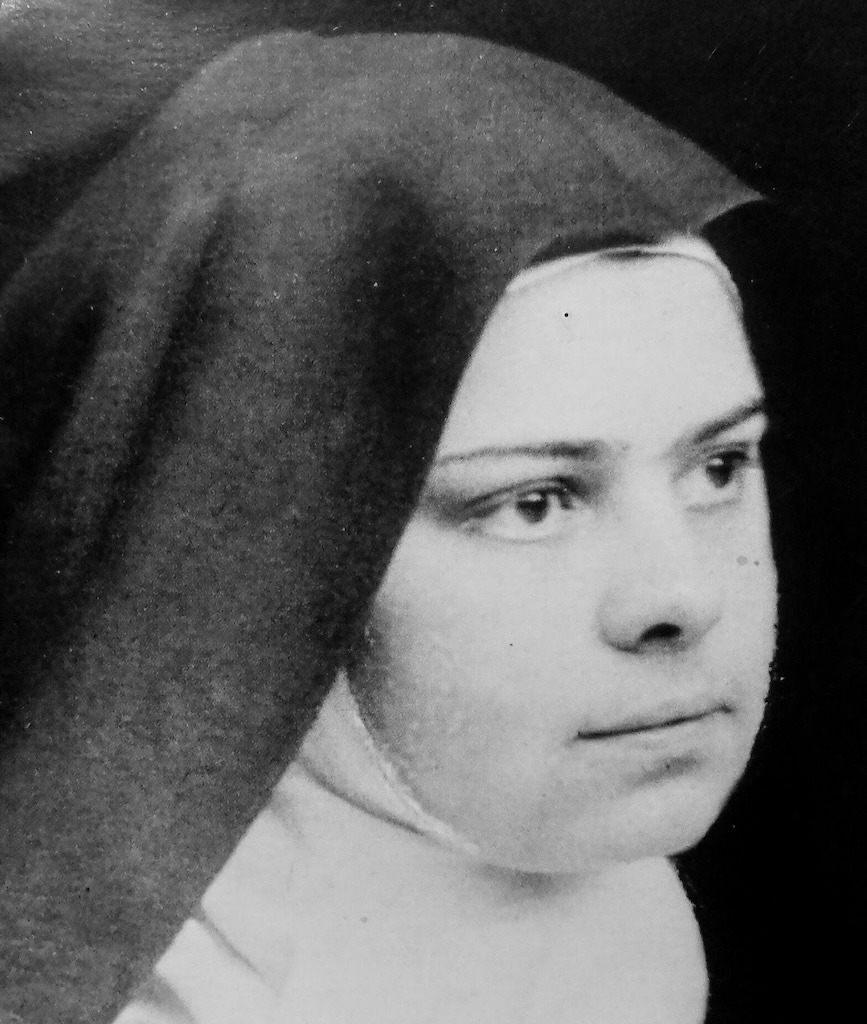

Discovering the Love of the Three Divine Persons
Elizabeth Catez was born in 1880 at Camp d’Avor, near Bourges. As a child she showed a strong temperament—at times impulsive and even prone to anger—but her character changed profoundly when her mother explained the meaning of First Communion: to receive Jesus, one needed to offer a gentle and willing heart.
From that moment on, Elizabeth resolved to master her impulses, always remembering that day as the moment when she and Jesus gave themselves to each other in total surrender. A visit to the Carmelite monastery of Dijon during the same ceremony left an indelible impression on her: the prioress told her that her name meant “house of God,” helping her understand that she was inhabited by a divine presence—a truth she would treasure all her life.
During adolescence, Elizabeth developed great intellectual and artistic abilities, successfully graduating from the music conservatory of Dijon. She loved deep friendships, mountain excursions, and above all music, through which she expressed her rich sensitivity. At seventeen she felt a strong religious vocation and longed to enter the monastery, but her mother firmly refused, preventing her from any contact with the Carmel until she reached adulthood.
Only at twenty-one was she finally able to cross the threshold of the cloister, exclaiming in wonder: “God is here! How present He is, how everything is wrapped in Him!” She explained to her friends that monastic life is a continual communion with God—an anticipated heaven in which He fills every corner of the cell and the cloister, visible because carried in the heart.
In the monastery, Elizabeth discovered and deepened the mystery of the Trinity: she was captivated by the idea that her soul was immersed in the eternal love exchanged by the Father, the Son, and the Holy Spirit—a love that embraces all creation. In this divine embrace she found her true vocation as an adorer and a woman entirely dedicated to communion with God.
She described herself as “Elizabeth of the Trinity,” meaning one who loses herself in the love of the Three, living this union with an ever-greater intensity that showed even in her outward composure. In one of her letters she wrote that she felt immersed in an ocean of love, where she abandoned herself completely—waking, moving, and sleeping in continual union with God. To express this profound spiritual experience, she composed a long prayer dedicated to the Most Holy Trinity, still considered a masterpiece of mystical literature. For her, the Trinity was also the place where souls meet beyond every barrier of time and space; for this reason she strove to live human relationships that were unified and sincere, with total dedication. Until the end she remembered her passion for music, imagining herself as an artist who increasingly identifies with the melody she performs, and she longed to become a “living praise” to God.
In 1905 she was struck by a severe and incurable illness that turned her life into an “altar of suffering.” The pain was so intense that she sometimes felt tempted to give in, but she overcame it through her certainty of being upheld by God’s infinite love. In her final months she often sought refuge in the words of St. Angela of Foligno, who said that Jesus dwells in suffering; thus Elizabeth understood that true union with God necessarily passes through the cross and pain.
Often, lying on her bed, she imagined herself climbing onto an altar and would say to God: “Don’t worry!” Even in moments of anguish she was able to calm herself, saying that none of it really mattered. She loved to hold tightly the small crucifix she had received at her religious profession, recalling the deep love that bound her to Christ. On 9 November 1906, Elizabeth died with the certainty that “in the evening of life, only love remains.”
She had already stated what her eternal mission would be: to draw souls toward God, helping them to step out of themselves in order to cling to Him, in an interior silence that allows God to transform them into Himself. Her last words were an expression of faith and hope: “I am going to the light, to love, to life!”
Elizabeth of the Trinity was beatified by Saint John Paul II on 25 November 1984 and canonized by Pope Francis on 16 October 2016.