


November 16: Saint Agnes of Assisi, sister of Saint Clare
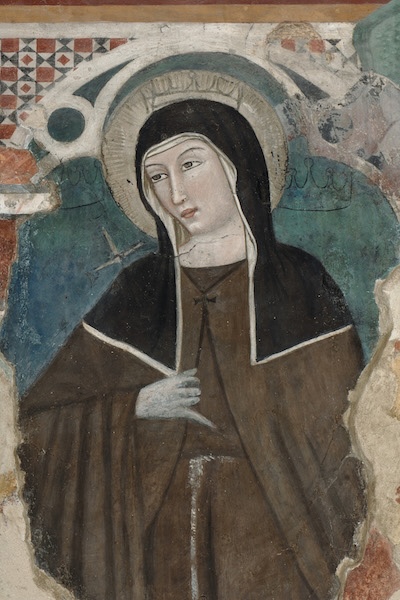

A point of reference for religious vocations
Caterina di Favarone, a member of the Offreduccio family and younger sister of Clare of Assisi, was born in the Umbrian city in 1197. Before she had even turned sixteen, she felt the desire to follow her elder sister’s example, choosing a life shaped by evangelical poverty and the Franciscan way.
To mark this turning point, she took the name Agnes. Neither pressure nor threats from her family could sway her decision: with a strength that seemed to go beyond the human, she resisted attempts to drag her away from the monastery, and even physical force proved useless. Certain episodes—such as her body suddenly becoming heavy and the powerlessness of those who tried to bring her home—convinced everyone to let her continue along the path she had chosen. It was Francis of Assisi himself who called her “Agnes,” comparing her to the gentleness of a lamb.
The young woman followed Clare in the intensity of prayer and in the choice of an austere life, marked by severe renunciations and daily work—hallmarks of the Poor Ladies of San Damiano. After about ten years spent at her sister’s side, in 1221 she was sent to Florence to lead the monastery of Monticelli, whose nuns had asked to share Saint Clare’s form of life. From there, she wrote letters filled with melancholy: she missed her sister and the community of Assisi. In the years that followed, she contributed to the founding of new monasteries in northern Italy, until in 1253 she was asked to return to San Damiano, as Clare was nearing death. Only three months later, on November 16, 1253, Agnes too ended her earthly life.
The figure of Agnes has become a point of reference especially for young women beginning their journey in religious life: her ability to detach herself from family ties, her unwavering fidelity to her vocation, and the freedom with which she chose the Gospel make her a model for those discerning their own calling. Her example reminds everyone that fidelity to the Lord requires courage and a willingness to overcome the obstacles that human bonds—precious as they are—can sometimes create.
Her veneration, widespread for centuries, was solemnly recognized by Pope Benedict XIV in 1751. Today her relics are kept in the Basilica of Saint Clare in Assisi.