


27 November: Saint Virgil of Salzburg
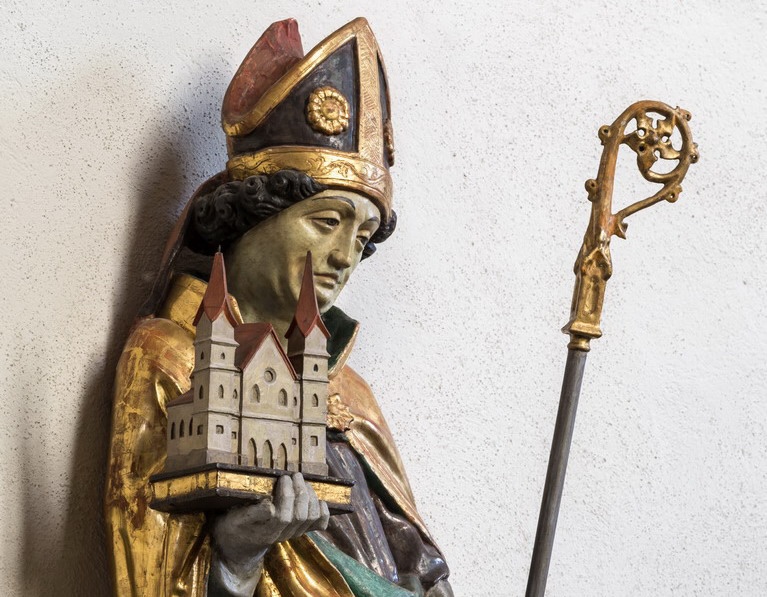

A monk in the service of evangelization
Virgil, born in Ireland in the 8th century, belonged to the tradition of itinerant monks who left their homeland to undertake long religious pilgrimages. Setting out around 743 with the intention of reaching Palestine, he interrupted his journey.
He stopped in France, where he was received by King Pepin the Short and spent two years in Cressy, near Compiègne. He then traveled to Bavaria at the invitation of Duke Odilo, where he entered the service of Saint Rupert, regarded as the principal evangelizer of Austria. Later he was placed in charge of the Benedictine monastery of Saint Peter in Salzburg and, around 765, he was also entrusted with the leadership of the city’s diocese.
This appointment displeased Boniface, the great missionary of Germany, who objected that he had not been consulted in his role as the Pope’s representative. For this reason, Virgil’s episcopal consecration took place only after Boniface’s death.
A learned man, open to study as well as practical and resourceful, Virgil distinguished himself as a pastor attentive to the Christian formation of the population and to supporting the weakest. During his episcopate, Salzburg and the Bavarian region experienced a period of both religious and civil renewal. He was responsible for building the first Salzburg Cathedral in 774 and for founding the monastery of San Candido in South Tyrol.
He died on 27 November 784 and many centuries later, in 1232, Pope Gregory IX proclaimed him a saint. Today his relics are kept in Salzburg Cathedral.