


July 2: Blessed Giovanni Becchetti of Fabriano
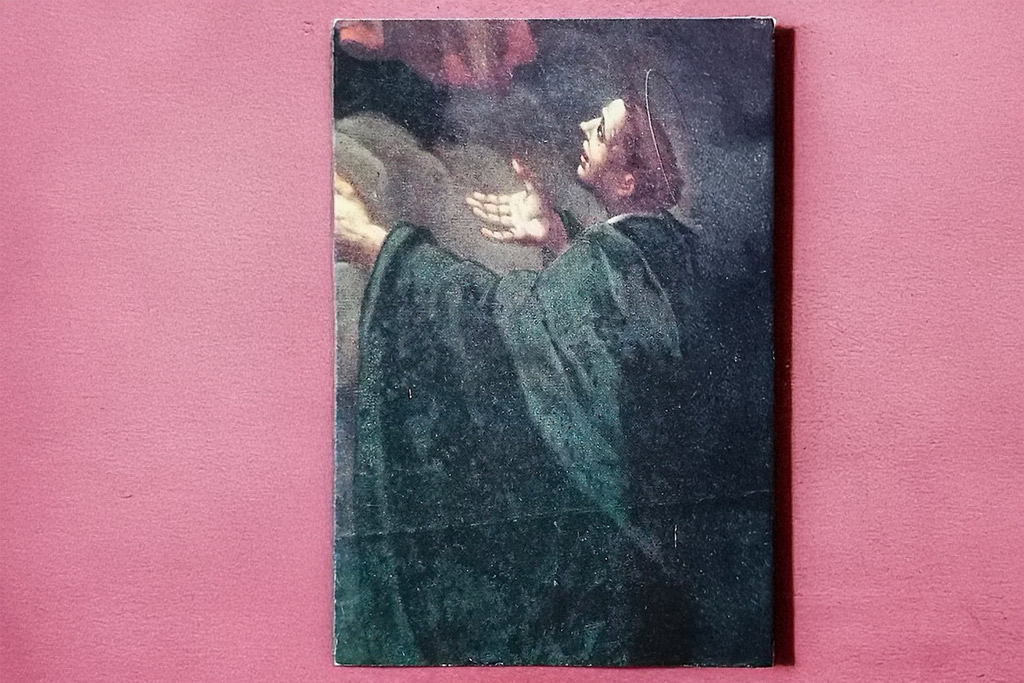

A Theologian in the Service of Pastoral Ministry
Inspired by the example of his cousin Pietro, who was a few years older, Giovanni Becchetti entered the Augustinian convent in Fabriano, in the Marches region of Italy, at a very young age. We do not know the exact date of his birth, but it can be placed in the second half of the fourteenth century.
Devoting himself to intellectual and spiritual formation, he was sent by his superiors to the University of Oxford, where he pursued advanced studies in theology and obtained the title of Master in 1385. While at the university, he witnessed the heated controversies stirred up by John Wycliffe against the Church hierarchy, which eventually gave rise to the heretical Lollard movement.
In that context, he came to understand that study must be accompanied by piety and obedience to the Magisterium of the Church. After several years of teaching, in 1392 he was appointed Regent of the Augustinian Studium in Perugia. He wrote several philosophical and theological works, as well as commentaries on Sacred Scripture.
He always made time for preaching, prayer, and meditation. He also made a pilgrimage to the Holy Land. In order to allow the faithful who could not travel to the Holy Places to relive that experience, he had an oratory dedicated to the Holy Sepulchre built within the cloister of the Convent of Saint Augustine in Fabriano. By 1420, he was serving as Rector of the convent in Fabriano.
He died shortly afterward in 1420, and his mortal remains, together with those of his cousin Pietro, were displayed in the Church of Saint Augustine. In 1591, during a deadly plague outbreak, the Municipality of Fabriano took part in a procession to invoke Blessed Giovanni’s intercession to plead for an end of the scourge. Their prayers were answered and thenceforth the municipality sponsored twelve consecutive years of public thanksgiving celebrations. In 1835, Pope Gregory XVI officially confirmed his veneration in the Church.