


July 16: Our Lady of Mount Carmel

Disciple and Mother
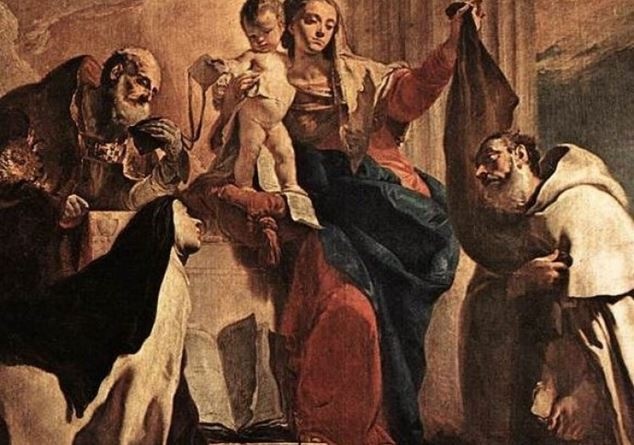
The liturgical feast of Our Lady of Mount Carmel was established to commemorate her apparition on July 16, 1251 to Saint Simon Stock, then Prior General of the Carmelite Order. During this vision, the Virgin Mary gave him a scapular and revealed remarkable spiritual privileges associated with wearing it.
To Saint Simon Stock—who spread devotion to Our Lady of Mount Carmel and composed for her the beautiful hymn Flos Carmeli—the Virgin promised that those who died wearing the scapular would be freed from the sufferings of Purgatory. This connection was further reinforced by the so-called “Sabbatine Bull,” which claimed that Pope John XXII had a vision of the Virgin Mary. In this vision, she promised the release from Purgatory on the first Saturday after death for those who wore the scapular, remained chaste according to their state in life, and prayed regularly.
Thus, July 16 became the official feast day of Our Lady of Mount Carmel. Originally, it celebrated Mary as the Patroness of the Carmelite Order, but over time it took on the deeper meaning associated with the scapular, which is also worn by laypeople as a symbol of devotion and protection.
The title “Holy Mary of Mount Carmel,” tied to Mount Carmel in Galilee—the birthplace of the Order—is one of the most widespread expressions of Marian devotion. Mount Carmel is a mountain range that stretches from the Gulf of Haifa to the Plain of Esdraelon. Tradition, confirmed by the current Arabic name Jebel Mar Elias ("Mount of Elijah"), links the site to the prophet Elijah, although the Bible explicitly makes this connection only once (1 Kings 19:46).
In the 12th century, a group of devout pilgrims—possibly linked to the later Crusades—settled on Mount Carmel to live a hermitic life. Between 1206 and 1214, they received a Rule of Life (Vitae formula) from the Patriarch of Jerusalem, Albert. They lived near the so-called “Spring of Elijah,” close to a small chapel dedicated to Our Lady. These religious eventually became known as the Order of the Blessed Virgin Mary of Mount Carmel, as confirmed by a papal document in 1252.
This name indicated that the members were entirely devoted to the Virgin Mary, their Patroness. For the first Carmelites, Mary was the one who kept the Word of God in her heart and became a spiritual guide, an inspiration, and a model of contemplative life.