


July 23: Saint Bridget of Sweden, Patroness of Europe
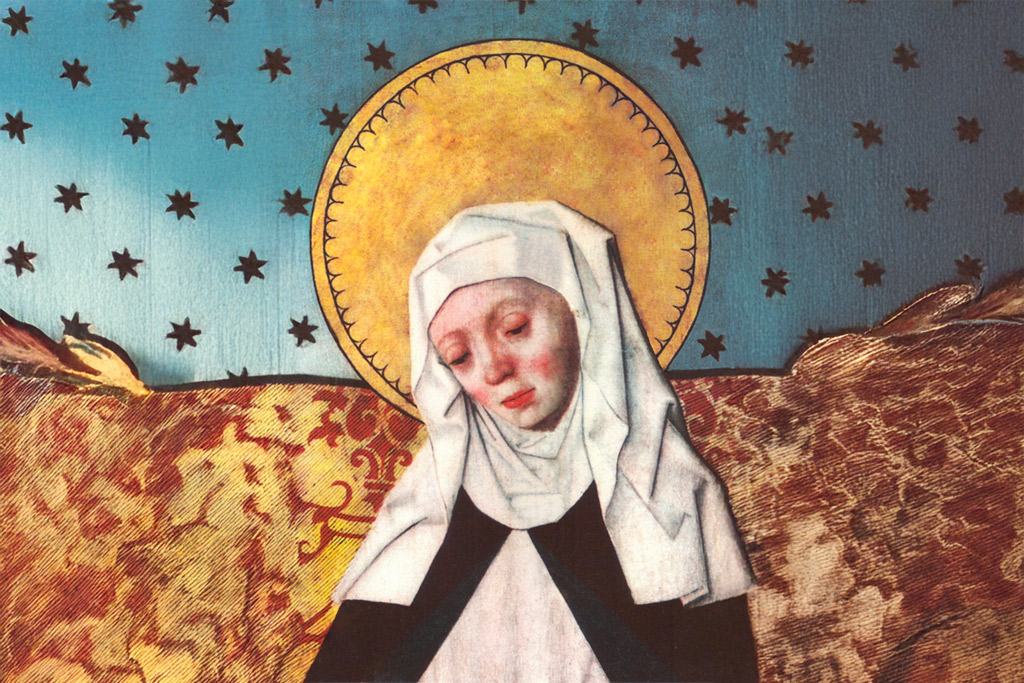

In Search of Peace
She promoted peace and reconciliation in Europe, writing to rulers to call for an end to the Hundred Years' War between France and England. This was Bridget (Birgitta Birgersdotter), born in 1303 into a noble Swedish family. She seemed destined for an ordinary life for a woman of her status. Married to Ulf Gudmarsson, a high-ranking official of the kingdom, she had eight children, including Saint Catherine of Sweden. Together with her husband, she followed the Rule of the Third Order of Saint Francis, dedicating herself to charity and founding a hospital where they personally cared for the sick.
In 1335, thanks to her wisdom and education, Bridget was called to the royal court as lady-in-waiting to Queen Blanche of Namur, wife of King Magnus Eriksson. It was at court that she began to experience her first prophetic visions, often directed at the royal family. According to historian Camille Bataille, Bridget sought to guide the king and queen toward a Christian ideal of sovereignty, even through spiritual admonitions.
In 1341, after becoming a widow following a pilgrimage to Santiago de Compostela, Bridget began a new life fully devoted to God. She gave away all her possessions and withdrew to the Cistercian monastery of Alvastra, where she received numerous divine revelations, later collected in eight books known as the Revelationes. These visions, often addressed to kings and popes, called for moral and spiritual reform within the Church and society.
In 1349, Bridget traveled to Rome, where she was joined the following year by her daughter, Saint Catherine. The two lived together, sharing a life of deep spirituality. Filled with mystical graces, Bridget followed the Gospel in a radical way: she embraced poverty, even begging beneath church porticoes to experience humiliation and public scorn.
She founded the Order of the Most Holy Savior and asked the pope to approve a monastery housing both men and women under the leadership of an abbess, in accordance with one of her visions. Despite the initial refusal, she continued her path of faith. She traveled to many Italian cities, and in 1371, she embarked on a long pilgrimage to the Holy Land. She died on July 23, 1373, without seeing the pope return from Avignon to Rome.
Canonized in 1391 by Pope Boniface IX, in 1999 Saint John Paul II declared her co-patroness of Europe, together with Saint Catherine of Siena and Saint Teresa Benedicta of the Cross (Edith Stein).