


July 3: Saint Thomas the Apostle
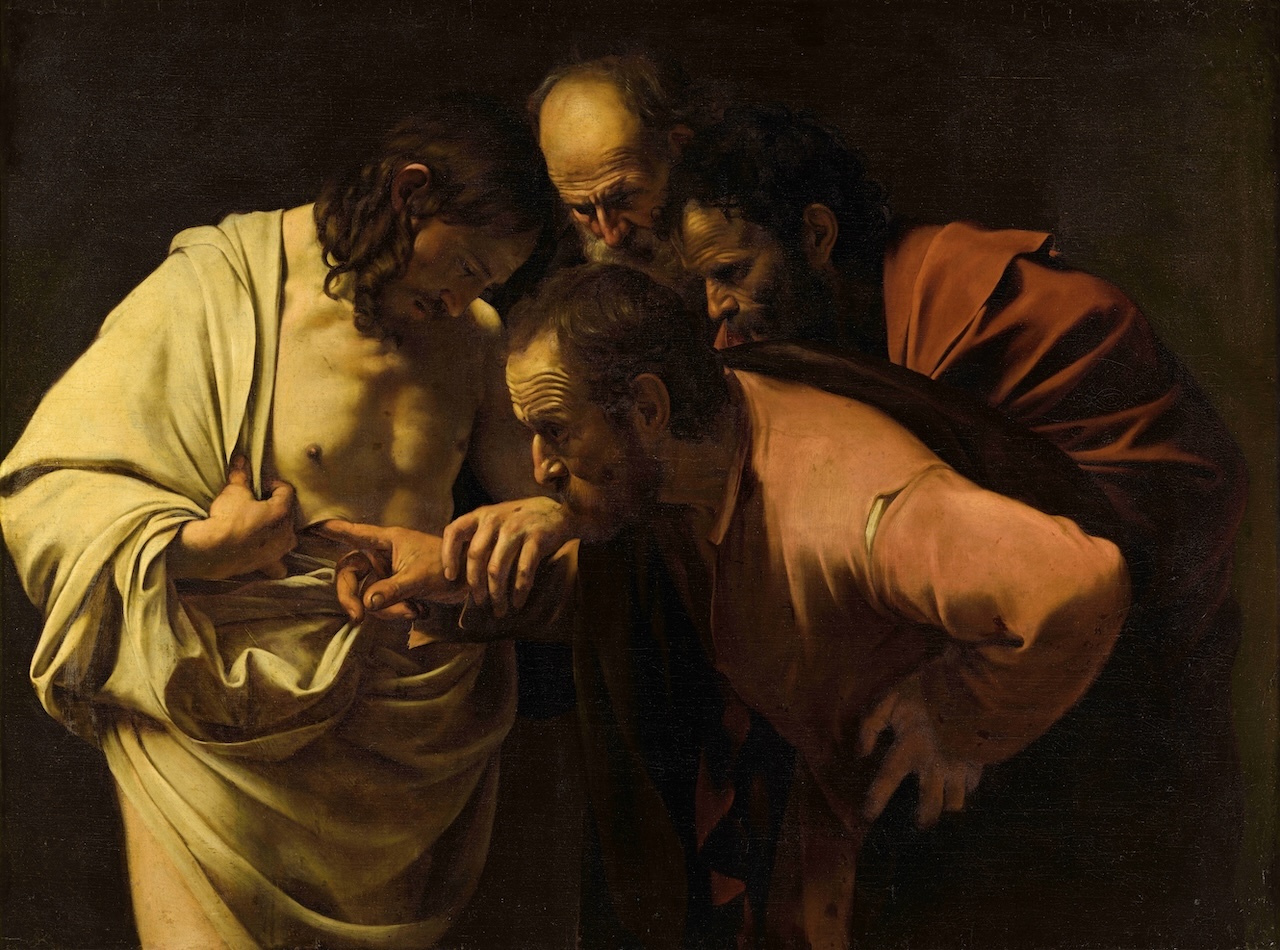

“My Lord and my God”
Thomas, also called Didymus (which means “Twin”), was part of the small group of disciples chosen by Jesus from the very beginning of His public ministry. He was one of the Twelve Apostles, as emphasized by the Evangelist John. John also recounts several episodes that help us understand Thomas’s personality.
When Jesus decided to go to Bethany after the death of Lazarus:
Then after this he said to his disciples, “Let us go back to Judea. The disciples said to him, “Rabbi, the Jews were just trying to stone you, and you want to go back there?”
Jesus answered, “Are there not twelve hours in a day? If one walks during the day, he does not stumble, because he sees the light of this world. But if one walks at night, he stumbles, because the light is not in him.” (John 11:7–10)
So then Jesus said to them clearly, “Lazarus has died. And I am glad for you that I was not there, that you may believe. Let us go to him.” So Thomas, called Didymus, said to his fellow disciples, “Let us also go to die with him.” (John 11:14–16)
Thomas again speaks during the Last Supper, when Jesus announced that He was going to leave them:
In my Father’s house there are many dwelling places. If there were not, would I have told you that I am going to prepare a place for you? And if I go and prepare a place for you, I will come back again and take you to myself, so that where I am you also may be. Where [I] am going you know the way.” Thomas said to him, “Master, we do not know where you are going; how can we know the way?” Jesus said to him, “I am the way and the truth and the life. No one comes to the Father except through me. If you know me, then you will also know my Father. From now on you do know him and have seen him.” (John 14:2–7)
After the Resurrection, when the others had seen the risen Jesus but Thomas had not been with them, John recounts:
Thomas, called Didymus, one of the Twelve, was not with them when Jesus came. So the other disciples said to him, “We have seen the Lord.” But he said to them, “Unless I see the mark of the nails in his hands and put my finger into the nailmarks and put my hand into his side, I will not believe.”
Now a week later his disciples were again inside and Thomas was with them. Jesus came, although the doors were locked, and stood in their midst and said, “Peace be with you.”
Then he said to Thomas, “Put your finger here and see my hands, and bring your hand and put it into my side, and do not be unbelieving, but believe.” Thomas answered and said to him, “My Lord and my God!” Jesus said to him, “Have you come to believe because you have seen me? Blessed are those who have not seen and have believed.” (John 20:24–29)
It is precisely because of Thomas’s need to touch and see in order to believe—a kind of “scientific” approach—that we can be assured of the reality of the Resurrection. At the same time, Thomas was the first to truly recognize who the risen Jesus was, addressing Him with the words: “My Lord and my God.”
According to tradition, Thomas brought the Gospel to southern India, where he is considered the founder of the Church on that continent. His tomb is located today in the Basilica of Saint Thomas in Chennai, India.
An apocryphal gospel is also attributed to him: the Gospel of Thomas.