


July 17: Saint Teresa of St. Augustine and 15 Discalced Carmelite Companion Martyrs
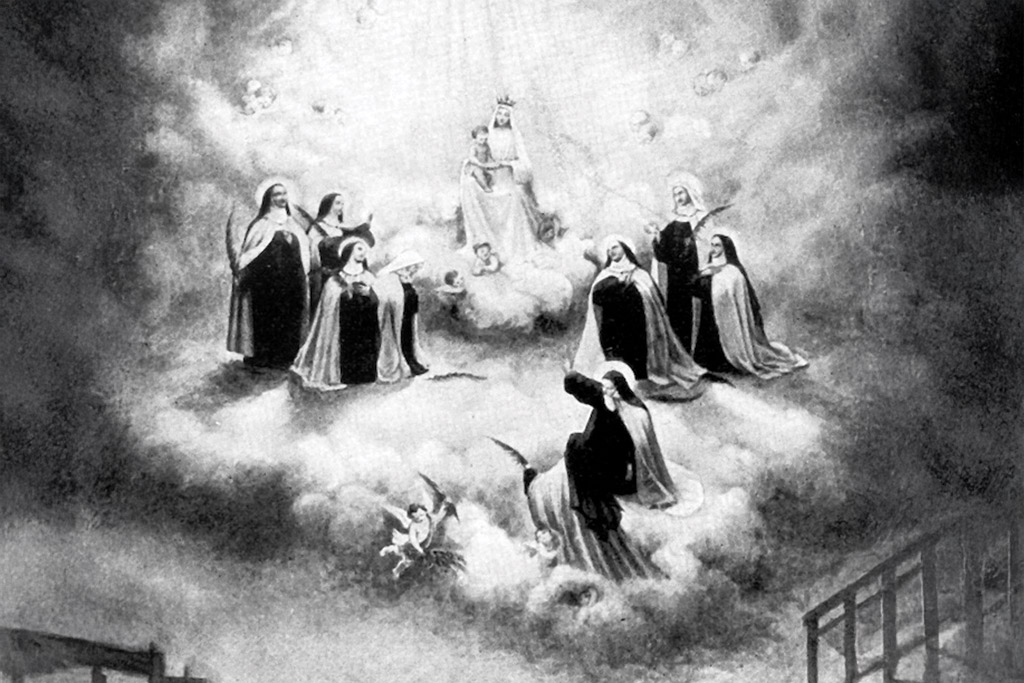

Guillotined for their faithfulness to consecrated life
A show trial before the Revolutionary Tribunal — a parody of justice whose only guiding principle was hatred toward religion and the Church. The outcome was fatal: sixteen Discalced Carmelite nuns from Compiègne, led by their prioress, Teresa of St. Augustine (born Marie-Madeleine-Claudine Lidoine), were guillotined in Paris’s Place du Trône on July 17, 1794.
The sixteen Carmelites nuns were taken to the square on two carts for the execution. For the crowd and the regular onlookers of such grim spectacles, that day offered an unusual scene. As the nuns were led to their deaths, as they sang psalms the crowd fell silent and upon reaching the scaffold, began chanting the Veni Creator. Before mounting the scaffold, they renewed their religious vows in the hands of the prioress, who was the last to be executed. Their courage and dignity in the face of death left a deep impression on the crowd. Just ten days later, the period of the French Revolution known as the Reign of Terror came to an end.
The sixteen Carmelites were accused of forming counterrevolutionary gatherings and of continuing to live in obedience to their Rule and to their superior. Above all, they were charged with remaining faithful to religious life — considered “fanaticism” — and with maintaining devotion to the Sacred Hearts of Jesus and Mary.
At the start of the French Revolution, members of the Committee of Public Safety visited the monastery to interrogate the nuns and persuade them to abandon religious life. The sisters, however, refused to give up their habit or their vocation.
Between June and September of 1792, amid a climate of increasing violence, Prioress Teresa of St. Augustine invited her sisters to offer their lives to God as a sacrifice for peace between the Church and the State. This offering became a daily prayer that would accompany them all the way to martyrdom.
In September of the same year, the nuns were expelled from the monastery, forced to wear civilian clothes, and to live in four separate groups across different homes in Compiègne. Despite the separation, they continued their lives of prayer and penance, remaining spiritually united through letters and the ongoing guidance of Prioress Teresa.
On June 24, 1794, after being discovered and denounced, they were arrested and transferred to Paris, to the prison of the Conciergerie. Even in prison, the Discalced Carmelites bore witness to their faith with serenity and unwavering trust in God.
Their bodies were buried in a mass grave alongside other victims in what is now the Picpus Cemetery. They were beatified by Saint Pius X on May 27, 1906 in St. Peter’s Basilica, and canonized by Pope Francis on December 18, 2024.