


July 19: Saint Symmachus, Pope
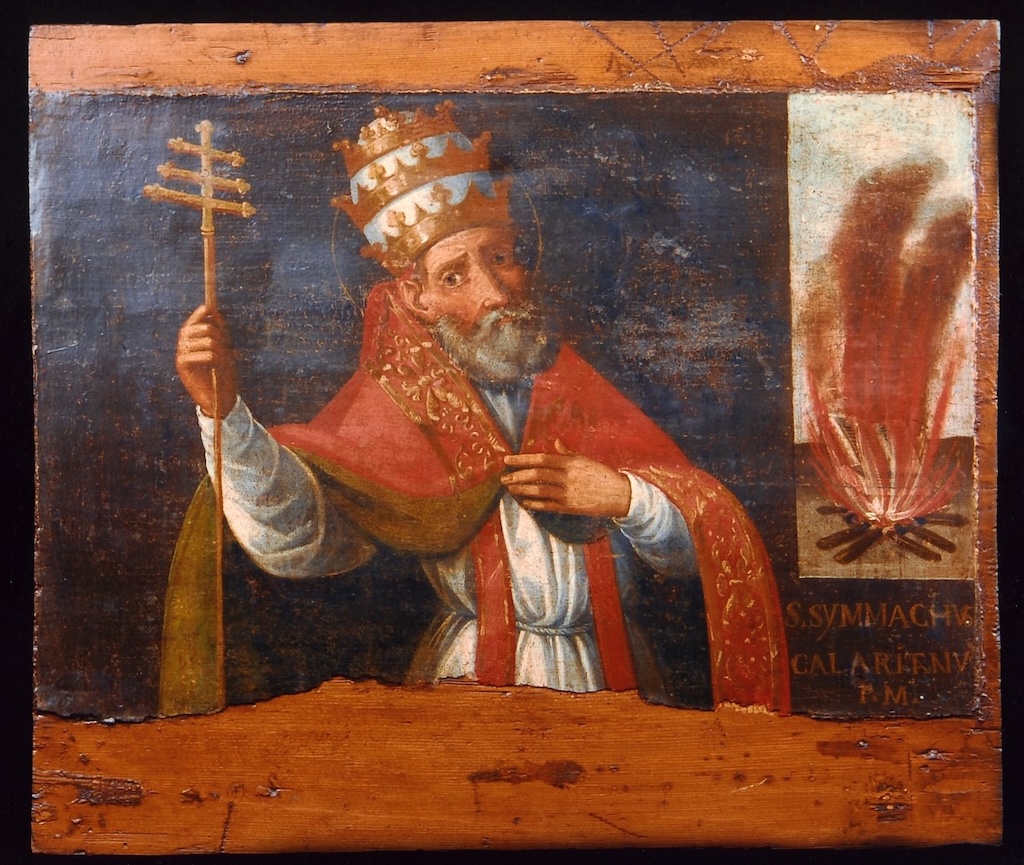

Charity toward the poor and pilgrims
Symmachus, originally from Sardinia, was elected Pope on November 22, 498, following the death of Pope Anastasius II. However, his election was contested by a Roman faction aligned with the Byzantines, who instead elected the archpriest Laurentius. To resolve the dispute, the Ostrogothic King Theodoric summoned both candidates to Ravenna and decreed that the one who had received the most votes would be recognized as the legitimate pope. Symmachus had the majority and was thus confirmed as supreme pontiff.
Upon returning to Rome, Symmachus convened a synod at the Basilica of St. Peter with 72 bishops from across Italy. This gathering is also notable as it marked the first time that priests from the Roman churches—known as "tituli," which today are entrusted to cardinals—participated. During the synod, several rules were established to prevent future conflicts during papal elections. For instance, anyone who attempted to appoint a new pope while the reigning pontiff was still alive would face severe penalties.
In 501, another synod was held at St. Peter’s, producing a significant declaration signed by 76 bishops, which firmly stated that the Holy See cannot be judged by any earthly authority.
During his 15-year pontificate, Symmachus was deeply committed to charity. Every year, he sent aid and clothing to bishops exiled in Africa and Sardinia, who were being persecuted by the Vandal king Thrasamund. He also freed many slaves in Liguria and Milan.
Symmachus made the singing of the Gloria mandatory on all Sundays and on feast days of the martyrs. In Rome, he established hospices for pilgrims, hospitals for the poor in the major basilicas, and a large xenodochium (a guesthouse for foreigners and the poor) in the city of Porto.
He expelled the followers of the Manichaean heresy from Rome and ordered their writings to be publicly burned. He also took care to beautify the Basilica of St. Peter, paving the atrium with marble and decorating the portico walls with mosaics depicting lambs, crosses, and palm trees. Pope Symmachus died on July 19, 514.