

August 21: Saint Pius X, Pope

From the Region of Veneto to the Chair of Peter
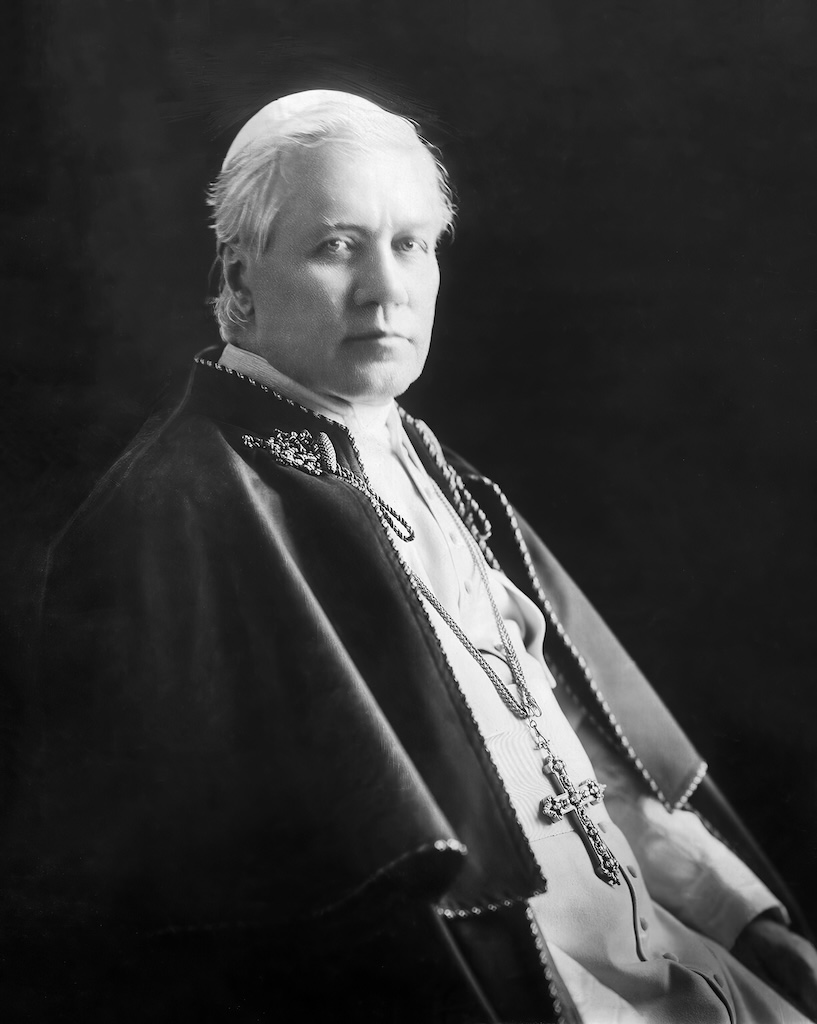
He is known for having compiled the Catechism that bears his name, for granting Communion to children from the age of seven and for promoting important reforms within the Church. This is Saint Pius X, born Giuseppe Sarto.
He was born in Riese, in the province of Treviso, on June 2, 1835, the first of ten children of Giovan Battista Sarto and Margherita Sanson—a family of humble origins, poor but not destitute, at least in the early years. From an early age, Giuseppe displayed remarkable intelligence, which allowed him to excel in elementary school and opened up the possibility of continuing his studies. His vocation to the priesthood was nurtured within his family, but it immediately collided with a lack of financial means, which would have prevented him from entering the seminary.
He was supported by the Patriarch of Venice, Jacopo Monico—also a native of Riese—who, upon learning of the young boy’s talents (affectionately called Bepi by his family), offered him a scholarship to attend the seminary in Padua. There, during his eight years of study, he once again distinguished himself with excellent academic results.
However, those years were marked by a painful event: the premature death of his father, which plunged the family into severe poverty. His mother, Margherita, became his main source of support in the decision to pursue the path to priesthood, even though Giuseppe also had to assume the role as head of the family. Through great sacrifices and difficulties, he still managed to provide for his mother and siblings, never hesitating to assist anyone in need.
He was ordained a priest on September 18, 1858, in the cathedral of Castelfranco Veneto. His first assignment was as chaplain in Tombolo, in the province of Padua.
After nine years, he was appointed to lead the parish of Salzano (Venice). As archpriest, he won general affection thanks to his commitment during emergencies such as the cholera epidemic and to his generosity toward the poor.
It was in Salzano that he began writing the work that would make him famous worldwide: a catechism in the form of questions and answers, which would become a fundamental tool for the religious formation of generations of ordinary faithful.
In 1875 he was appointed canon of Treviso Cathedral and chancellor of the diocese. In this role he demonstrated great competence in canon law and excellent ability in managing relations with the State, avoiding the frequent conflicts between Church and civil authorities.
In 1884 he was appointed Bishop of Mantua. The diocese was in deep crisis and Pope Leo XIII considered Giuseppe Sarto the last chance before having to take drastic measures. The new bishop reorganized the diocese, reopened the seminary, engaged in social promotion and became a point of reference for the Catholic movement active in the economic sphere.
His successes earned him the appointment as Patriarch of Venice in 1893. In 1903, upon the death of Leo XIII, Sarto was not among the favorites for succession. He bid farewell to Venice with the famous words: “Alive or dead, I will return.”
The leading candidate was Cardinal Mariano Rampolla del Tindaro, the Secretary of State, but his pro-French position displeased the Emperor of Austria, who vetoed his election. Even though the veto was not decisive, the votes began shifting toward the Patriarch of Venice, who begged the Cardinals not to vote for him. Nevertheless, on August 4, 1903, he was elected Pope with a large majority.
Immediately after his election, he abolished the right of veto by States, thereby establishing the definitive independence of the Church from temporal powers.
He initiated major reforms of the Roman Curia: he began codifying Canon Law—an unprecedented undertaking that lasted twenty years; reformed the rules for the Conclave, many of which are still in force today; reorganized the Vatican Congregations; required bishops to reside in their dioceses and conduct regular pastoral visits; strengthened priestly formation by making seminary training mandatory. He fought against modernism to safeguard the purity of the faith and promoted biblical studies.
He also changed the style of the papacy: he introduced public audiences, sought to simplify ceremonies, and maintained a humble lifestyle.
Three of his reforms are the most renowned: the Catechism, famous for its clarity, simplicity, and effectiveness; the reform of sacred music, with the revival of Gregorian chant and liturgical music; the introduction of Communion for children, allowing even the youngest—starting at age seven—to fully participate in the Eucharist, provided they understood the difference between ordinary bread and the consecrated Bread, the Body of Christ.
He died on August 20, 1914, just days after the outbreak of the First World War. Pope Pius X had done everything in his power to prevent the conflict.