


October 29: Saint Honoratus of Vercelli, Bishop
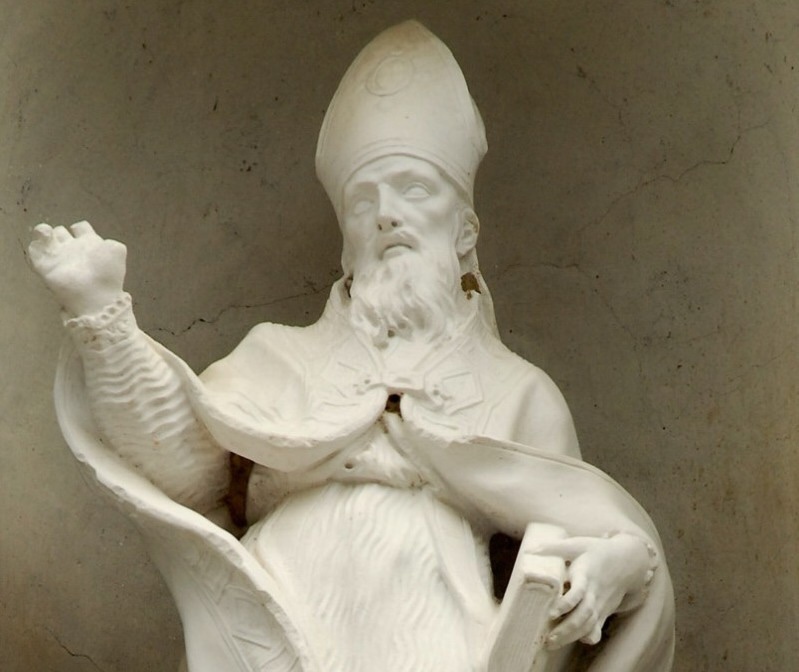

A faithful witness to the legacy of Ambrose
Saint Honoratus stands as a central figure in the history of the Church of Vercelli, Italy, remembered for his deep spirituality, his dedication to ecclesial service, and his special bond with two great saints: Eusebius and Ambrose. A member of the monastic community founded by Saint Eusebius in Vercelli, Honoratus was his disciple and companion in exile during the Arian persecutions. This ascetic and formative environment prepared him for a leading role in the life of the Church.
In 396, upon the death of Bishop Limenius, the diocese of Vercelli found itself in a critical moment. The situation was unsettled by internal tensions and by the destabilizing influence of two clerics from Milan who had abandoned orthodox doctrine to promote ideas akin to those of Jovinian, in opposition to Christian asceticism and continence. Their words even spread suspicion toward Ambrose, Bishop of Milan, who was unjustly accused of being responsible for the turmoil.
To restore peace within the Church of Vercelli, Ambrose wrote a long letter to the community, urging them to make a wise choice for their new bishop. This text, known as Ad ecclesiam Vercellensem, was his last writing before his death. When this was not enough, Ambrose personally traveled to Vercelli to guide the selection of the new shepherd. His choice fell upon Honoratus, a figure well known and respected both within the monastery and among the local clergy.
His election calmed the unrest and brought an end to the period of tension. Honoratus thus assumed leadership of the diocese as its third bishop, following Eusebius and Limenius, carrying forward his master’s legacy with steadfastness and fidelity to Catholic doctrine.
The following year, in 397, Honoratus went to Milan upon learning that Ambrose was gravely ill. According to the account of his biographer Paulinus, it was Honoratus who administered the Viaticum to the dying bishop during the night between Good Friday and Holy Saturday (April 3–4). This act sealed the profound bond of respect and gratitude that united him to Ambrose, a decisive figure in his ecclesial journey.
During his twenty years as bishop, Honoratus was an authoritative guide for the Church of Vercelli. The epitaph carved on his tomb—discovered in 1575 beside those of Eusebius and Limenius in the Church of Saint Eusebius—describes him as an exemplary pastor, steadfast in doctrine and immune to the theological deviations of his time, including the still-prevalent Arian heresy.
According to this poetic inscription, he was a man of prayer and action who taught the Gospel with integrity and lived with humility and pastoral zeal. Some sources also attest that he endured imprisonment and exile, experiences shared with Eusebius, as signs of his unshakable commitment to defending the true faith.
Honoratus died on October 29, 415. His figure was immediately venerated by the local Church, which recognized him as a saint. The devotion has remained alive through the centuries, testified by the liturgy and by the historical memory of the diocese of Vercelli.