


June 1: Saint Hannibal Mary Di Francia
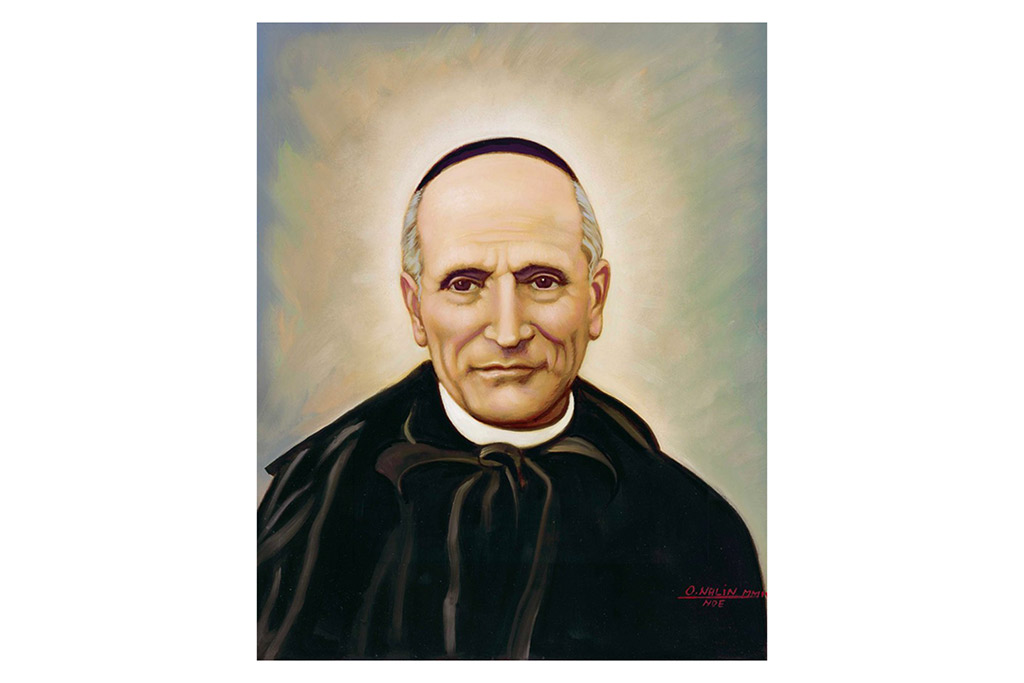

The “Rogate” Invitation for Vocations
“Rogate”: the discovery of the necessity of prayer for vocations, according to the Gospel — “The harvest is plentiful, but the laborers are few. Therefore pray [Rogate] the Master of the harvest to send out laborers into His harvest” (Mt 9:38; Lk 10:2) — is the essence of the charism of Saint Hannibal Mary Di Francia. The premature death of his father also led him to develop a special tenderness and loving care toward orphans.
Hannibal Mary Di Francia was born in Messina, Sicily on July 5, 1851, to the noblewoman Anna Toscano and to Francesco, Marquis of Santa Caterina dello Ionio and Papal Vice Consul. At the age of fifteen, he lost his father.
Feeling called by the Lord to follow Him more closely, he was ordained a priest on March 16, 1878. A few months earlier, an encounter with an almost blind beggar had made him aware of the tragedy faced by those living in poverty in the outskirts of Messina, in a district called Avignone.
With the Archbishop’s consent, he went to live in that area of degradation and poverty in order to help the many people in need. Hostility and misunderstandings were not lacking, yet they did not distract him from his apostolic zeal to offer hope, putting into practice his guiding principle: “A spirit of double charity: evangelization and assistance to the poor.”
In 1882 he opened the first orphanages, which were called Antonian orphanages because they were placed under the protection of Saint Anthony of Padua. Through these institutions, he wished to offer not only material assistance but above all a complete Christian education. The orphans thus found a family where they were welcomed and prepared to face the future.
He gathered around him men and women who wished to share his ideals, and so in 1887 he founded the Congregation of the Daughters of Divine Zeal and, in 1897, the Congregation of the Rogationists. He wanted the members of both Institutes to commit themselves to living the “Rogate” through a fourth vow.
He sought in every way to spread prayer for vocations and maintained both personal and written relations with the Popes. He also established the Sacred Alliance for the clergy and the Pious Union of Evangelical Rogation for all the faithful.
The Archbishop of Messina entrusted him with the formation of seminarians, to whom he recommended prayer and spiritual life; he also cared for priests in difficulty and for cloistered nuns.
He died on June 1, 1927, in Messina and was buried in the Temple of Evangelical Rogation, which he himself had built. Saint John Paul II beatified him on October 7, 1990, and canonized him on May 16, 2004.