


June 4: Saint Francis Caracciolo
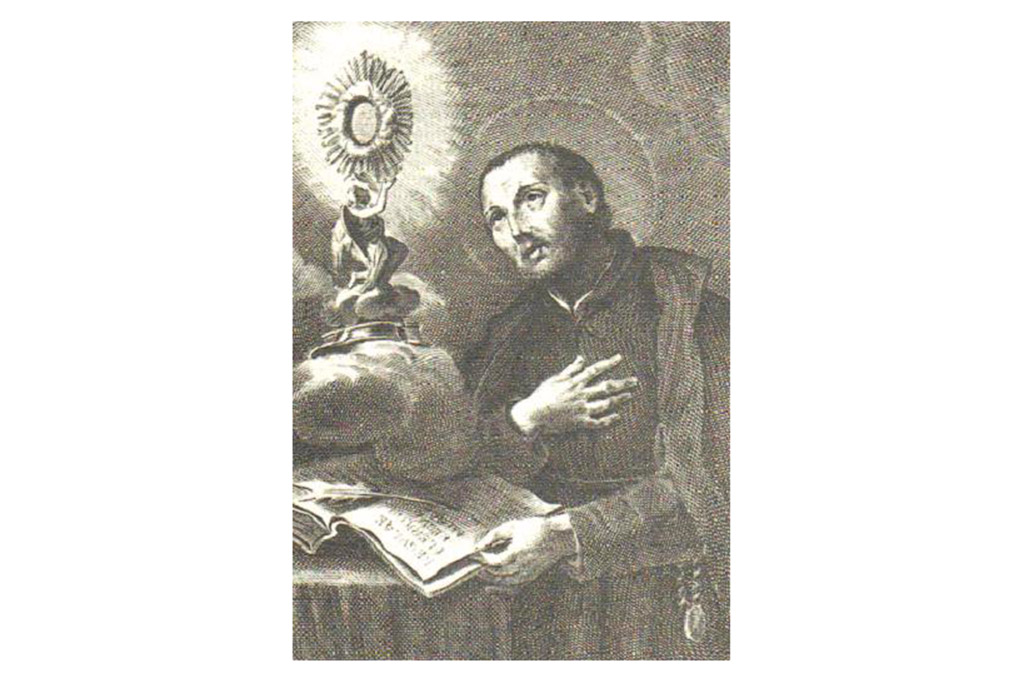

The Saint of the Eucharist
He is considered one of the promoters of perpetual adoration of the Blessed Sacrament and one of the Eucharistic Saints par excellence. This is Saint Francis Caracciolo, born Ascanio, son of Ferrante of the noble Caracciolo family and Isabella, in Villa Santa Maria on October 13, 1563. Educated according to his noble status, at the age of twenty-two he was struck by a form of elephantiasis. He promised God that if he were healed, he would become a priest. After obtaining his recovery, two years later he was ordained to the priesthood.
He moved to Naples and studied the works of Thomas Aquinas. He devoted himself to the poor, the sick, prisoners, and especially those condemned to death. In this regard, in 1588 he joined the Compagnia dei Bianchi in Naples, a confraternity dedicated to assisting prisoners and convicts sentenced to death.
One day he received a letter addressed to another man with the same name, asking for the foundation of a new religious Order. He understood this request as an invitation from Divine Providence. In 1588, together with Giovanni Agostino Adorno and Fabrizio Caracciolo, he founded the Clerics Regular Minor. To the traditional three vows of poverty, chastity, and obedience, he added a fourth vow committing the members to refuse any ecclesiastical office. On July 1, 1588, when the Clerics were officially recognized by Pope Sixtus V, Ascanio changed his name to Francis.
One of the distinctive features of the Clerics Regular Minor is Eucharistic adoration, with one hour of daily adoration before the Blessed Sacrament. He promoted the solemn exposition of the Forty Hours devotion in the churches of the Clerics Regular and established the Eucharistic Day, to be celebrated on the first Sunday of every month. Personally, he never spared himself hardships or privations in order to practice charity and spread the Kingdom of God, remaining faithful to his mission: “To bring the light of the Gospel to those furthest away and to relieve the sufferings of the poor and marginalized.”
In 1591 he was elected perpetual Superior General. He made several journeys to Spain to spread the Clerics Regular Minor and establish charitable works. He died on June 4, 1608.
During his funeral, the first miracle attributed to him was recognized in the healing of a crippled man. Pope Clement XIV beatified him, and in 1807 Pope Pius VII canonized him. He is the patron saint of cooks.