


June 2: Saint Erasmus, Bishop
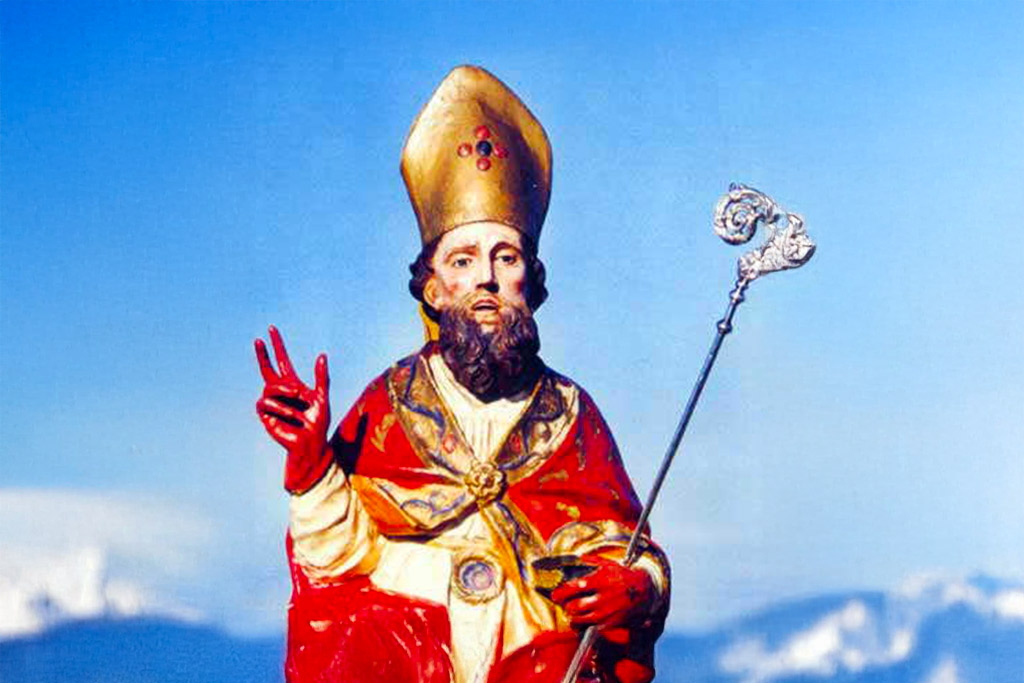

Martyr of Christ
Information about the life of Saint Erasmus is scarce and derives from a Passio dating back to the 6th century. His date of birth is unknown. According to tradition, Erasmus was Bishop of Antioch. When persecutions against Christians broke out, he hid for seven years in a cave. Discovered and arrested, he was thrown into prison for refusing to sacrifice to the pagan gods.
Freed through divine intervention, he continued his apostolic mission and converted many people. Persecuted and tortured once again, he was led by the Archangel Michael to Formia, a coastal town in central Italy, where he died after seven days.
The Martyrologium Hieronymianum confirms the presence in Formia of a bishop named Erasmus around the year 300. His cult spread throughout the regions of Lazio and Campania by the end of the 6th century, to the point that he was included among the Holy Helpers and invoked by sailors as their patron saint.
Erasmus is also known as Elmo, a familiar contraction of his name that probably originated in the late Middle Ages. This name is connected to “Saint Elmo’s Fire”: electrical sparks caused by the ionization of the air during thunderstorms, which appear on the masts of ships. This is linked to the tradition that Erasmus-Elmo was burned alive. According to witnesses of the time, a blue flame appeared at the top of the stake on which Erasmus died, and it was considered the soul of the Saint ascending to heaven. He died in 303.
He is the Patron Saint of the cities of Formia and Gaeta. In Gaeta, his mortal remains were hidden in the Church of Saint Mary in 842, after the Saracens had destroyed Formia. In 917, Bishop Bono rediscovered the relics and proclaimed him Patron Saint of Gaeta.