Select your language

Saint of the day

Saint of the day

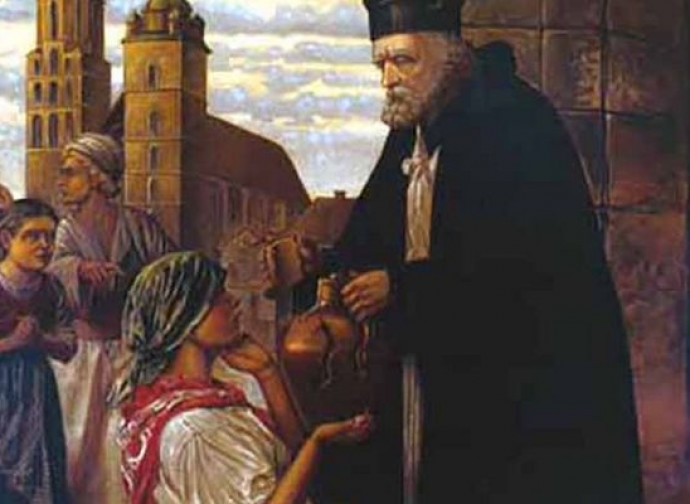
8 March: Saint John of God, Patron Saint of the Vatican Pharmacy

“Extreme” charity

Saint John of God’s name was Juan Ciudad. He was born in 1495 in Montemor-o-Novo, Portugal, where he spent his early years, before moving to Oropesa, Spain, when he was eight years old. He took part in two wars, one in Fuenterrabía in the Pyrenees and one in Vienna against the Turks. Following these events, he returned to Spain and embarked on a long spiritual journey that took him to various cities, including Seville, Ceuta, Gibraltar and Granada, where he worked as a book seller. After hearing a sermon by John of Avila, he underwent a profound spiritual transformation that led him to declare his “folly” for God, to the point that he was committed to the Royal Hospital of Granada. When he was discharged, he decided to dedicate himself entirely to serving the Lord.

22 February: Feast of the Chair of Saint Peter

Celebrating the unity of the Church

The Feast of the Chair of Saint Peter the Apostle commemorates the moment when the Lord said, “And I tell you, you are Peter, and on this rock I will build my church”. On the day in which Romans traditionally honoured their deceased, we honour the See of Saint Peter’s birth in Heaven, which draws glory from victory on the Vatican Hill and presides over the universal communion of charity, states the Roman Martyrology.

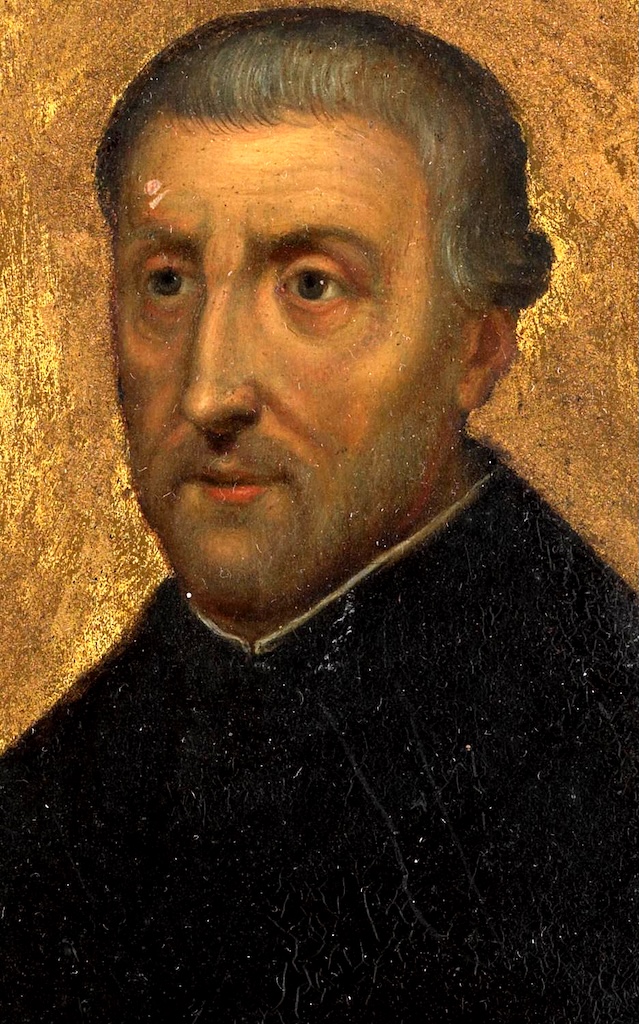
21 February: Saint Peter Damian, Doctor of the Church

A monk at the service of the Church

Peter Damian is one of the most well-known writers of the 11th century and one of the greatest advocates of the pre-Gregorian reform, along with several Popes who fought against the evils afflicting the Church at that time – in particular against simony, the buying and selling of an ecclesiastical office or dignity and Nicolaism, which rejected celibacy. With his advice and without taking radical positions, he served the Popes and wrote about these themes in Liber Gratissimus.

18 February: Blessed John of Fiesole, known as Fra Angelico

Painting as a vehicle to make the mysteries of faith known to all

Guido di Pietro, known as John of Fiesole, or better, Fra Angelico, was a Dominican friar with a great talent for painting.

He was known as Angelico because of the great message of faith that imbued his works and the humility that distinguished them, and for the mystical value he gave to light.

17 February: Seven Holy Founders of the Order of the Servants of Mary

Seven merchants united in imitation and praise of the Virgin Mary

Seven merchants met in an oratory in Florence on the Feast of the Assumption of Mary in 1233. They were all wealthy and part of the old nobility of Florence. Their names were Bonfilius Monaldi, Bonajunta Manetti, Manettus dell'Antella, Amidius Amidei, Hugo Uguccioni, Sosthenes Sostegni and Alexis Falconieri. 

They shared a great devotion to Our Lady and belonged to a confraternity, whose aim was to pay homage to Mary. Known as “Laudesi”, members of the confraternity felt called to be at the service of Our Lady and follow Christ. After seeking the advice of the Bishop of Florence, Ardingo, who encouraged their project, they began their new lives.

14 February: Saints Cyril and Methodius

Evangelizers of the Slavs

Cyril and Methodius are known for being the evangelizers of the Slavs, for whom they created an alphabet that was understandable to a large part of the people, in order to pass on the teachings of the Scriptures. The two brothers, Cyril and Methodius, were from Thessalonica, today known as Salonika,  in Greece, but then part of the Byzantine Empire. Methodius was born around 825, while Cyril was born two years later. Cyril’s original name was Constantine, but he changed his name when he became a monk on his deathbed.

Select your language