Select your language

Saint of the day

Saint of the day

21 January: Saint Agnes, Martyr

Like a lamb sacrificed for Christ

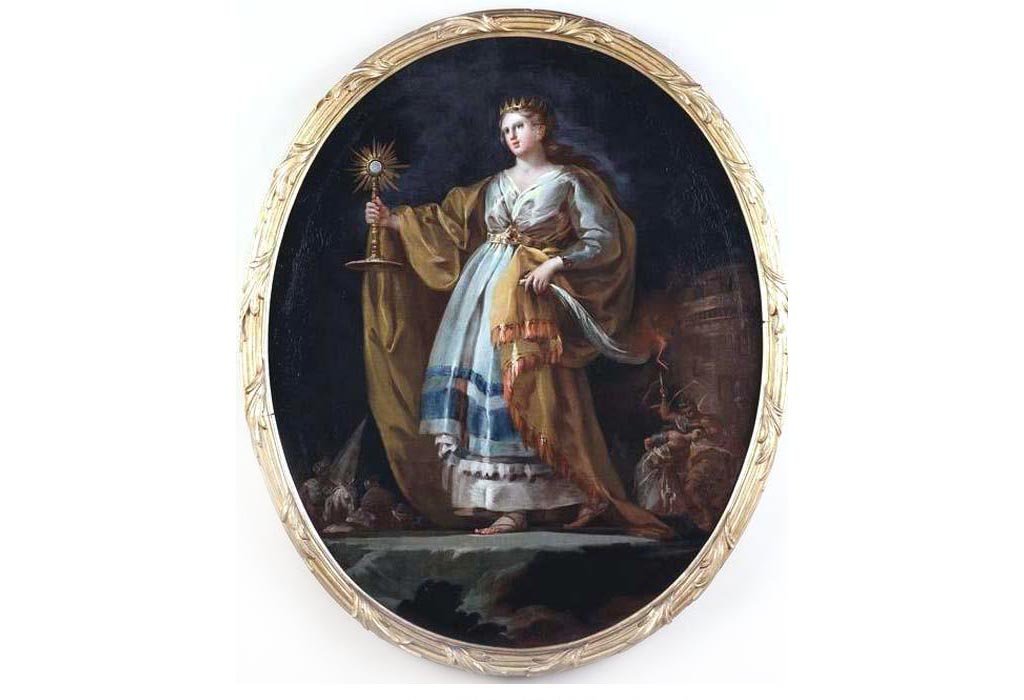
Saint Agnes was a 13-year-old girl from Rome, who did not hesitate to sacrifice her life to bear witness to her faith in Christ. Saint Ambrose, Bishop of Milan, wrote that her witness to Christ was twofold: her chastity and her faith (De Virginitate II. 5-9). Pope Damasus wrote an epitaph in her honour.

20 January: Saint Sebastian, Martyr

He did not fear those who can kill the body but not the soul

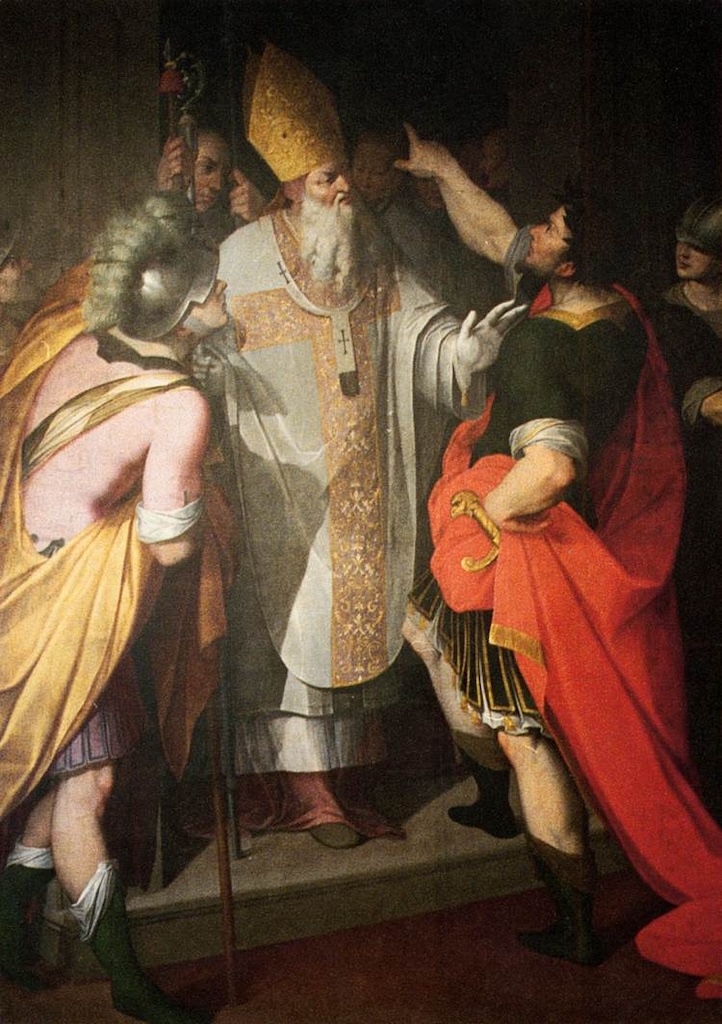
We do not have much information about the life of Saint Sebastian. According to the Passio Santi Sebastiani Martyris, a text long attributed to Saint Ambrose of Milan (340-397), he was born around 250 A.D., and raised in Milan by his father from Narbonne and his mother from Milan. Educated in the Christian faith, he moved to Rome in 270 A.D., enlisted sometime around 283 A.D., and eventually became a tribune of the first cohort of the imperial guard. Unaware of his faith, Emperors Maximian and Diocletian entrusted him with important responsibilities.

17 January: Saint Anthony the Abbot

Father of all Monks

Anthony is considered the Father of Monasticism. Details of his life are narrated in “The Life of Anthony”, by Saint Athanasius of Alexandria, written in 360 AD. Anthony was born to a wealthy family, in Koma, Egypt, on the left bank of the Nile, around 251. He was an orphan by the time he was 18 years old. Two years later, taking the Gospel literally, he sold all his possessions, distributed them to the poor and withdrew into the desert to live a life of penance.

13 January: Saint Hilary of Poitiers, Bishop and Doctor of the Church

A journey in search of truth

Born into a noble and wealthy pagan family in Poitiers, Aquitaine, around 310, he was able to receive an education befitting his status. He felt compelled to seek the truth from a young age and, at the end of his journey, he converted to Christianity. He was baptized when he was 30 years old. Reading the Gospel of John gave him with an opportunity to find answers to his questions. He described his personal journey in the introduction to his famous work on the Trinity (De Trinitate), in which he highlighted the stages a pagan goes through to come to know God.

12 January, Saint Anthony Maria Pucci, of the Order of Servants of Mary

The little Curatino, who gave himself entirely for his parishioners

He never hesitated when faced with people in need, giving everything to everyone in charity, even going so far as to give away his own clothes to help the poor. He challenged the hostility of some anticlerical citizens, for which he was even beaten with clubs on one occasion, as he walked through Viareggio’s streets, distributing food. Known to everyone as the “Curatino”, he was seen as the manifestation of God’s presence among the people. He was the father of the poor and a supporter of sailors, who faced the storms to feed their families. Everyone knew they could count on the prayers of this little friar, who was small in height, but who had a big heart that was open to the needs of others.

9 January: Saint Andrew Corsini, Bishop

A peacemaker in the midst of conflicts

As a mediator and peacemaker in disputes between warring towns, Saint Andrew Corsini, a Carmelite religious and Bishop of Fiesole, was imprisoned for his zeal.

Saint Andrew was born into an aristocratic Florentine family in Florence on 30 November 1301, and had a carefree adolescence. He entered the Carmine convent when he was 15 years old, distinguishing himself for his charity towards the poor and those in need. After he was ordained a priest, he was sent to the University of Paris to complete his studies.

Select your language